Really wish this was 8hp for a straight swap with my ES-8 (I really don’t care for dual LEDs for voltage monitoring).
Also (more importantly) the input range is +/-10v which in my experience can mean clipping with hot signals which some modules can put out. It’s not a problem if you’re going via a mixer where you can attenuate the master level but if you’re wanting to go directly into the ADAT inputs without attenuation you’re probably going to get clipping.
I had the same issue with ES-9 and ES-8.
Because of this I just got an ES-10 which is +/- 12v which (hopefully) is enough for a clean signal (even though it is 4hp bigger than my ES-8).
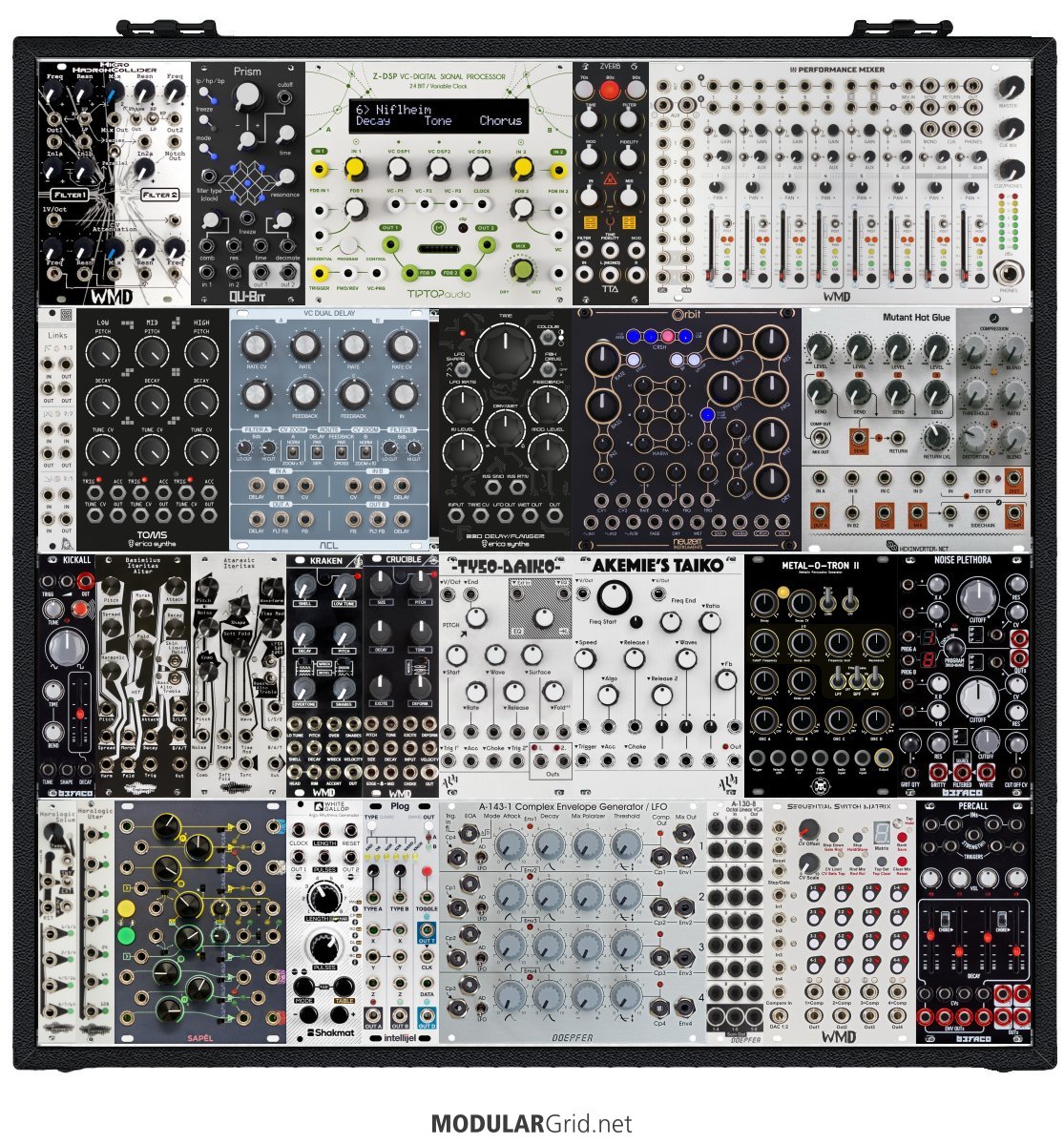
Was thinking of getting back into Eurorack after a few years to specifically create an experimental drum rack again and I’m basically at $1,500+ easily buying used or with 10% discounts new, but more like $2,000+ realistically.
So the Pulsar 23 grabs my attention again because the screw version is $1,500 and would provide so much more (and better sounds in my opinion from seeing demos online) than the Eurorack drum rack. I’m trying to figure out why I would go Eurorack instead.
I guess two reasons: 1. the rack modules can be used for things other than drums if I want to expand into other types of sounds by; and 2. I can modify the rack over time by buying new modules. The Pulsar 23 is self-contained instead, even though I could build a rack to modulate the Pulsar but that’s another topic.
I dunno. The Pulsar seems to be the wise decision - and looks like a blast to use. But there’s something appealing about building a rack from scratch even though it wouldn’t be close to the Pulsar for the same price.
If you are sure you want nothing more than an “experimental drum rack”, then get the Pulsar-23.
If you have ambitions to go beyond that, then consider modular. But the design decisions (for something that starts out as percussion-focussed but with the potential to expand further) get a lot more thorny.
I found that I even tend to use my BIA as a weird, skrunky synth voice (through the MUM M8) rather than for percussion. I tend to leave drum duties to AR/OT now….
I have Temp Legio that I added for occasional drum/percussion but I like it for bass.
Most of the techniques for getting experimental drum sounds are available in software form. Sugar-Bytes Drum Computer covers lots of ground. I only have the iPad version, which is perfect for my needs.
FM is another area that people look to for drum sounds and again… it’s available in software or dedicated hardware.
I guess most of modular is experimental anyway but I guess what I mean is lots of modulation, different clocks doing different things with modulation of them too, heavy distortion/effects etc. Basically when I created one last time, it was the main thing, instead of being the rhythm for a melody for example. I’m leaning more into Pulsar now since I last posted The $1,500 for a Pulsar doesn’t get me anything as exciting in Eurorack. I think I might have to scratch that itch.
$1500 is a GREAT price for the P23. But, it does lack some key patching points (eg: Release) which may or may not bother you. It does keep the whole machine hands on and highly unpredictable
If you need the push I highly recommend watching some videos by TÆT
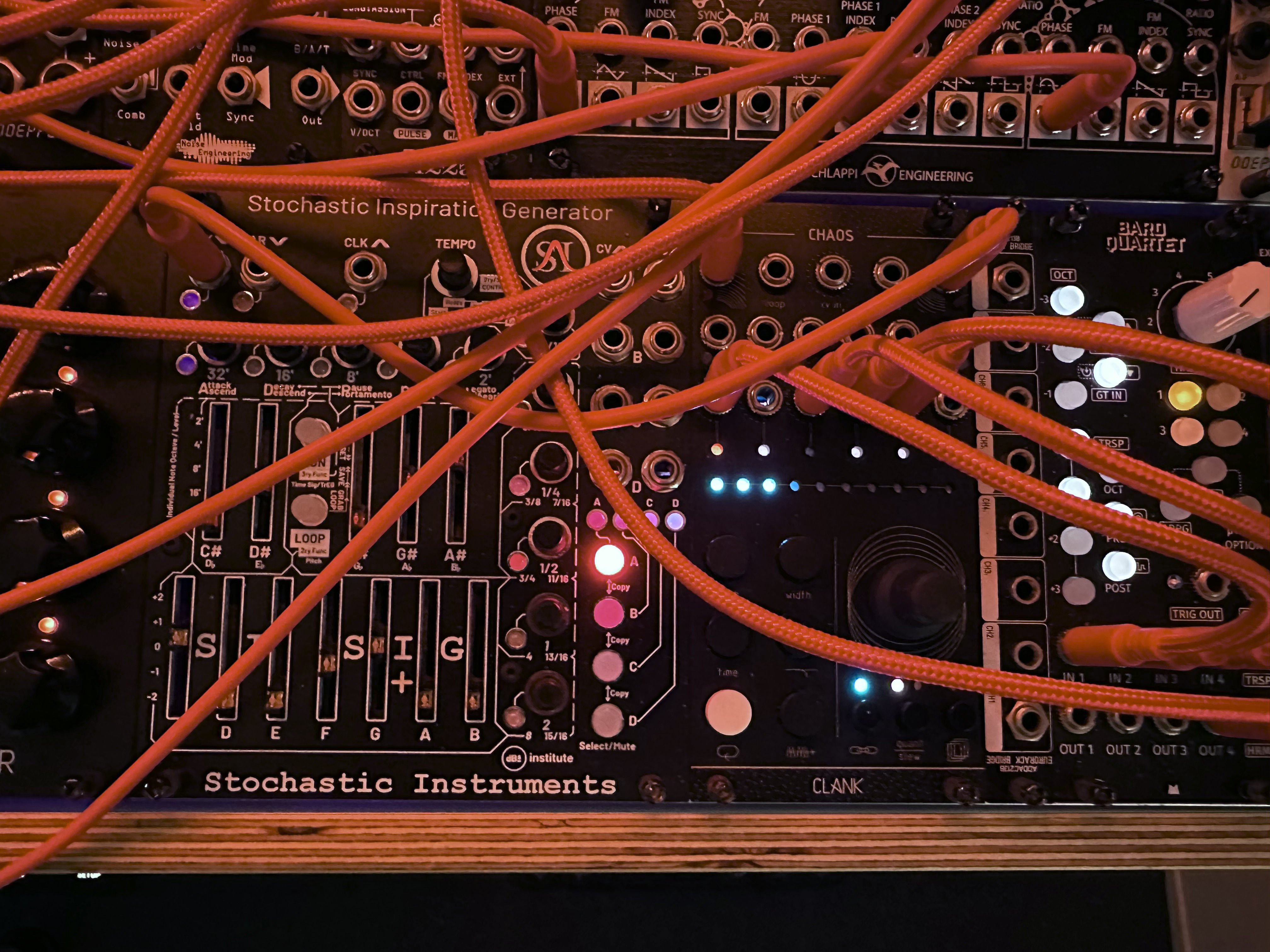
Point taken! But perhaps a certain amount of hidden state and button combos are inevitable in a generative sequencer. It’s the details that make the difference. The range of generated voltage is too discrete on Marbles (2V, 5V, 10V), and the smallest setting sometimes too large for pitch applications. The Steps button has too much functionality packed into it and its behaviour changes radically at 12:00. Marbles throws away the loop when one exits loop mode; both SIG and Chaos keep it until the user decides to replace it. I have kept Marbles, and I’m sure I’ll find irritating features on Chaos, but I expect it to be an improvement for my purposes.
I was just teasing, I have a similar dislike for hidden menus and combos and have been ridding my case of such modules, but Chaos is one of the few exceptions I don’t mind, and have no intention of getting rid of.
I also have the SIG sat right next to it, likewise a keeper.
The Pulsar is indeed a joy to play. The recording sequencer is ace. It also sounds huge. And I agree, the new model pricing is appealing. You can also expand the pulsar with a small case later on.
One key point to understand about the pulsar is that it has a very strong sonic identity, and it is difficult to get out of it.
I have a complete euro system dedicated to drums, and it is the funniest drum machine that I ever owned. The beauty to me is that I can go into very crazy and versatile sequencing pathways, and get unique results.
Pulsar-23 -> Pulsar-23 with Eurorack skiff -> Pulsar-23 with Eurorack skiff + Ornament-8 -> Full on Eurorack drum machine, no Soma -> remove drum modules from the modular, use a regular degular drum machine as the foundation of percussive stuff, synthesise supplementary experimental stuff from scratch with oscs etc
For me, doing a Eurorack drum machine was way too expensive, fiddly, unergonomic etc: many of the same challenges as doing a polysynth in modular. Pulsar has the advantage of being (comparatively) compact, and it’s dense in utilities (which can always be supplemented by Eurorack). Plus you can just stick a MIDI cable into it to use it more ‘normally’ vs losing rack space to MIDI to CV conversion etc. I thought I could “fix” some of the issues I had with Pulsar by going full modular, but it just wasn’t as fun to use. Of all of the (semi-)modular configs I used, Pulsar + Ornament-8 was definitely the coolest, it just took up too much desk real estate for what it was.
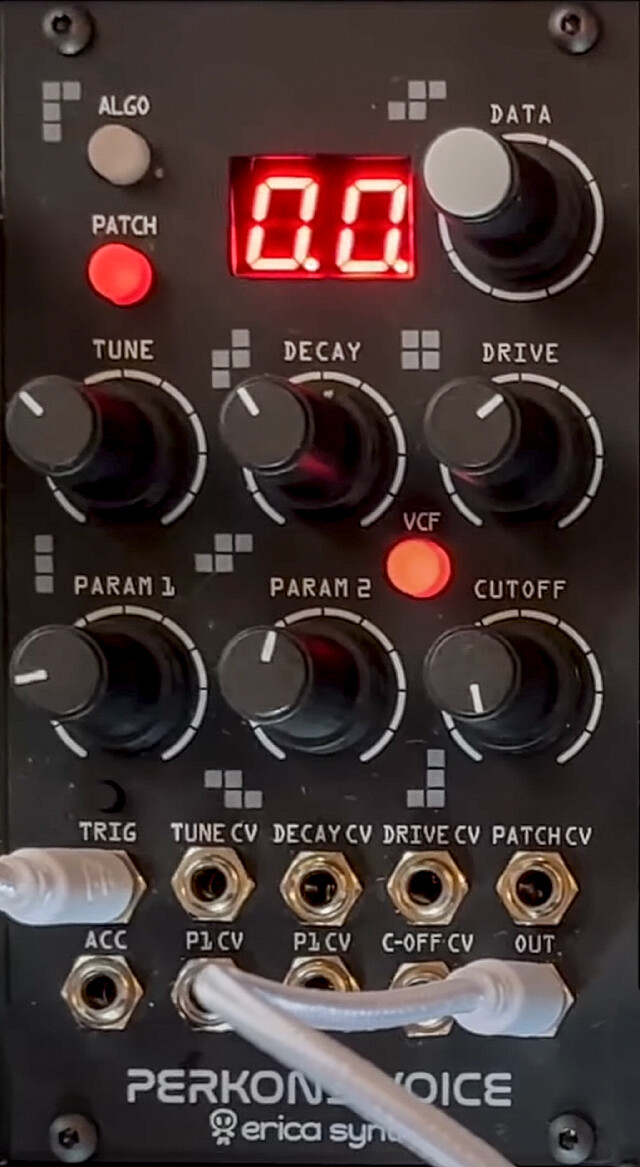
Perkons voice will be here at some point, and I’ll be getting 2.
All algos available, cv control over pretty much everything, Preset save and recall and cv control over presets.
 The $1,500 for a Pulsar doesn’t get me anything as exciting in Eurorack. I think I might have to scratch that itch.