“Hi Innerclock, one of the things I most appreciate about Elektronauts is that discussions here tend to be courteous and fair, and I’d really like to keep it that way. I can absolutely relate to wanting to avoid forums sometimes. Things can get ugly on the web, but this place really is a great exception.”
Hi Erik, and thanks for the reply. I was hesitant to even draft a reply, but after reading your post a few times it still fundamentally takes the position that in sync and rhythm, loose = creative and tight = stiff/boring, and that people who work in this space are chasing something esoteric and counter to the creative process. It implies that these tools are only for lab experiments and, conversely, that your solution is designed for ‘real’ creatives. Which I disagree with. Music is a blend of maths and emotion — both have to be respected in equal measure. Forum discussions like this, even on Elektronauts, often get the two sides scrambled and it quickly can become personal. Facts and numbers keep the emotional/subjective heat out, which is really for another forum.
“I was intrigued with your statement that our main claim is “hardware level precision”, which is not something we focus on in our language.”
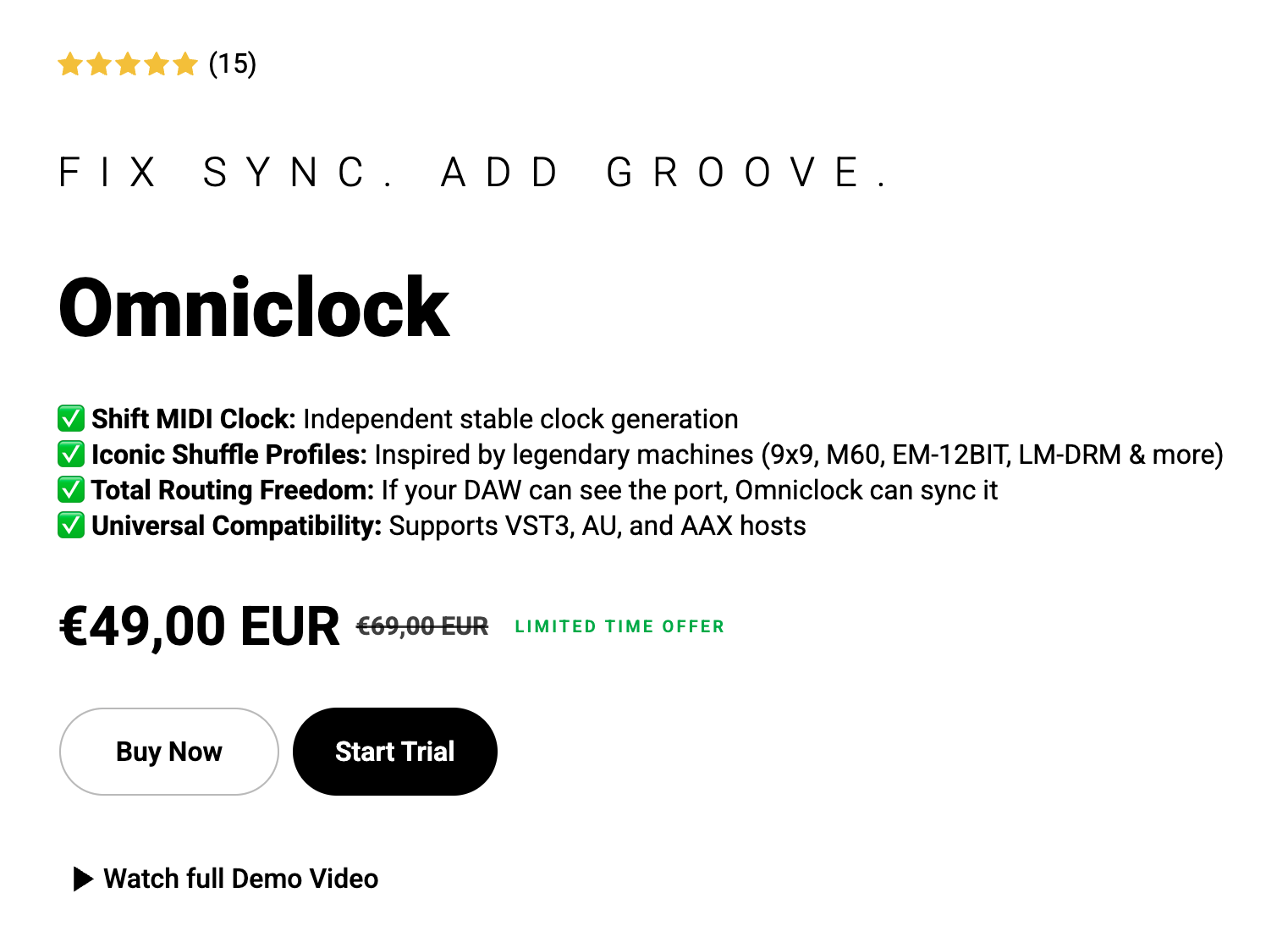
Maybe not in those exact words, but your marketing positioning leans hard on it: “hardware level synchronisation box precision,” no external hardware needed. That’s the hardware-grade-without-the-hardware comparison, baked into how it’s presented — and the Gearnews piece runs the same angle straight off your press material, right down to a headline asking whether Omniclock can “replace expensive hardware clock boxes.” So even if the phrase isn’t on the spec page, the framing of your marketing pitch is all around it.
“I’ve since gone back and checked the product page, the manual, the press release, and the tech specs PDFs, that language doesn’t appear in any of them. If I’ve missed something please do point me to it and I’ll address it. (The one place I did find it was in the FAQ, and I’ve already removed it.)”
When making public claims on the maths behind the music, clarity and transparency are important, and credit for doing it. If I sound pedantic, it’s because sync is a serious business and we treat it that way. That’s why we lean on specs and stay away from spin.
“To address the “hardware level clocking” point directly: to my knowledge I used that language on YouTube and even there I wasn’t referencing Innerclock or any specific hardware system. What I meant, and probably didn’t express clearly enough, is that hardware timing is not one single standard. It spans a really wide range, and we were never claiming to be at the precision end of that spectrum.”
*This is where we genuinely part ways, Erik. “Hardware timing is not one single standard” — yes, there’s no industry spec for rhythmic timing, not because it can’t be measured or doesn’t matter, but because the industry never had to. That gap is where decades of sloppy drum machines, sequencers and MIDI interfaces have sat with random rhythmic jitter reframed as “human feel” or deliberate, baked-in “character” — which it isn’t.
Time is the standard — fixed since 1967, not elastic. It’s the canvas everything else in music production gets painted on.
Two drummers, same straight 100 BPM 4/4 — kick, snare, eighth hats.
A kid sitting down for the first time can play the pattern OK, but the motor skills and internal clock aren’t developed yet — it’s a rough listen, the hits landing with random timing errors. Those errors aren’t deliberate feel or repeatable character. They’re just slop.
Put any great player on the same pattern — Ferrone, Carlock, Gadd, Colaiuta — and the tight internal clock shows up instantly: listenable, infectious. That’s a stable clock with deliberate micro-timing placed on top — swing, late, early — placements that only read as intentional because the clock underneath is solid. Take the core stability away and any micro-timing expression collapses back into slop.
Electronic music and the tools we use are no different.
“However what I can say from using Omniclock in my own studio, is that it has replaced a hardware system I used previously. (This was not one of your systems to be clear.) We are getting similar feedback from OC users, so this is not a one-off “founder preference”.”
This heads into serious subjective territory again, Erik — what works for you works for you, and if it works for others, that’s brilliant too. It’s totally subjective on all counts. My Dad can’t dance to save his life but he still likes music.
But your marketing pitch isn’t presented as subjective. It’s framed as: you don’t need expensive hardware to get the same results — and that’s clearly not the case. “We were never at the precision end” sits oddly next to the marketing that calls it a “precision-driven timing engine” with “sub-millisecond accurate precision,” built on profiles “developed through mathematical analysis.” That’s the science-and-precision angle front and centre.
And to be clear, this isn’t me defending my own position exclusively — “hardware-grade sync without the hardware” takes a swing at everyone doing serious sync, including Multiclock (E-RM, now Floatingpoint), SND, Expert Sleepers and Sim’n’ Tonic. Whether a plugin-only solution suits your studio is entirely your call. But “hardware-grade” used as a comparison to dedicated, tested, repeatable solutions is a timing claim — and timing is measurable.
“The machines that inspired Omniclock, the 909s, the 808s, the MPCs, the stuff we all love, don’t produce notes with lab-grade precision either. That’s part of their character. Interestingly, your measurements put Omniclock solidly under 1 ms — for the producers using it, that’s a result we’re really proud of. The TR-909 recordings I shared earlier clearly show timing behaviour with much wider tolerances.”
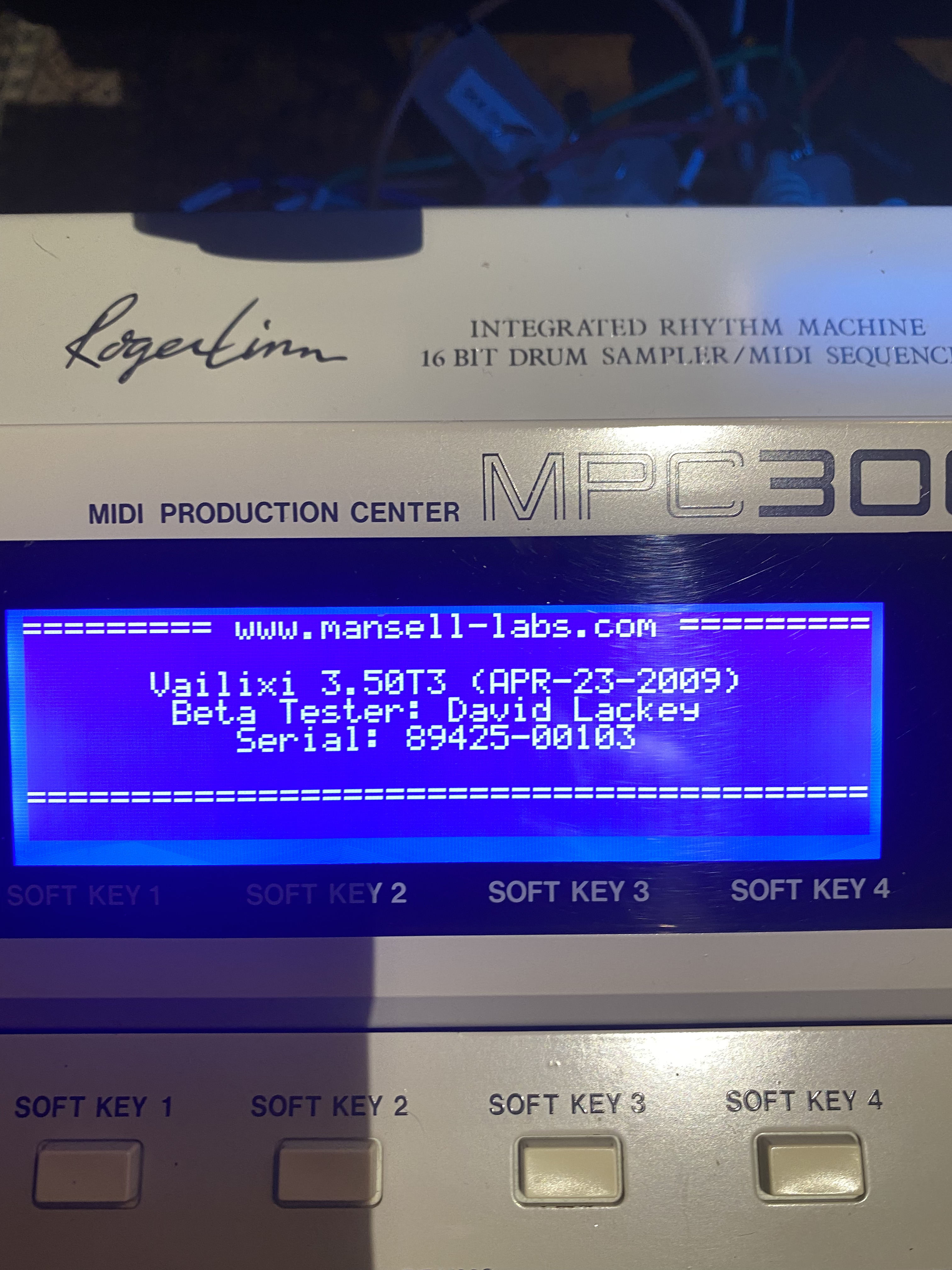
The TR-909 / MPC point I’ve already covered — for decades. Roger Linn said as much himself. Systematic, repeatable timing is experienced as rhythmic feel; random rhythmic jitter isn’t. The tighter the better. I won’t run it again.
Comparing Omniclock to a TR-909 and concluding it’s “tighter than the TR-909, so it’s enough” compares two different things. A TR-909 is an instrument — a sound source with its own timing signature. A master clock is the reference that instrument gets slaved to. They do opposite jobs: the reference has to be steadier than anything hanging off it, because everything is measured against it. “Tighter than a 909” is the wrong yardstick.
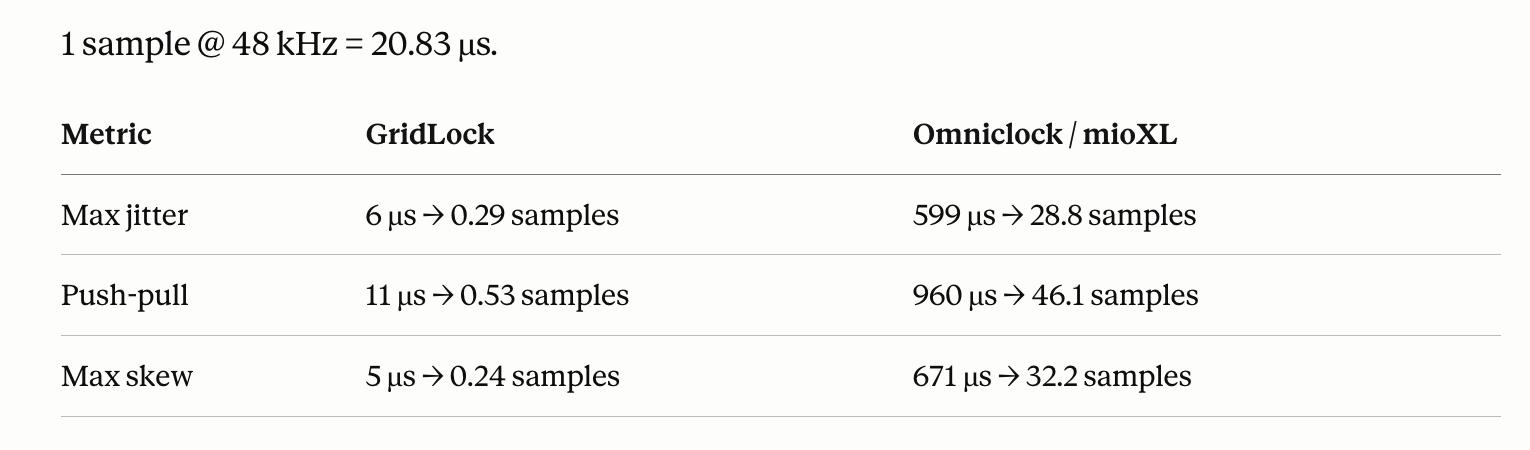
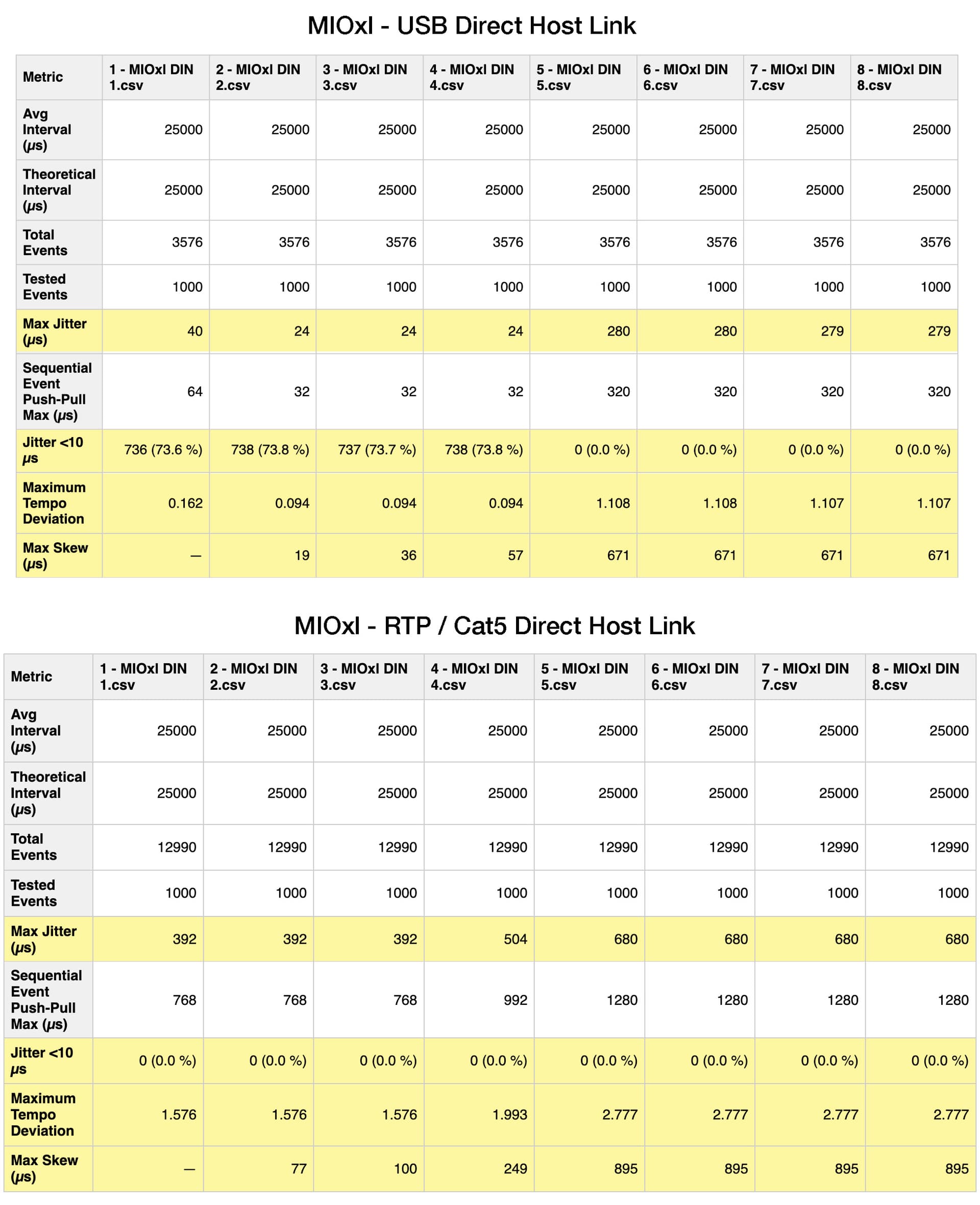
One correction on the numbers. “Your measurements put Omniclock solidly under 1 ms” — that’s only the one path I tested: a clean DIN output through one interface. But there’s no absolute figure here, and that’s the point. Omniclock’s clock precision ends at the computer’s MIDI layer — the interface, the path, the host all sit downstream, and that’s where the timing is delivered. Final output precision isn’t Omniclock’s to own; it’s inherited from whatever it’s plugged into. A hardware sync box owns its output stage and can put a number on it. A plugin can’t — which is exactly why “sub-millisecond accurate precision” isn’t a spec it can stand behind.
“I genuinely want to be fair here: your system is around 100x tighter on jitter than ours. That’s a real engineering achievement and I’m not trying to minimise it.”
Appreciated . We’ve been refining this since 2004; they’re simply the numbers the system was designed to deliver. And again, you might not minimise the achievement itself, but you minimise its importance in the creative process.
“I believe there’s genuinely room for both in this space. You’re chasing the absolute edge of timing precision, which is impressive work. We’re focused on something different: helping producers get their hardware and DAW truly in the pocket, with musical groove profiles and routing flexibility built in, at a price point that opens that up to a lot more people. Hope this clarifies this and we can all get on with making music and / or audio tools.”
Room for both — of course — if a clear statement of the differences is front and centre. They are not the same.
You said “truly in the pocket.”
We’re firmly back in subjective land with that, Erik.
What a good pocket feels like to you is personal — to everyone — and it’s not something you can measure or promise. But where the pocket sits depends entirely on the stability of the timing canvas underneath it. That part you can measure.
And you are still driving home the myth that Loose = Human Feel/Soul and Tight = Sterile/Boring.
So go back to the drummers. Plenty of people would happily listen to a school-band kid on a good day. But the implication that wanting that same part played by a Ferrone or a Carlock is just “chasing the absolute edge of timing precision” — for no real creative or expressive gain — doesn’t fly. Everyone hears that difference, instantly. It’s the whole reason those players get the call.
The fundamentals haven’t changed — acoustic or electronic, it makes no difference.