The huge amount of work to reach the specifications of the stretch goals you have unlocked will unfortunately postpone delivery of the first units. As we don’t want to compromise on quality for this high-end instrument, we won’t be able to deliver this month but hope to be ready for the end of the year.
How many backers in here have had the chance to play the Anyma Phi?
I absolutely mostly love mine, altough the software side of things can sometimes be a bit wonky. Stuck notes and the occasional crash which has been bumming me out ever since release.
The UI is a pain to navigate if you want to design patches from scratch and not use the computer app so the biggest upgrade for me - besides increased polyphony - if I end up upgrading to the Omega would be the extensive front panel controls for patch tweaking.
But I really enjoy the Waldorf-like front panel for jamming on Phi, assigning four performance macros (not unlike on the A4) and just focusing on those can be both a blessing and a curse when you’re in the zone.
The sound engine is top tier quality, if its most rudimentary waveforms can sound thunderous if you want them to. Sort of like Dreadbox synths have the ability to shake the pillars of heaven with little effort.
So there’s high hopes for the future of this company, I feel.
I would back the Omega in a heartbeat if it wasn’t for the buggy nature of the Phi already. If they do end up making a drum machine then I’m sure it’ll be nothing short of experimental and unique!
Yeah this is the main thing for me as I typically don’t want to be on the computer for an editor for a hardware synth. Some things though like moving patches around or fiddling with a bunch at the same time are way easier on the computer so it’s nice to have the option.
The other thing is I don’t want to think about CPU budget so the upgraded processing power should hopefully help with that especially for single patches.
Ah bummer, first I heard of this issue. Aodyo seems like a company with a lot of know-how, so hopefully they can iron this out going forward, at least on the Omega.
Is this maybe the main issue? Is it possible that underpowered CPU is causing the stuck notes and crashes on the Phi, or do y’all think there could be a (un)fixable issue with their firmware? Curious what people’s thoughts are.
(I really wish the Omega to be a great success—for my uses it’s potentially one of the most exciting synths to appear in a long time, and I know I’m not alone in that.)
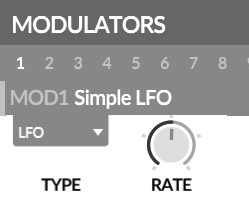
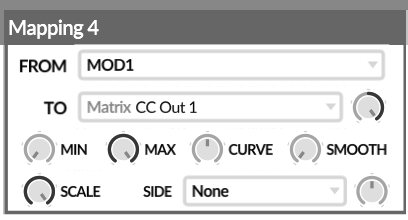
So the Hydrasynth has some rather insane CV/MIDI utility stuff such as the fact you can route envelopes and lfos to arbitrary MIDI CCs or the CV Mod Outs. The modulation matrix can plug out to the external gear.
So I was thinking this would be a cool use of the routing capabilities of the Anyma engine as we’re going to have tons of CV outs and other stuff and both are inspired by modular setups for the ability to plug out certain internal things to other gear.
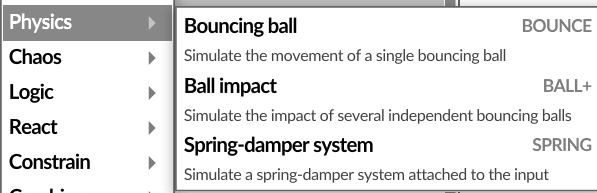
So all the crazy utility mechanisms using those Modulators should be able to make it to other gear, the only thing I had to do was setup the routing and enable it to send To DIN in the menu system (or your destination of choice).
And there’s some exotic modulators in there:
This makes the Phi even more useful to keep around after getting the Omega and I’m surprised I haven’t seen much about this aspect.
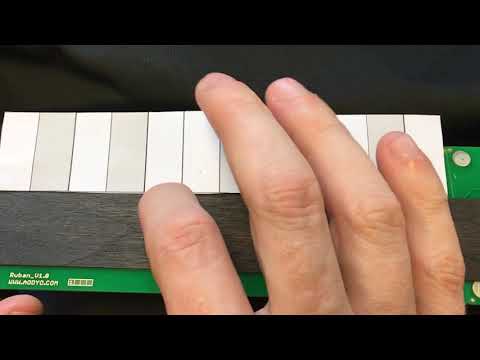
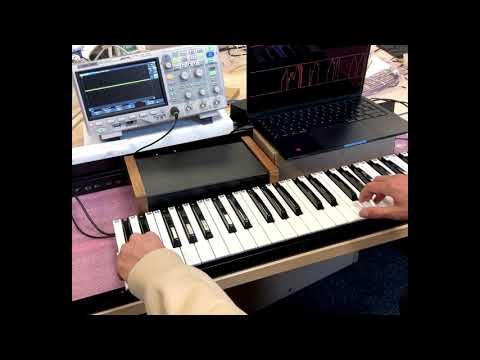
So the ribbon, which is on both models is three point multitouch, and as you can see in the video, has both X and Y position sensing. The ribbon can also be used with the strum function. Will the strum be in 2-D as well ?
Lots of possibilities for this. Does this become a sort of mini Continuum ?
With all the human interface options, and the modular patch making, along with this … hard to get my mind around where this machine might be able to take us.
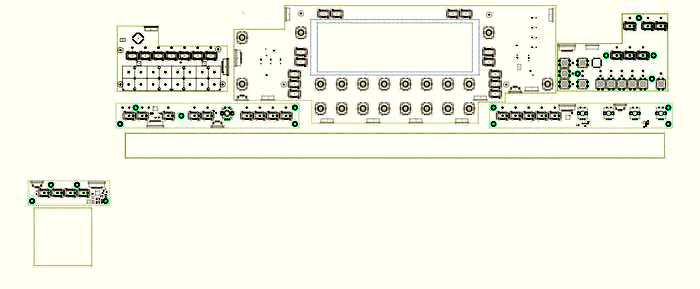
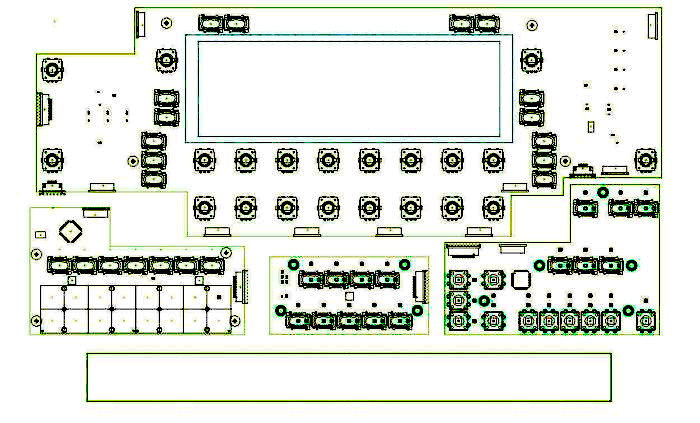
You can see the design ( as you would expect ) is a collection of sub-unit circuit boards. Also as you would expect, Aodyo is using some of the sub-units in both, specifically the Main Display with Encoders, the Patch Diagram Selector Interface, and the Sixteen Modulator Selector Interface. Notice how those puzzle pieces “interlock” differently in the two different arrangements. You’d also expect that the Processor Board would be in common, and likely all or most of an I/O Connector panel both not shown in the images.
Also you can see the difference in size of the Ribbons in both. I would expect the Ribbon in the keyboard version to be relative to the Keyboard for pitch. The Desktop, well i guess that is a little more open pitch-wise, perhaps there could be a narrow guide strip similar to the one in the video ? There is a piezo microphone on the ribbon on desktop and on the pad on the keyboard.
… Me just dreaming and for sure it would not be for quite a while, but the Omega seems ideal for a MIDI 2.0 interface. Both as a controller, and as a hardware synth device. There are a lot of details to be worked though to do this but this in the long run will be better than MPE The screen on the Omega is as large as the one on the new Native Instruments Kontrol S-Series Mk3 MIDI 2.0 controller ( thread ).
And the Omega especially the Keyboard version has a generous set of UI controls to be used ( OK no sliders ). Picture with Property Exchange using the screen to display parameters on an external device. Or on the flip side, using the computer based editor to set up names and controls that might show up in your MIDI 2.0 DAW to control the Omega.
“We have successfully tested most user interface boards for both Keyboard and Desktop versions, except the main display board, which is still in development.”
“Additionally, we are making progress with the PolyAT Fatar keyboard.”
“Our next objective is to implement the Aftertouch scan for every key.”