For some reason. This really tickled me. I’ve been chuckling about it for two minutes!
1 Like
Hm. I do really wish that it could provide separate tracks into the draw. Not sure if processing power is the problem, or that it would need to circumvent the master effects (I guess internally at that point it’s a stereo mixdown)
I would be fine with that limitation for 11 outs.
I would like to try doing more slowcore/post punkish stuff for a cooperation, and all my other stuff is not really suited for that so I’m hoping the samples work well enough, at least in the Compositional stage.
Imagine making a successor to the op-z and not addressing the number one issue of it 
2 Likes
@pidgeo @Hooger I think Seqtrak is better in terms of performance tweaking, sound parameters, polyphony, and “completeness” You can do more with samples (as you CAN load them into synth tracks) and it has more and (mostly) better FX.
But, KO is better built, more direct in that it doesn’t use the app for extra functionality, better battery life.
If I had to keep only 1 it would be the Seqtrak as it does a lot more for £50 extra.
Soundwise they both are great, I love these portable devices though I don’t think I’d ever use either to finish a track, but as idea generators they are ticking all the boxes 
The midi spec of Seqtrak is very comprehensive and it has excellent documentation and the app is great, the visualiser was for me the main draw, although I have not yet delved into it.
Main downside is the disappointing build quality, there feels like a massive disconnect between that and it’s capabilities and execution as an instrument. I definitely would not have minded paying a bit more for better construction.
Overall the Seqtrak feels pretty stable firmware wise, I have found a few bugs related to sample import, just related to play mode, nothing showstopping.
It feels like a lot deeper than first impressions, and the way that you can perform/jam with it are very nice indeed - main downside as mentioned before is loading projects requires playback to stop, I hope this gets addressed in a firmware update.
The buttons on the side - not optimal, I was hoping it would be the less important buttons, and largely with respect to performance it is, but it isn’t any worse than the OP-Z in that regard, in fact it is a little better, but honestly it is a dumb idea regardless, especially since they could have put them on the top.
Hope that helps, but if you have any other specific questions let me know 
Edit: Had a drink so apologies for the incoherent rambling
10 Likes
Thanks @darenager. Glad u figured out sample import. Have you managed to make it play poly with samples?
Crystal clear review, thx a million!
2 Likes
No, I think it is a bug, you can set poly on the app or the unit, but it still plays monophonic, also portamento does not work, when engaged notes do not sound which seems like a bug too.
Edit: One handy thing is imported samples come first in list before presets.
Another nice thing is lots of modes are remembered, so if you leave a function/page when you go back things are as you left them.
1 Like
Also Sappo mentioned that you can fav them for quick access but that’s nice to hear.
top tier response. balanced, detailed.
10/10
3 Likes
I think when you import them they are faved by default - so maybe that explains why they are first in list. Also you can add 2 tags to them, aside from category.
Nice jam here (not mine)
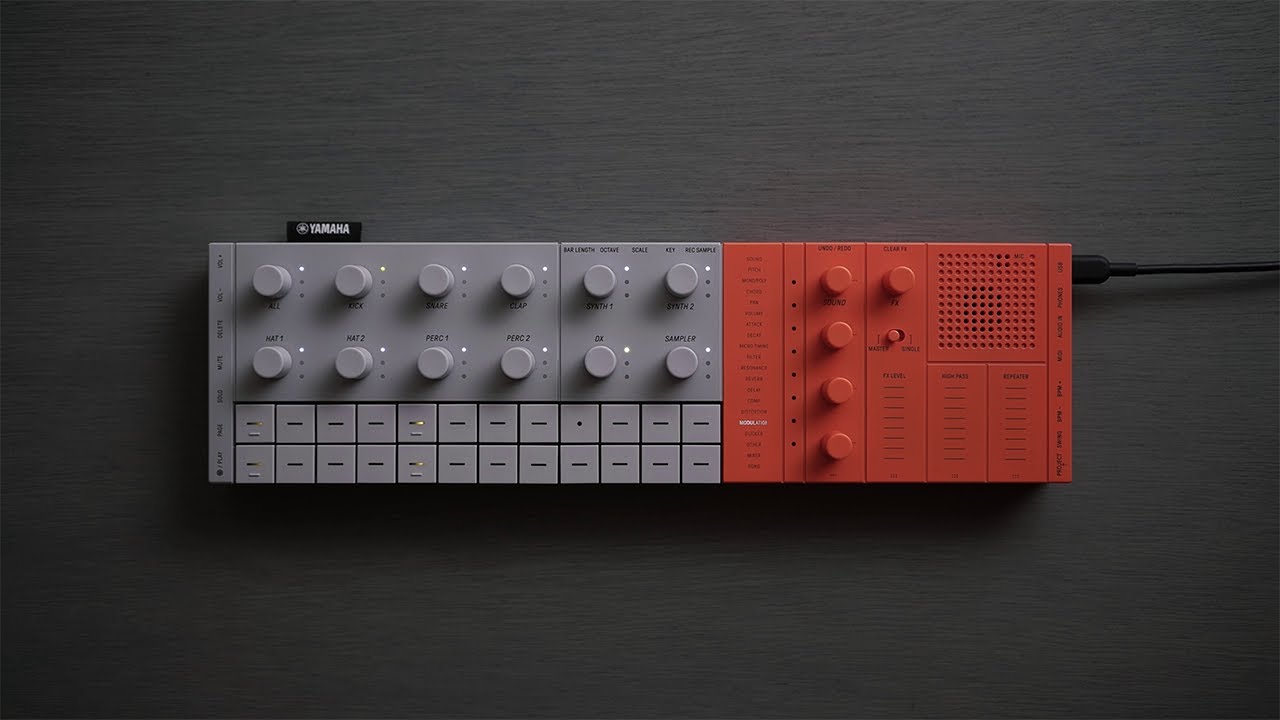
10 Likes
Thanks again for the valuable feedback.
You’ve helped me decide to buy a new one under warranty instead of waiting a few months and buying a cheap (and possibly abused) one off Reverb.
In chord mode, are all 4 notes sent out over MIDI or just the one note that triggers the chord?
Yeah, this jam is crazy 
You’re most welcome.
I think it sends all notes, but I’d have to check. I only tested midi in briefly, need to test midi out more, the touch sliders transmit sysex BUT the parameters mapped to them respond to CC, so automated fx sliders are possible via midi, which somewhat makes up for the fact they can’t be p-locked.
I personally really like the design. However, the side buttons are a bit cumbersome because they have a different tactile feel; they are rather stiff. On the other hand, the keyboard keys are very soft, spongy, and sometimes unresponsive if you don’t press them right in the center. They are those typical silicone press pads, not mechanical keys like on devices from Elektron or M8. The housing is made of very thin plastic, which indeed gives it a somewhat cheap appearance. The weight, on the other hand, is acceptable. I expected it to be lighter given the ‘budget’ build quality.
The workflow, on the other hand, makes perfect sense to me. I navigate through the interface quickly; I’m fast with the device even though it’s new. The integration with the app is fantastic. Real-time parameter updates, the ability to quickly adjust patterns, shift steps, or edit using the piano roll is simply amazing. The effects sound really good to my ears, and the selection of sounds is vast. Yes, you have to like the DX sound, or it may not make much sense, but since I do, I’m thrilled. Changing patterns for each individual sound using the dial is super interesting. Also, the ability to easily load new soundpacks and projects via the app is really cool. Everything is so fast and straightforward. The limit of 8 projects is… questionable, but since you can easily drag and drop them in and out using the app, it’s not a major hindrance.
I must admit, it’s hard to describe – visually and in terms of touch, the device falls short. It’s far from being considered ‘good quality.’ My recently purchased Yamaha FGDP 50 is in a completely different league in that regard. However, I have to say that the software and the device’s implementation (despite the quirky side buttons) are incredibly enjoyable and extremely fast. Most importantly, it’s very well thought out. Price-wise, it competes in the same league as the Model Samples or the Circuit Tracks. I would rate both of those as being better built in terms of quality. However, when it comes to software and capabilities, none of them can match the Seqtrak. It’s definitely not a perfect device, but it’s a lot of fun for me as a hobbyist musician looking for a way to unwind from the daily grind. I’ll definitely be keeping it.
13 Likes
That says a lot. About the build quality of the Seqtrak I fear
8 Likes
Are you mixing build feel (does it feel luxurious or cheap), build quality (can it take frequent use and abuse without failing) and and failure rate? ( How many really break/come broken?)
From all I gathered the KO2 has a great feel for the price, ok build quality if you have a working unit, but high failure rate from a design flaw with the slider / the packaging being not protective enough.
This one (going by what I’ve read) feels cheap, how long it holds/ what it can survive is unknown, and it seems to have a bad failure rate.
2 Likes
One things for certain. The adage ‘They don’t build them like they used to’ feels more applicable today than ever.
5 Likes
 agree on all points, it’s a keeper for me too.
Yeah. With so many quality mechanical switch copies where you get a while mechanical keyboard for like 60€ … I don’t think having the same style switches as the KO2 would have been to much.
Or the whole casing, seeing how other manufacturers in the same price range (smaller manufacturers) can do it 
2 Likes
@robotunes yes confirmed it does send chord notes via midi.
Man, the production facilities on board - the eq, compressors, fx are possibly the best in a mid price groovebox yet seen, they sound fantastic, good enough for release quality recordings to be made.
7 Likes