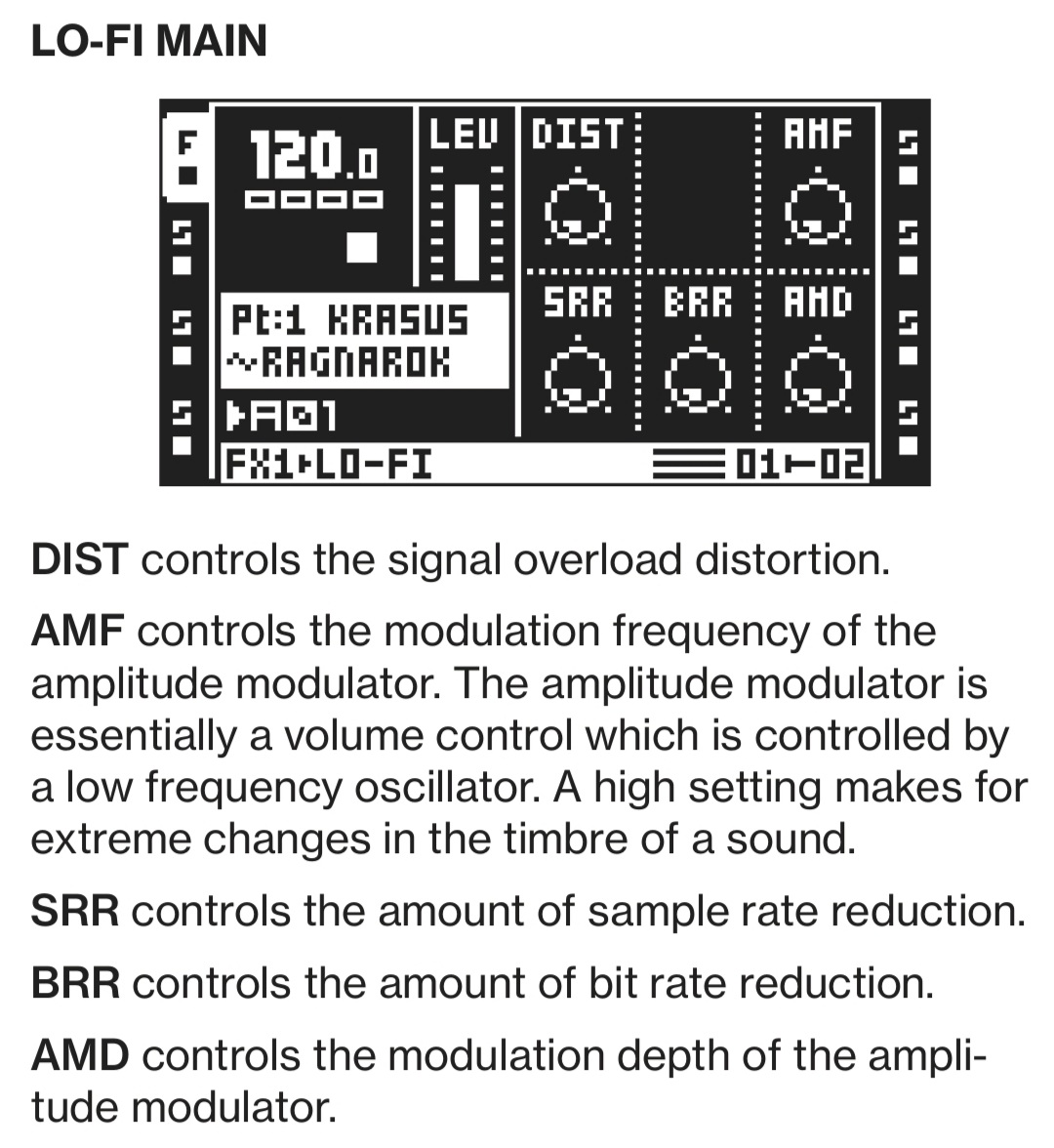
The Lo-Fi effect on the Octatrack includes an AM section that behaves as a ring modulator when fed an audio signal. The AM Frequency (AMF) control is coarse, but with a simple LFO trick you can dial in specific musical pitches with fine resolution.
The technique: Set all points in the LFO designer to the same value = 1 (flat waveform) and assign the LFO to the AM Frequency parameter. The LFO depth (0–127) then acts as a fixed offset — effectively a “Fine” control within each AMF step.
The mapping: I measured the combined parameter AMF + Fine/127 against carrier frequency across 6.5 octaves (A0 to C7) and found a near-perfect log-linear relationship (R² = 0.9999):
AMF + Fine/127 = 12.6006 × log₂(Hz) − 11.8673
This means the effect uses proper musical (logarithmic) frequency scaling, and the table below gives you pre-computed AMF and Fine values for every semitone from A0 to C7.
Note
Hz
AMF
Fine
A0
27.5
48
48
A#0
29.1
49
55
B0
30.9
50
61
C1
32.7
51
67
C#1
34.6
52
74
D1
36.7
53
80
D#1
38.9
54
86
E1
41.2
55
93
F1
43.7
56
99
F#1
46.2
57
106
G1
49.0
58
112
G#1
51.9
59
118
A1
55.0
60
125
A#1
58.3
62
4
B1
61.7
63
10
C2
65.4
64
17
C#2
69.3
65
23
D2
73.4
66
29
D#2
77.8
67
36
E2
82.4
68
42
F2
87.3
69
48
F#2
92.5
70
55
G2
98.0
71
61
G#2
103.8
72
68
A2
110.0
73
74
A#2
116.5
74
80
B2
123.5
75
87
C3
130.8
76
93
C#3
138.6
77
99
D3
146.8
78
106
D#3
155.6
79
112
E3
164.8
80
118
F3
174.6
81
125
F#3
185.0
83
4
G3
196.0
84
10
G#3
207.7
85
17
A3
220.0
86
23
A#3
233.1
87
30
B3
246.9
88
36
C4
261.6
89
42
C#4
277.2
90
49
D4
293.7
91
55
D#4
311.1
92
61
E4
329.6
93
68
F4
349.2
94
74
F#4
370.0
95
80
G4
392.0
96
87
G#4
415.3
97
93
A4
440.0
98
99
A#4
466.2
99
106
B4
493.9
100
112
C5
523.3
101
119
C#5
554.4
102
125
D5
587.3
104
4
D#5
622.3
105
11
E5
659.3
106
17
F5
698.5
107
23
F#5
740.0
108
30
G5
784.0
109
36
G#5
830.6
110
42
A5
880.0
111
49
A#5
932.3
112
55
B5
987.8
113
61
C6
1046.5
114
68
C#6
1108.7
115
74
D6
1174.7
116
81
D#6
1244.5
117
87
E6
1318.5
118
93
F6
1396.9
119
100
F#6
1480.0
120
106
G6
1568.0
121
112
G#6
1661.2
122
119
A6
1760.0
123
125
A#6
1864.7
125
4
B6
1975.5
126
11
C7
2093.0
127
17
Full writeup with figure attached. Enjoy the exploration — there’s a lot of strange and beautiful territory in here.
Ring mod is one of my favorite effects. One thing I love to do is put it in the feedback path of a delay/looper. Being able to then sequence the tuning is really something I’ve not been able to easily do before.
But the one on OT can be set fully wet, so I think it is a pure ring mod.
Sine wave generator in Logic. If I was tuning (for example) 220 Hz, I sent a 220 Hz signal and then found the OT settings that would generate the sum tone of 440 Hz. The difference one was 0 Hz.
The parameters are very close, but some fine tuning might be needed. There are some idiosyncrasies in the OT that I don’t fully understand yet.
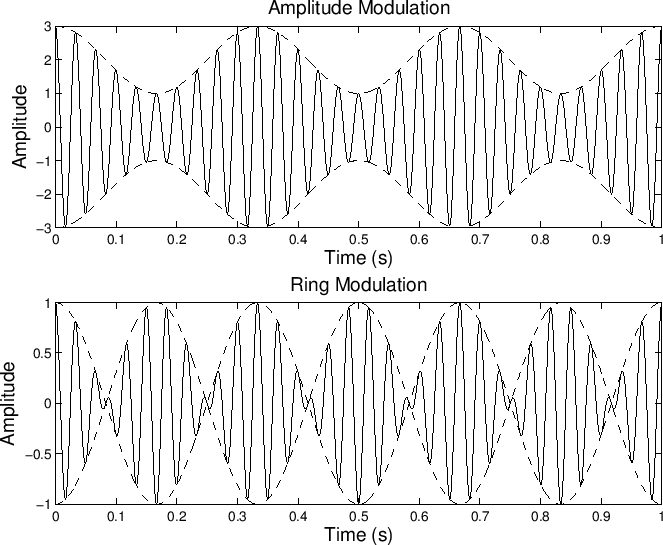
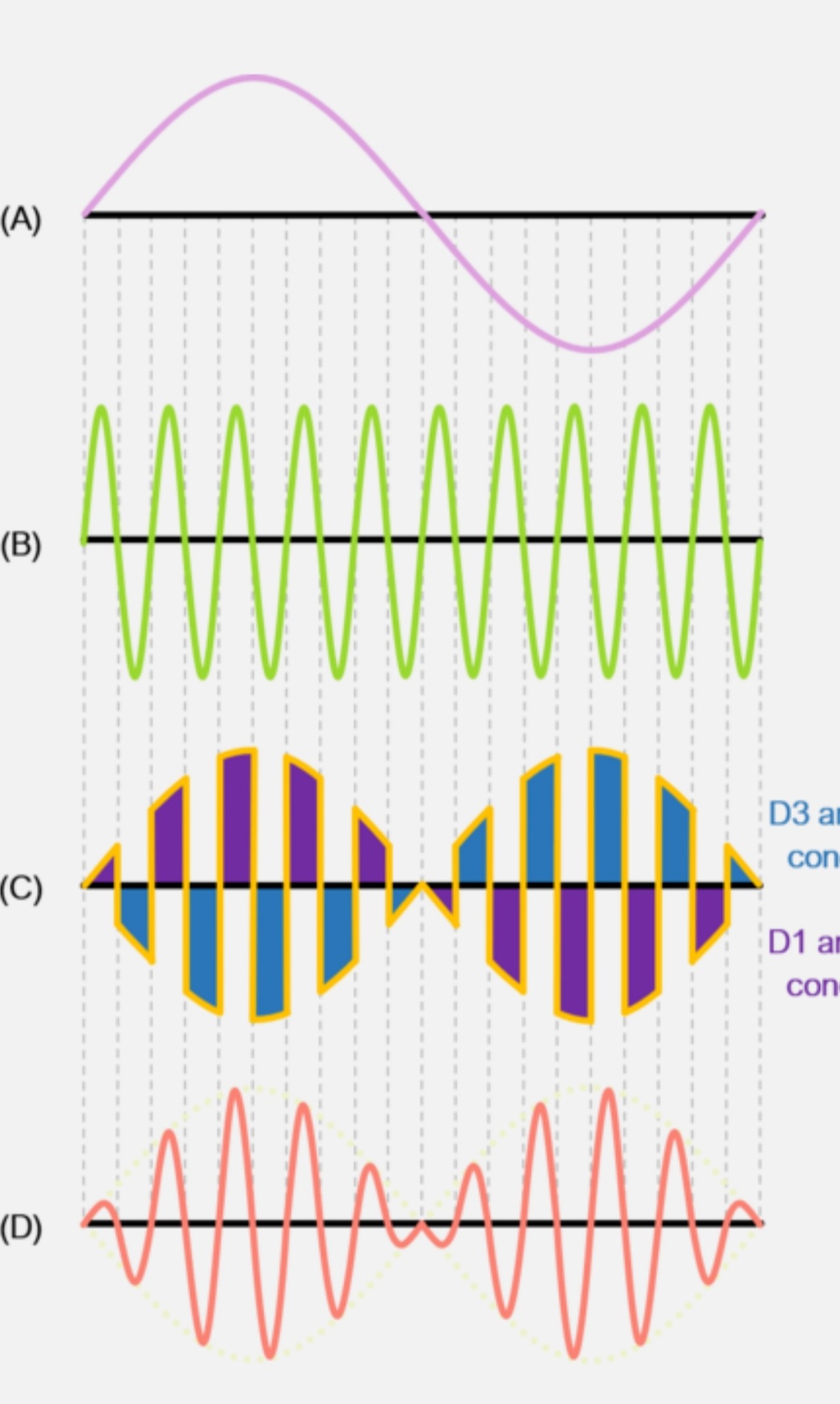
Ring modulation is similar to amplitude modulation, with the difference that in the latter the modulator is shifted to be positive before being multiplied with the carrier, while in the former the unshifted modulator signal is multiplied with the carrier."
AM is two-quadrant multiplication, where the modulating waveform is unipolar.
Ring modulation is four-quadrant multiplication, where the modulating waveform is bipolar. The modulator affects both the amplitude and the phase of the carrier."