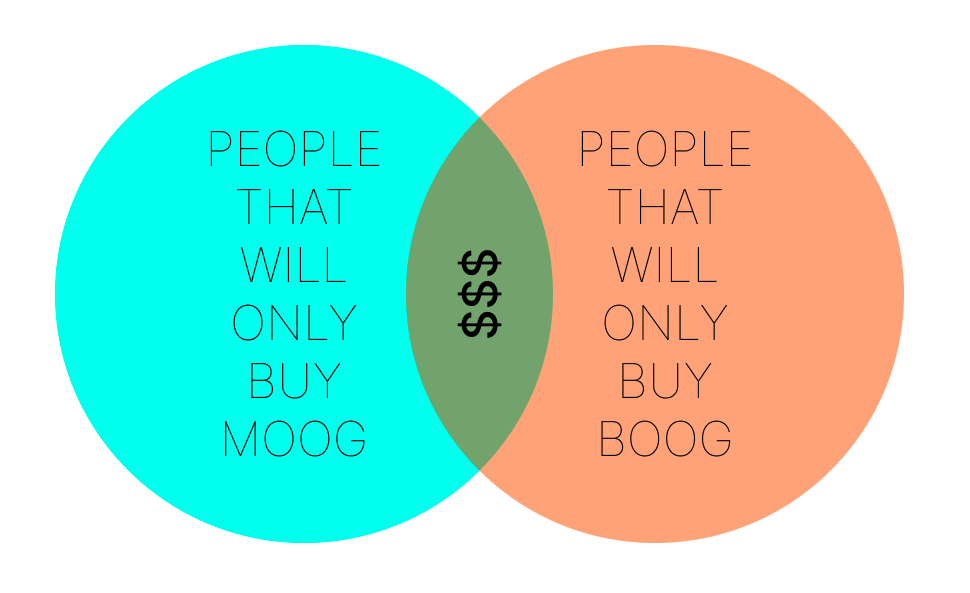
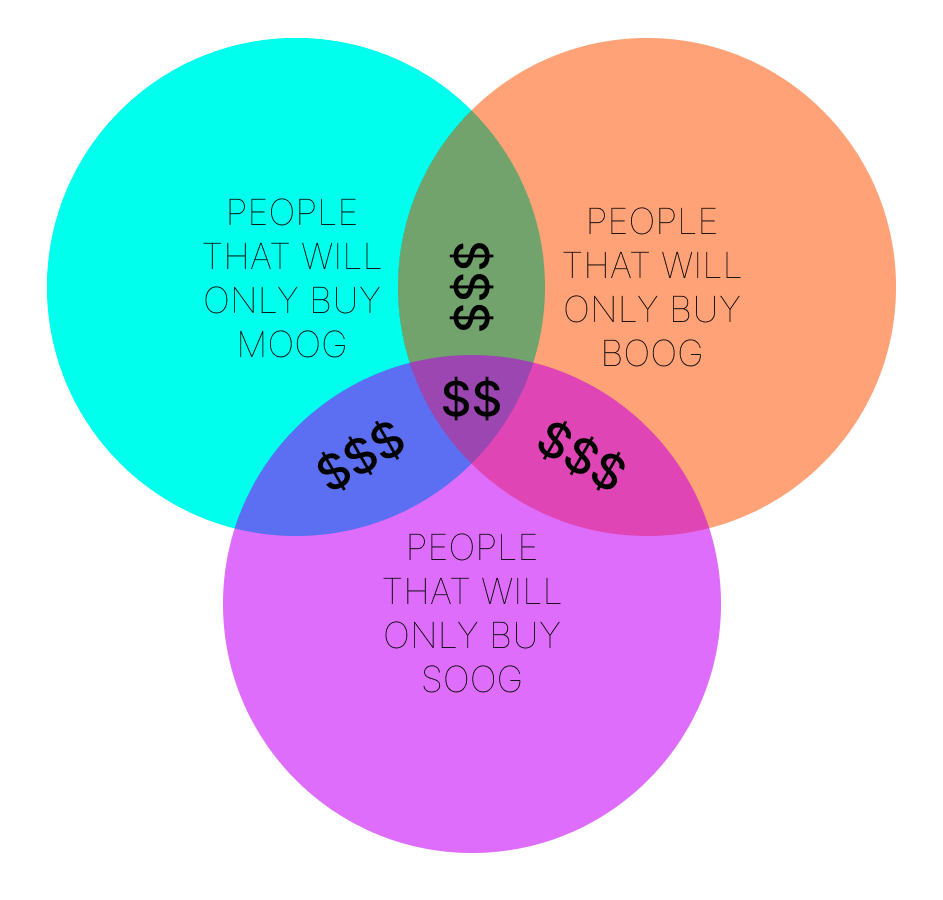
Which in itself can disrupt the market. They have the power to withhold sales from other companies without even making anything!
i.e. there will no doubt be people ‘waiting for the Behringer’ version of X, Y or Z, regardless of whether it will ever exist or not. It almost seems spiteful when they do it. Like what is even the value in them talking about Spice other than attempting to secure sales from potential buyers of existing Moog gear?
A cynical person (like me) might claim that this is attempting to take advantage of the endowment effect
I’m sure it’s been mentioned, but I can’t imagine a company like Behringer would effect a company like Moog’s sales. Moog’s target audience has never been the low budget type.
Same for something like Make Noize
If someone want’s a pair of Nike Dunks, they are going to buy Nike Dunks.
There’s still plenty of room for Nike to thrive even though Walmart makes knock offs.
There will definitely be people that exist in distinct camps (probably not as large as illustrated), but there are a lot of people that will happily buy a Boog to save some dollar, but would have bought a Moog if it were the only option available to them - those are lost Moog sales. There are countless synth guys on the youtubes with extensive collections that have Behringer gear in them, they’re not short on cash.
It’s like how you can find expensive sports cars in the Lidl carpark - everybody likes a good deal.
This argument is pretty easy to deflate; all Nike has to do is argue that some people that would have bought that particular shoe now will not. Or that the knockoff makes the value of that shoe go down.
You can’t deny that Behringer brought this practice to a whole new level.
Copying/cloning other brand’s products seems it has became the core of their business.
Can you make an example of similar practices in a different market? I can’t.
I definitely get that.
But I wonder, would those people who bought the Boog instead of the Moog, opted for a software plugin if Behringer did not exist, or possibly another cheap synth?
I can’t help but think stealing IP is more of a hit to the ego, or just incites feeling of theft more than it actually effects sales.
I’m of course completely speculating and just chunking my lil opinion in the ring because I like this forum.
Pretty much every quasi-legitimate (or better) marketing or business or economics piece I can find that addresses this question argues that knockoffs rob sales. The better the knockoff, the more sales it takes.
Oh for sure.
I don’t like Beheringer for two reasons.
They make cheap shit, and they steal IP.
about 20 years ago I bought my one and only Behringer product, a cheap Mackie mixer knock off.
It sounded like shit, swore them off ever since.
This whole synth knock off thing to me is wild, I’m blown away how brazen they are with it.
I guess I am focused on the extremity of a statement like “Behringer will put X company out of business.” That kind of statement seems greatly exaggerated to me.
For sure knock offs steal some sales as well as IP, but do they put reputable companies out of business?
It may not put them out of business, but it can certainly impact their bottom line. I presume that for companies like MN, steady sales of the Maths gives them the room to release more avant garde modules. If that steady income stream withers, perhaps the stream of funky new modules will, too.