its the same for me. i also sold the newer ones. i really dont wanna deal with that ugly mess anymore
1 Like
Thanks. I scrolled through the thread a bit and searched it with keywords like “alcohol”, but seems I missed that part.
The buttons on my DN are already a bit messed up, because someone had tried to clean them with acetone…I’ll try hot water.
1 Like
Dilute it with distilled water! Undiluted isopropyl alcohol is way too effective.
Note: Polycarbonate and acrylic glass also cannot tolerate isopropyl alcohol, which diffuses into the material and causes cracks. I destroyed a Korg Electribe 2S display with it…
Use 70% and only use it for quick wiping. Wash afterwards.
Soap can also work wonders in some cases.
1 Like
i found this one but rember also some more about it.
dont use too hot water. mine deformed because i did want to speed up the process with extra hot water after i got bored of the rubbing.
1 Like
Unfortunately in German, but there are subtitles:
1 Like
As far as I can see, the only safe solvent is water (not hot), nothing else. The only valuable method that has been mentioned somewhere here to accelerate the “rubbing” process, is to rub the button itself to a steady soft cloth, not the opposite that is the obvious first attempt everyone will try. I also have seen someone to spray paint all cleaned buttons with a simple mat acrylic varnish in order to cover the remaining particles as a last optional step. But this could possibly be irreversible.
2 Likes
the solutions he recommends dont really work good or clean also the paint away. most important they are mot tested on the elektrons.
i really try to help her and others too and you are confusing everything. why cant you just join again when you also have melting buttons and found a good, tested solution?
Just a heads up. I paid for a new set of caps for an OG Digitone, and now only random step ones are sticky again. Which is odd, as it implies it not only an environmental thing, or all of them would be similar. I say this only to brace for the fact even the new ones might face a similar fate.
3 Likes
Warm water worked quite nicely on the Func button. That’s promising. Can’t stand that sticky stuff on my fingertips…
As an aside note, I just checked all the stuff I’d cleaned with alcohol last summer and everything’s fine. But I didn’t soak them with alcohol, I used a q-tip dipped into a tiny bit 99% isopropyl alc, gently removing the coating and washing everything with a bit of soapy water.
I’m sure there are different compounds with different chemical properties and of course there’s different types of plastic that could be underneath the coating, so if you care about the stuff you want to clean, make sure to research what’s the recommended cleaning method.
3 Likes
I suggest pressing them on a regular basis, preferably to make some music. That way the surface will wear off at the same speed as it degrades, leading to bald but perfectly usable buttons and much less stress.
The price of new ones seems pretty fair to me, far more reasonable then Teenage Engineering’s moulded parts, the postage though seems a bit of a liberty.
2 Likes
The tester in the video recommends 70% isopropyl alcohol, as do many others here in the forum. I have also had good experiences with it. It doesn’t solve the problem of soft-touch surfaces being sold, but it helps to remove them. Orange oil can also help, but I would personally be careful with oven cleaner. Some brands are very strong.
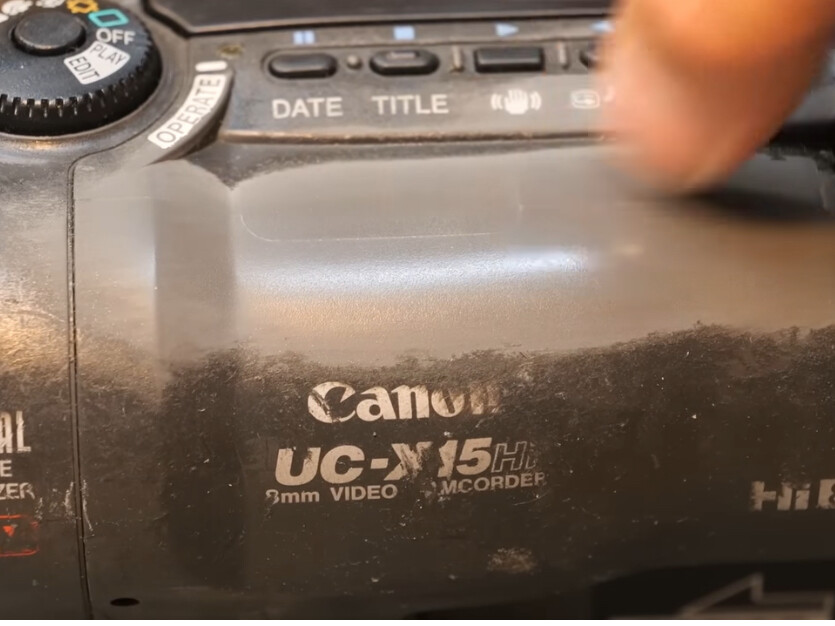
Well researched! The soft-touch coating has been successfully removed. Complete success.
the material is also on the sides. not just where you press it
1 Like
the color is gone too. this is getting weird here 
You do realize that the labeling and color at Elektron is a little different, right?
Yes, you can remove it completely—then you’ll have to re-label it. Or you can work with less pressure, less force, and less aggressively. Then it will stay on.
A finish with a suitable clear coat will seal it very well.
Beware. Silicone elastomer also known as soft-touch coating becomes even more sticky when alcohols, acetone, citrus cleaners are used.
Isopropyl belongs to the alcohol class, it only plasticizes the surface and smears the rest, the polymer itself stays basically untouched. Despite you might be lucky the plasticised surface responds better to mechanical removal.
There is industrial cleaner but that is toxic, nobody should ever have to touch it unless you want children with strange anime properties.
“Silicone remover” is also widley ineffective because it is a mix of the earlier mentioned.
Heat between 120-180°C would do a lot of break down, but so would the plastic body below too, so thats a bad idea.
Alkaline cleaner degrades PU-silicone but not Silicone.
The mechanical wipping off method is the only actual working method. Explains itself that water and silicone have no good chemical interaction at all, you can leave water (hot or not) actually out of the equation. Just wipe the damn thing - oh.
Good tool to remove most will be a simple linen dish towel you’d throw away after, hence is contaminated then. Such linen based cloth allows you to put a lot of pressure on the surface but is also stable enough while linen fiber catches the plasticised chemicals.
10 Likes
Elektron North Pole, will soon be forced to make an official honest announcement acknowledging the issue and take advantage of free shipping Santa Clause provides new years eve.
2 Likes
“To ask what happened before the Big Bang is like asking what happens North of the North Pole.”
- Stephen Hawking, May 10, 1989
2 Likes
