I wonder what potentially desirable phenomenon takes place when pitch shifting down a sample.
(edit) : actually I’d like to mimic this kind of effect without the process of sampling and repitching.
My research :
aliasing due to reduced sample rate, if no interpolation is done, can give a lofi grit.
associated loss of hi frequency content could lead to a desirable lofi-vibe.
formants shifting in case of fixed resonances, like acoustic instruments can give an artificial and interesting new sonic signature.
I think it depends on the genre of music really. There’s a pretty deep history of pitching samples in hip hop and jungle music for both the textural reasons but also to avoid sample recognition so low budget hip hop acts could try and fool RIAA or other governing bodies and not have to pay for clearance.
There’s also pitching up of samples to make use of the low sampling time on older sample percussion drum machines like SP1200 and on actual sampling workstations like the MPC line, ASXR or the Boss/Roland products which all have notoriously low sample time. Naturally after they’re on the machine they have to pitch them back down so there’s some inaccuracy in that and also the deep pitching like you’re talking about is more of a textural thing done to taste. That can sound good with jazz and some other genres but then again, not with some others.
You’re also seeing a lot of deliberate pitch down of samples in recent music employing granular or paulstretching by ambient and noise artists and some more commercial electronic artists in associated genres as texture in the background as opposed to where it appears in the foreground of other more fringe musical acts.
I mean I’m sure there’s a ton of reasons, not just the ones that you listed or that I listed, but coming from a hip hop background I know that for many years before the internet, and then after it’s popularity boom (but especially before crazy AI recognition type software could be used to automatically make copyright and DMCA claims against low budget online youtube and soundcloud uploads) that artists were doing stuff like this to disguise the samples because “only toys pay for clearance” and other such attitudes that are a lot harder to cop in modern major releases than they were 20 to 30 years ago.
Beyond that, your guess is as good as mine, style I guess? Doing what’s popular? Derivatives of doing what’s popular? Sounds good when you’re high on xanax and lean? I don’t know, there’s probably unknown factors to us both but to me, it’s more than just a textural thing and I understand why you’d focus on the composition side of things because aside from that, the other aspects aren’t necessarily obvious and out in plain sight.
Interesting thought though and it caused me to think back to some grimy shit we used to do on tracks or, still do.
Historically this was used by aritsts generating “Musique Concrete”, who used tape machines in the 1950ies and later and by playing the tapes much slower than the speed of the recording.
Many familiar sounds evolve to unexpected sound-scapes if played pitched down.
AFAI this technique has been used for all kind of FX sounds in music, radio productions, games, and movie industry until today.
For me it’s a method of creating otherworldly soundscapes. To overcome reduction of quality I use a sampler with resolution up to 192 kHz (Rossum Assimil8or)
It makes any reverb tails sound longer, and stereo effects sound wider. You get to hear more of the detail in the sound that would otherwise be going by too fast to process, ‘grains’ become audible and appreciable.
Lower pitch + longer reverb + wider stereo + more granular = a ‘physically bigger’ overall sound, which can be relatively more exciting than a short high pitched sound.
speeding things up, pitching up, emphasizes the funny nature of things…
slowing things down, pitching down, empahasizes their inner gravity grace…
and even old hw samplers never added anything in lofi charme when playing stuff an octave or so lower than the original sample, if there was no change in sampling rate involved…but common things like ground noise and noise hissing might come more into focus, once played back slower…
You guys have nailed it.
I think the outcome of everything already raised - the loss of high frequency, the warmer tone, the extra detail, the change to percussive textures, the nostalgic hauntological frequencies -
It feels to me like a very stylised compression, it just smooshes everything together in a very pleasing way.
Why is that, what happens to the sound? that is what I’d like to figure out.
Maybe mimic this with effects without having to actually sample anything…I like the sound I generally dislike the sampling process!
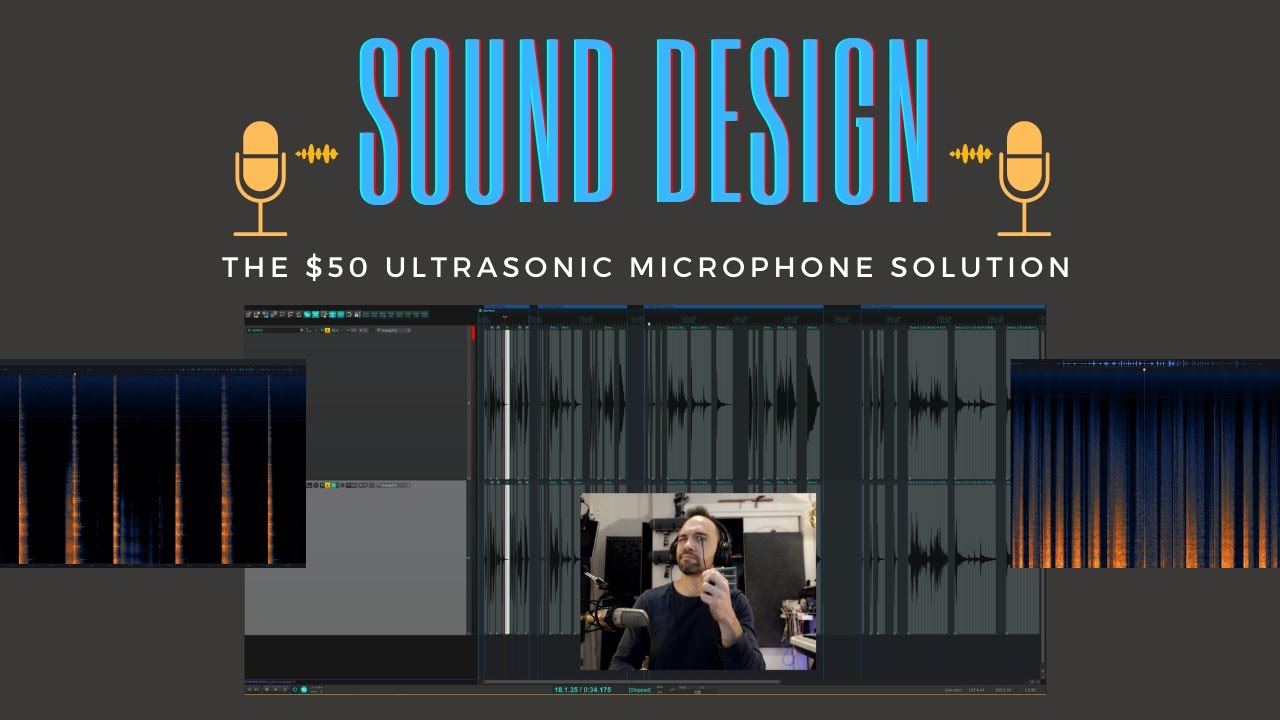
I’d be curious to hear if pitching down a 192KHz sample actually reveals significant content that was previously above the human earing frequencies
i am quite sure this is related to the fact that pitching up/down changes the formants of recorded acoustic material. also yes, when our brain expects a certain types of sound at a given frequency, having them suddenly appearing on different frequency register is certainly otherworldly for our brain.
I think, and could be very wrong, that the things that come out of a piece of audio that I greatly slow down that were not there at normal speed are quite often a result of pushing the algorithm used beyond what it is capable of, and the things I enjoy in the sound are essentially accidental errors.
Yes, I am after the sound that can happen when no specific algorithm is used to maintain the length of the sample while reducing the pitch. standard pitch shifting I would say.
I saw that samplers use different techniques to reduce aliasing artifacts while pitching down or up, like interpolation, antialiasing filters tracking the pitch, etc…
that can definitely give a special character to the sound depending on the algo
Sampling is not about playing back Reality 1:1, it’s another tool to bend it. It is not the same as recording, a tool trying to be as faithful to reality as possible.
As you’ve read already this emotion was already very popular with analog tapes. If you want a fatter drum sound you speed up the tape machine while recording.
Plenty of examples the other way, playing the tape slower so that you get impossibly fast executions. I believe there is a song on one of Earth Wind & Fire’s album doing this with there brass section. It goes faster and faster and faster. I forgot which album.
Persons use the (pricey!) Sanken Co-100k for field recording bats and other ultrasonic sources, but it would really depend on the receptivity of the mic you were recording that 192KHz sample from.
We have to distinguish at least two methods of pitching down:
playing a sample slower
using Fourier Analysis to generate a spectrum from the sample - pitching down the spectrum - Fourier Synthesis to generate sound again
It’s all about, how we perceive sound:
Each sound is a moving - fluctuating spectrum of overtones (partials) - technically speaking.
Our brain is used to recognize a sound of an object, instrument, animal, human voice etc. by analysing exactly how this sound is composed by overtone characteristics and the dynamic of motion concerning those charcteristics.
If we now play a sound very slow beyond recording speed, the frequency and the timing of the spectrum movements are changed dramatically and generate an impression of something we have never heard before.
Maybe we can compare this with a movie clip, which has changed colors and went to slow motion and we now not only detect hidden details, it also projects a very different mood - if that makes sense
Example: A couple of monster growlings have been created by this method.
If we pitch down using Fourier Technology (additive synthesis) we also change the character of the sound, but with this method we can separately change frequency and timing of the spectral movement. This method creates quite different results compared to reducing playback speed.
Hard to say, if this can be successfull. At least I don’t know a combination of FX pedals supporting this. But there are some plug-ins with “time-stretching” capability and Additive Synthesis.
IMO the most exciting results are achieved by using very complex audio material or quite short samples and use those methods like a microscope and time-machine.
Technically this would happen, if the recording contains such frequencies. But question is, whould we recognize it? Very high frequencies have very low intensity/volume compared to lower frequencies. It could be necessary to emphasize those high frequency bands by EQ-ing.