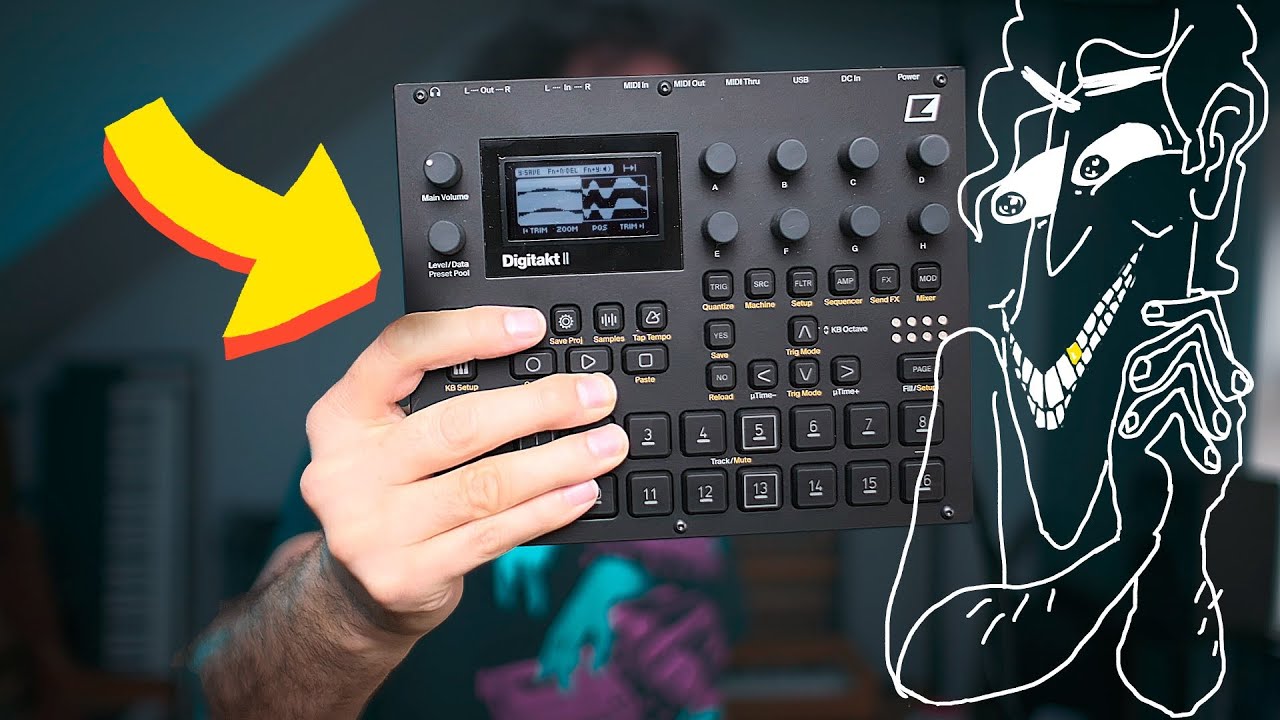
Hi, the easiest and only way is to start by loading any sample to any track via the sample slot which corresponds to encoder D on the source page.
Make any changes you want to make to your original sample (trimming, effects, pitch etc.) or if it’s fine how it is then change nothing. Once you’re satisfied with what you hear, go into the import / export menu and select export. Select a save location and then name it, you can also (at this point) add search tags if you intend to search by sample type later, otherwise skip that screen. Then save.
Once the presets are created and named, you can go back to the import / export menu and select “manage”. A list of your presets will then display, and you will select the ones you want to add to the preset pool. Any item on the list which you select will get a checkmark next to it to confirm the action. Now press the right directional arrow to open the sidebar menu and select “copy to”. From the next list choose preset pool. It will then say (X number) presets copied.
That is the easiest and only way to turn a sample into a preset and then add it to the pool.
A preset is a container file, like a .zip, a .rar or a .mkv file. It holds the sample and any settings you’ve associated with that sample. It is unique to the original sample, but it is not technically a sample or an audio file, which is why this frustrating process is necessary to put your sample into a “preset” container and then be able to access it from the pool. It is literally not a sample which is why you have to make a preset out of the sample in order to be able to use it in the pool.
The manual does not explain this part very well, but that’s how it is.
Also, in my opinion, though the preset browser is more convenient to access, it is more beneficial to the user to build the habit of going to the source page and loading samples to the sample slot using encoder D rather than loading presets (which have settings stored with them) unless your intent is to work with audio that already has settings attached (like you modified a sample and the modified version is the one that you want to work with, not the original).
The main advantage and primary use for presets should be sound locking them to individual steps when you want to use several different samples on 1 track. This was essential on the first generation digi boxes due to limited track availability and the knowledge is quickly being lost due to having more tracks on the digi 2’s, however it’s important to understand the differences in how you’d use them and why you would use one and not the other.
If you want a dry, bare sample with just it’s original audio and not the preset portion of it, just use the sample slot on the source page. That’s my opinion.
Good luck