I totally get what you’re saying…OXI does amazing stuff, but I haven’t touched mine in a while because the user experience hasn’t been all that for me personally. I should really spend more time with it, but it always feels like it takes too long to get things rolling.
I think they belong in the same conversation since Play has a dedicated MIDI sequencer. It’s not going to offer you the same connectivity as One, but apart from that it’s quite similar in my eyes.
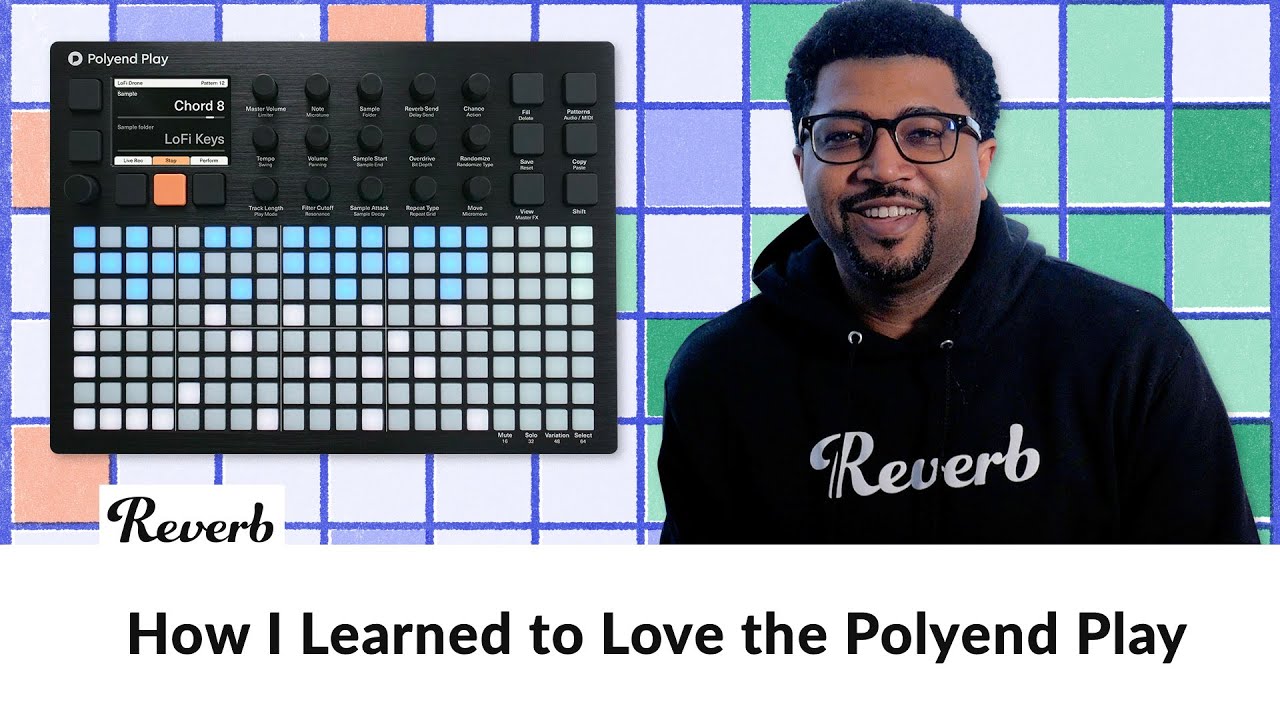
In fact I would put Hapax, One, Play, and Deluge in the same category - pad grid MIDI sequencers.
I’ve owned all 4 and currently still have Deluge and Play. Granted, Hapax and One have no built in sound generation. But if you ignore the built in sound generation in Deluge and Play, they will give you a lot of the same MIDI functionality as the other two.
And I personally like both of them better.
I like Play better just because it feels faster. Less flipping through screens, etc. and it has an intangible fun-ness about it. Plus it has dedicated solo/mute buttons per track. You can mix and match different combinations of MIDI channel/note on a single track which is great. And there’s per-MIDI channel CC mappings which is also quite handy.
I like Deluge because there is a knob interface for adding/removing euclidean steps and changing track length (per note in melodic tracks!) and it’s super fast to get interesting sequences going. Plus you can build “Kits” similar to the Multi tracks on One, but I find it faster/easier. Setting up CCs is super easy as well, probably easier than Play even. Just push/turn a gold knob. Downside compared to others is all the unlabeled shortcuts you have to memorize. But I think it’s arranger/song mode is probably the best around.
Play has no generating notes features as OXi so far the only way of generating a melody or a pattern is to randomize the Octaves up/down and that is that , apart from the randomizing samples and that also is to take carefull into account were you ned organise samples properly unless chaos is on the agenda, Muting on Oxi seems to me quite fast and I’m not comparing the 2 because they are similar in concept but not close enough, Play has a fast throw in notes BUT at the moment of writing a lack in FX settings ( so the FX are that and stay that while I would prefer to have a normal Delay were to set input and time myself, because those presets not alwyas work in my case. ) I’m confident the Midi side will grow but I don’t think Polyend decided to work on a clone of Hapax or Oxi otherwise you would not have a sample player, they both midi sequencers YES but the interesting ( and close to Oxi ) feature of Play is the Midi Chord ( samples are mono so…) but they are 2 of a kind, I also connect them both for allow Oxi to Generate instead but I was not happy , apart from the fact that I’m not a huge fan of self generating music ) PLenty to see ahead. oh… I forgot the Oxi Harmonizer and in the performing too … that is a cool feature in my view. again I don’t enter any debate of who’s better or worst, every machine has Pro and Con, is up to us to use it in a way or another
Still very tempted by this device. Also by the oxi. Still looking for that magic inspiration device for coming up with different stuff than I usually would. Probably doesn’t exist
How about a friendly contest. 4 participants each wielding one of four: hapax, oxi one, deluge and play. 10 musical tasks (unknown beforehand) to be announced in a series of timed performance. Done as a live stream. Of course the participants should each be very versatile with chosen device.
Not quite but it does have scales/quantizing so you can randomize within a 1-2 octave range and lock the output to a scale. And since you can define the percentage of randomization you can easily get 1.5 octaves, .75 octaves, etc. within your chosen scale.
That is exactly what I wrote but not exactly % and density and usually off grid but I can move the sequence, like I said hopefully it will get better, as a customer I have my Pro points and negative ones like all the gear I have and possesed since my Ensoniq EPs 16+ back in '92
I think I’ve arrived at my favorite sequencer and that’s the Play. This is coming from a person who has used Elektron faithfully for over 20 years. Now I’m using both in my compositions. The Play is my jumping off point then I go to the DT. I tend to write my own melodies then let the Play morph em a little. This process has been a revelation for me.
question, if I record some drums into the Play from some drum pads nord/roland/alesis what kind or how many levels of randomization can i use on them after the fact?
I use the Play to sequence the DT for chord progressions. The play offers plenty of chord structures. All I have to do is pick the type of cord and root note. I’m essentially using the DT as an multitimbral synth but I still use the internal sequencer as a auxiliary. It’s great to have an external synth that maintains itself as you completely destroy what’s going in the Play with its performance tricks. The Play will go to some very glitchy territories but it won’t effect anything midi so I’m using that as an advantage.
I haven’t tried recording any midi into the play but once you do have a sequence going it can be manipulated beyond recognition. You can add random notes, or have triggers muted randomly, you can have the samples randomly changed or the pitch. There’s also plenty of options on how you want the track to play for example forward, backwards etc… Not to mention you can also change the playback timing or the amount of steps. You can also move the track around backwards or forwards. The options are ridiculous. This is all before you even touch the performance section.

 But there are still devices that speak to you immediately and others you where you have to fight for it