Just for the sake of speculation, Fatar probably had plans to produce a bunch of Poly AT keybeds for the Anyma Omega product that has been cancelled…
“Probably” doing some heavy lifting since I couldn’t find anything on Fatar’s site.
You won’t find any relevant information on any keybed manufacturer’s website, so searching there is always pointless unfortunately.
1 Like
Fair, I did see that supposedly the same “mono aftertouch” keybeds were being utilized by Waldorf elsewhere.
I could always email, but effort++
The new Dreadbox Artemis doesn’t come with a keyboard (unless there is a keyboard version to be announced) so I wonder whether Dreadbox is announcing a synth with PolyAT in the next days, or that was it for now.
The pertinent quote from the article linked above :
Q: Any hints on a new Dreadbox release? Can you reveal what you are working on right now?
Y: We are currently working on a new synth that is probably going to be released in 2024. And for the first time, it will have keys and it’s not going to be a desktop synth. So far we haven’t used keys mostly because of the manufacturing process and secondly, because it’s not that easy to find actually good keys. We’re now planning to use a Fatar keybed which has probably the best keybed you can find. But they do make a ton of difference when you play them so I decided to have the best possible keybed for our first synth with keys.
My read of this is sometime this year, and not necessarily a keybed with poly-aftertouch, though that would be nice.
ADDED : May 2025 mid-Superbooth and no sign of a Dreadbox keyboard synth, though the Artemis is capable if you add your own appropriate keyboard controller. Any thoughts @rklem ?
2 Likes
Sorry, no, apart from that I find it a little weird to post such a concrete announcement with no follow up. Luckily I snagged a Murmux Adept in the meantime so I’m not in the market for it anyway, but perhaps Dreadbox will surprise us at SuperBooth.
So it’s not Dreadbox ( or at the best not yet ) …
But a company that really is about to release a very interesting eight voice analog poly synth with the Fatar polyphonic aftertouch keybed is Frap Tools with their Magnolia. ( thread )
So in addition to being analog with poly-aftertouch, some special aspects with the Magnolia is that it is bi-timbral with two oscillators per voice:( one “West Coast” and one “East Coast” ) with analog through-zero FM, wavefolding, and Flip sync on oscillator one, and variable waveforms, PWM on oscillator two.
In addition it has :
- Independent lowpass and highpass filters with resonance
- Linear filter FM
- Loopable ADSR envelope generators on oscillators, filters, and VCA
- Three LFOs with waveshaping
- High functioning and easy-to-use modulation routing system
- PLUS more to come, they are working on other as yet undisclosed features.
The fact that you can map the polyphonic keybed controls to all of this makes this synth a very expressive and unusually capable analog synth.
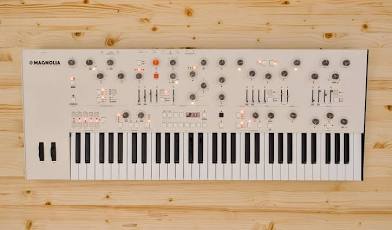
Looking forward to the unveil, hopefully coming up soon.
1 Like
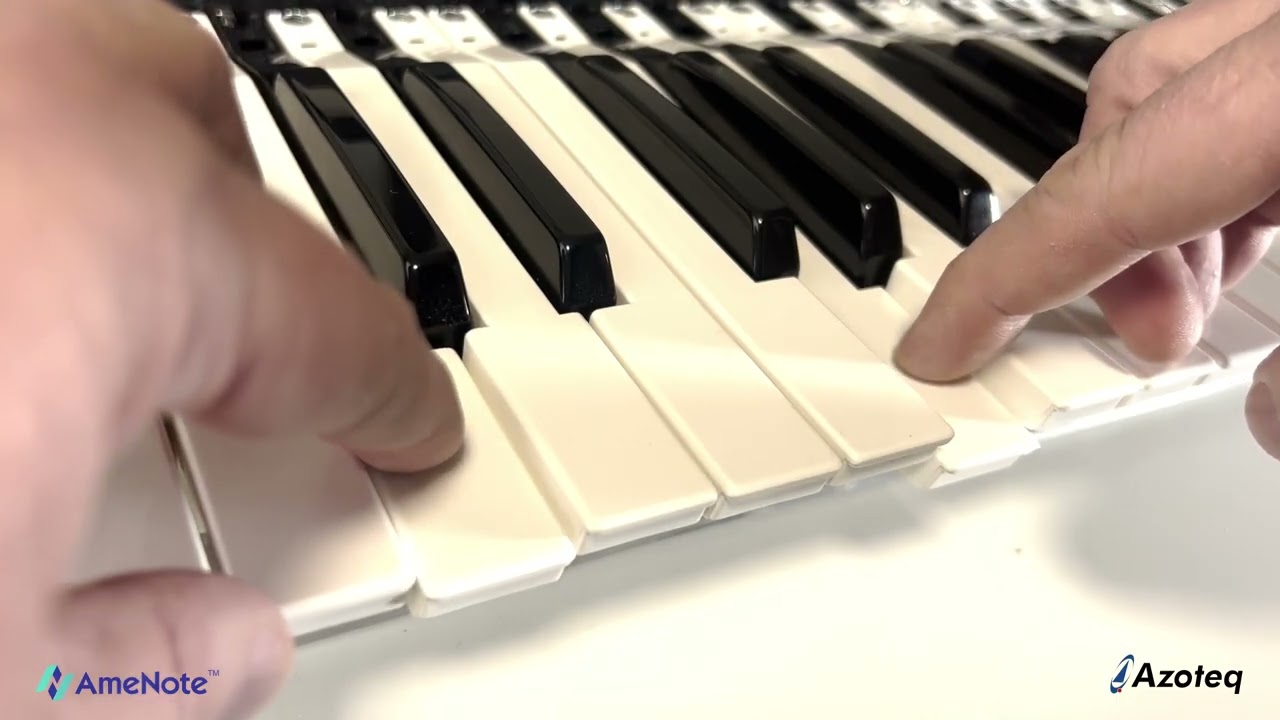
Not speculation but… There is this keybed by Azoteq mentioned in this year’s MIDI awards. Supposed to make polyphonic aftertouch, MIDI 2.0 and MPE keyboards more affordable. Supposed to offer the full range of vertical signal that the Osmose and the Polybrute 16 have.
3 Likes
Azoteq makes a wide variety of sensors and related technology.
Hopefully this keybed tech will see a lot of use.
( That part is speculation. )
Fixed that in thread title.
1 Like
Modular maker This Is Not Rocket Science has unexpectedly thrown its hat into the ring with another Osmose-like, full-motion keybed that it is marketing to instrument manufacturers.
Like the Azoteq keybed, it doesn’t do the Osmose lateral pitch bending, but has an ultra-precise position/force sensor that they claim to be in a class of its own.
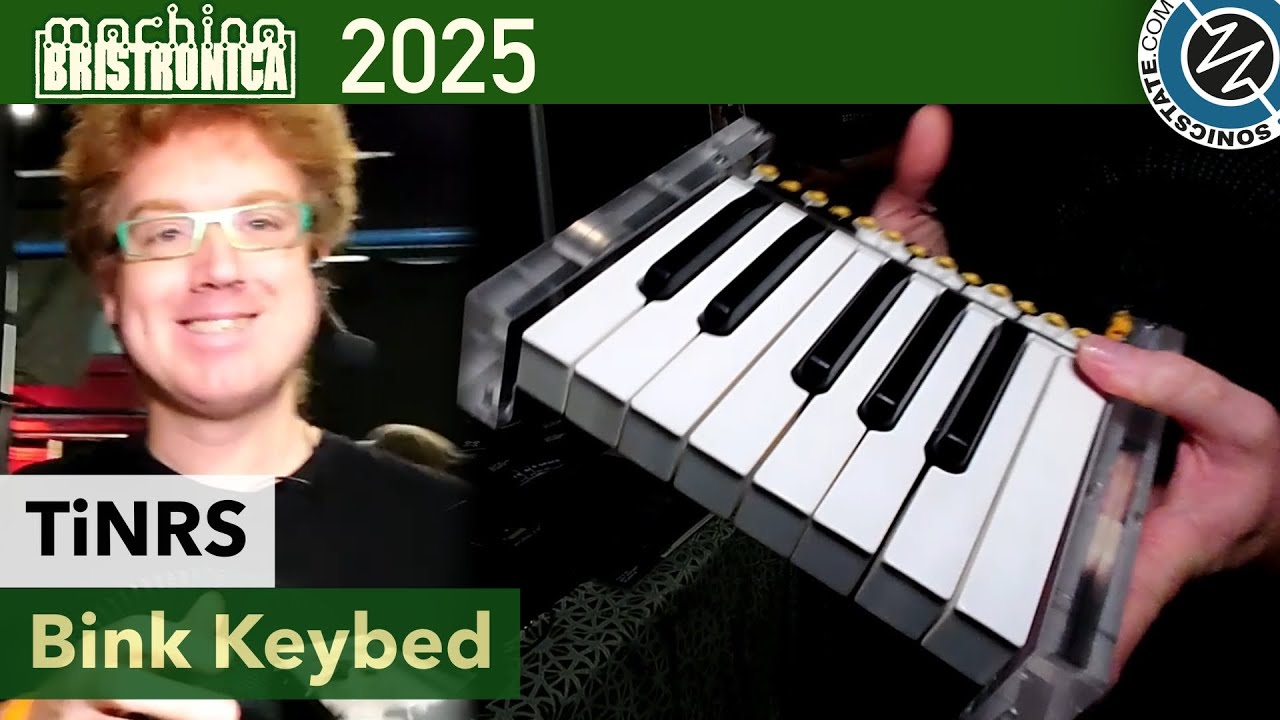
Fatar used to be the only game in town for premium keybed suppliers, so it’s pretty cool that we now have ASM and will soon have Azoteq and TINRS delivering next-gen keys. I hope we see one of the latter in a MIDI controller.
4 Likes
From blurrghost :
And the trend certainly seems to be in that direction.
Medeli ( OEM )
Fatar ( OEM )
Arturia ( proprietary )
Expressive E ( proprietary, OEM ?? )
Sequential ( proprietary, available to Novation )
Azoteq ( OEM )
TINRS ( OEM )
Behringer ( proprietary, quite likely OEM )
Have i missed any ?
( I have not included several flat non moving p-at keybeds. )
Add to this any being quietly developed.
Note too, many of the above come in various sizes and types ( synth, piano, maybe soon organ ? )
It’s for both digital and analog synths.
This sort of competition means improved quality and features, and dropping price. There may come a cross over point when except for the cheapest, the poly-aftertouch will eclipse channel aftertouch keybeds.
Even mono-synths can use p-at keybeds, like with aftertouch control on arpeggiators ( a feature pioneered on the Korg Keystage ), or on a MIDI chaining feature.
They may be funny in an annoying way, ( Robin Vincent made a humorous video about the Sequential Fourm ( post ) ), but it’s hard to miss the incoming surge.
3 Likes
You forgot Roli: Piano Create | ROLI
2 Likes
1 Like
Osmose is definitely proprietary because on their website they write:
Developed by Expressive E, the Augmented Keyboard Action (A.K.A.) is the technology inside every key of Osmose.
What i mean by proprietary and OEM.
OEM - The keybed is available for use by other manufacturers in their products.
Proprietary - The technology is being kept proprietary to that manufacturer’s own products.
There has been some loose speculation that the keybeds from Expressive E and Behringer could be available for use in other manufacturers products.
In the case of EE, i would consider it in the realm of possibility given their relation to Haken, they OEM their synth engine from Haken, their corporate structure, and the size of the company – OEMing would be a productive way to grow the company. On the other hand, you might think it would already have happened if it was going to.
In the case of Behringer they already OEM so much of their stuff primarily through Cool Audio, so they are already open to that sort of arrangement with other corporations. Plus the electronic interface to their p-at keybed was designed to be a piece of cake to interface with.
2 Likes
WARNING : This post is about business. If that makes you feel uneasy, or bored, skip this post.
Now with the release of the 61 key version of the Osmose, and on learning that EE has moved manufacture of the keybed ( and Osmose ) in house to their own factory in Poland ( from a third party maker in Shanghai ) it’s smelling more and more that they have OEM plans in mind with the keybed.
A large issue for companies that both OEM, and retail their own systems ( both Fatar, and Medeli do this as well ), is that you set up a situation where you may be competing with your OEM customers, and your OEM customers may compete with you. You want to keep this to a minimum, and draw clear lines. Keeping confidentiality across separate divisions of your company and keeping a clear and contained focus for your proprietary use of the keybed is very important. You want win-win situations for both you and your customers.
OEMing also means you potentially will be selling keybeds to two separate companies that are competing with each other. You don’t want any appeaeance of favoritism, with features, volume, pricing, or even on the personal side of the business. And keeping confideniality, and secrecy, is extremely importance.
Lots of challenges, but rewards too, as it diversifies your companies income, and establishes a greater base to continue your growth.
1 Like
TiNRS is working on a full synth – Bigfish – using this keybed, scheduled tenatively for Summer 2027 ( post ).
The keybed is actually called the Bink Keybed from Binkhorst Creations. It will have physically adjustable action.
Expect availability for the keybed in Summer 2026.
PRICING - excluding taxes and shipping
Bink49 development keybed €240
Bink13 one octave €100
Bink25 two octave €133
Bink37 three octave €166
Bink49 four octave €200
Bink61 five octave €233
Bink73 six octave €267
Will be available to lower volume producers !
It’s possible that more info and face to face meetings might be possible at Superbooth 2026.
5 Likes
If you are interested definitely watch this video. It is with Nick Batt.
This can be set up to go beyond poly-aftertouch in sensing ability.
They can potentially make a 97 key keybed !
The manufacturing ( lights out ) in Europe, is also a part of this.
It looks like we will see this being the keybed from a lot of synth makers.
Every other keybed manufacturer will need to up their game, or …
4 Likes