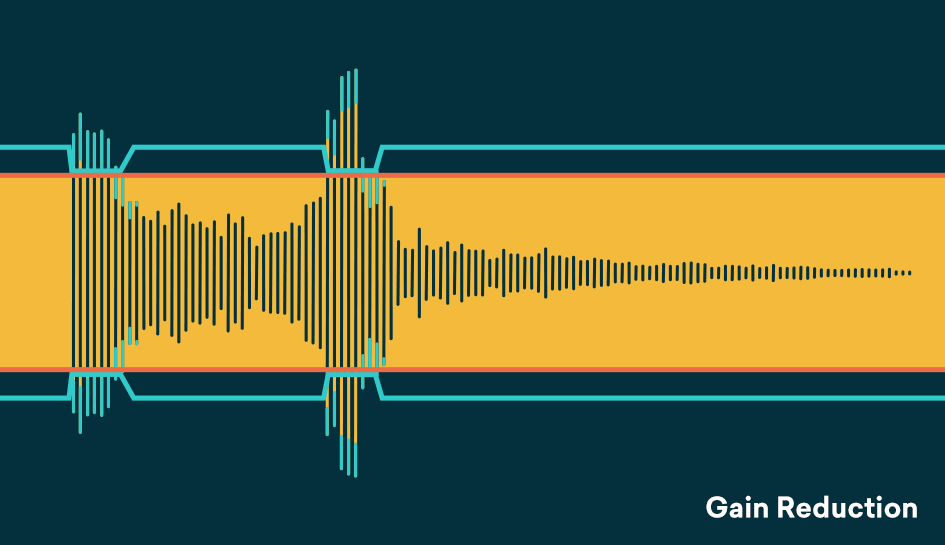
Took me one entire hour of experimentation, but I think I figured out the Threshold and Ratio settings, more specifically what the numeric values actually mean.
Basically I fed all sorts of materials into the compressor at different levels, and tweeked many parameter combinations, and analyzed the signal levels with Insight 2. I think I might have found out something really interesting: each THRS value equals to basically half a dB in gain, all the way from 127 down to the noise floor. A THRS of 107 is roughly a threshold of -10dBFS, and 87 a -20dBFS.
More importantly, the RAT value seems to represent a percentage (out of 128) of total gain reduction! An RAT of 64 reduced the level over the threshold to 50% AT ALL TIME, which is equivalent to a ratio of 1: 2. Similarly, an RAT of 111 reduced the level over the threshold to about 1/8 and 114 to 1/10, meaning that the effective ratios are 1: 8 and 1: 10 respectively.
I tried to google this but could not find anyone else mentioning it.
Hopefully my findings are correct and can be of help to you.
Thanks for the information. I’m also not sure of those values comparing with plugins or real hardware, but speaking of compressors, is it okay to use different sort of compression on a single track, then another one on submix and another on Master bus? Or if I put compressor in my submix chain then there’s no point to use it on a single track as well?
There are lots of articles all over the web tou learn how to use compressors, but I’d say that in the case of the Octatrack, which is not a ITB production studio but a creative electronic instrument, I’d say do whatever sounds good to you. However, it doesn’t hurt to study conventional compression techniques: that makes it easier to understand what’s happening exactly if you get lost (like: my track sounds lifeless though my sources are clean, WTF?). It also makes it easier to achieve a certain sound you have in mind. (Hint: yes, putting compressors on individual tracks, and a compressor on a mixbus, and then one on the master IS a conventional mixing technique )
Excuse my ignorance on compressors. How is the Gain here your talking about applied to dynamic range(loudest and quietest parts of a signal) which compressors are used for? Arent you just affecting the volume here?
Oh i see cheers. I havent used the comp on the OT yet. I will check the manual to see what the make up gain is. Thanks.( i’ve never used a compressor before)
In simple terms, the ratio is how much gain reduction is applied, threshold is the level that if crossed makes the compressor act, attack is how fast the comp will start to act, release is the time the comp takes to recover, and makeup gain is the gain after the reduction.
So you’re reducing gain, squashing part of the waveform (based on how threshold is set), but you’re pulling the gain up again afterwards.
Haha, I didn’t know^^ I’ts just that I prefer reading and when I post articles, many users seem to prefer video instead. So I try to find both options.
But now we have pretty much hijacked this thread^^Sry.
 )
)