Did anyone see it too?
That looks like the perfect dawless recording tracker.
Moderator Edit : Image for info

Did anyone see it too?
That looks like the perfect dawless recording tracker.
Moderator Edit : Image for info
very nice. i wish it did better than 44.1, but it certainly has enough inputs to keep me happy in my use case. I could be persuaded to abandon my Spire for this.
This looks cool. I was wondering when we would get some next-gen multi-track record-ers. I have been looking to pick up something like the Tascam Model or Zoom Livetrack, because for my needs they would mostly do what I need, although in the end, they are still basically just mixers with recording capability. But this is looking pretty intriguing as well. They really packed a lot in there as well with the amp modeling, built-in synths that be played via midi keyboard, and that nice and colorful touch screen.
Oooo. I have a Bluebox that I originally wanted to replace my R24 for portable MTR duties, but it’s never managed to step up to the task. But it does enough things better than the R24 that I don’t want to get rid of it, either. Maybe this will be the device that lets me ditch both?
Edit: Oh, weird. Only the first two tracks take ¼ inch? Oh well. Back to the drawing board.
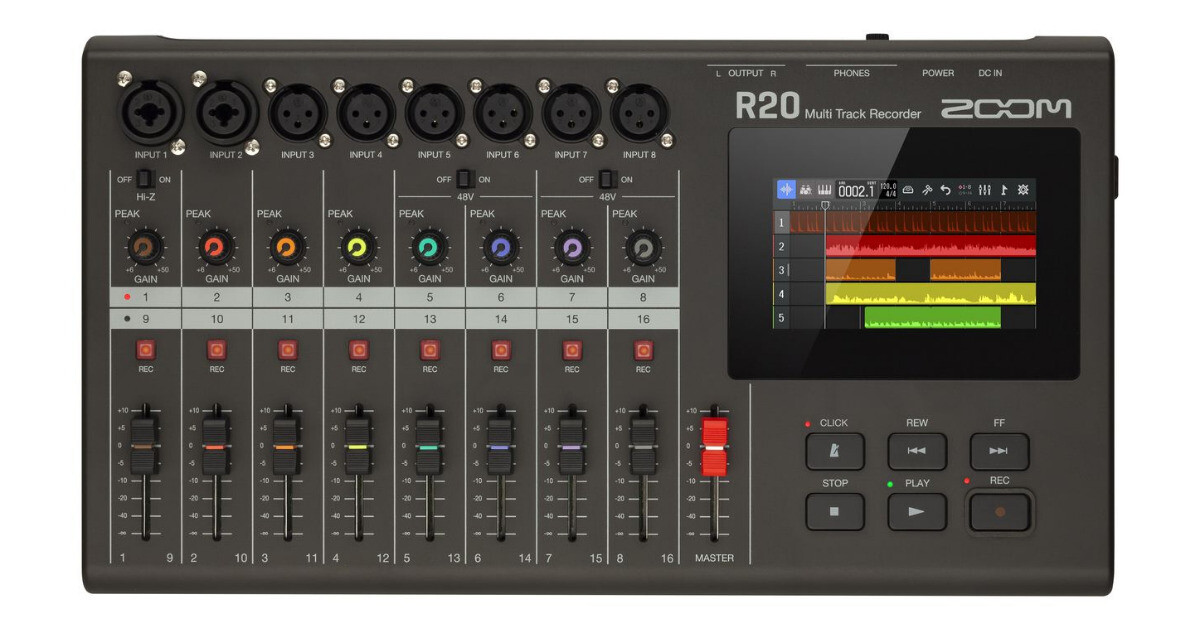
A big negative in my book is that only tracks 1 & 2 have combo input jacks, the other six are XLR.
I hate having to deal with getting new cables, adapters, worrying about unbalanced/balanced, etc. The combo jacks are standard on their Livetrack series, so maybe they should take notes from themselves. And on the Tascam Model 12, they have the combo jacks, and each channel has the instrument button. I guess it makes sense why they are advertising a drummer all over that page. It is for people who have a lot of mics they need to record.
Yup, even the R24 you mentioned had the combo jacks on all tracks. This seems like a lousy way to save a buck.
Right? The R16 too, if I remember correctly. What a weird step backwards. The only thing I can think of is a combo jack must require more internal space to accommodate the ¼ jack than just an XLR? But still.
The R24 is just, like, plug anything into anywhere (or use the on-board mic) all while running off of batteries. Guess I’ll be holding on to it for a while longer.
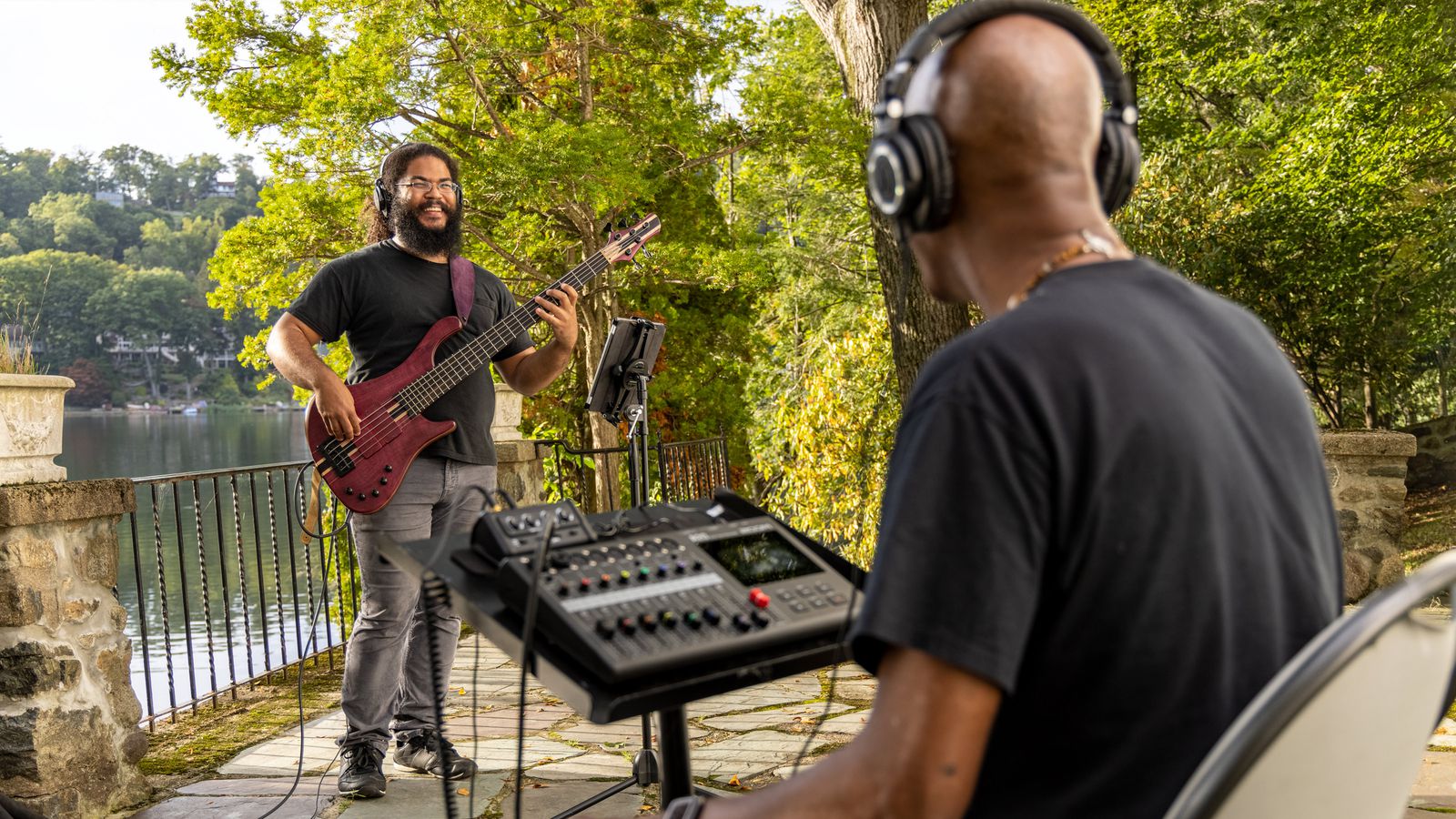
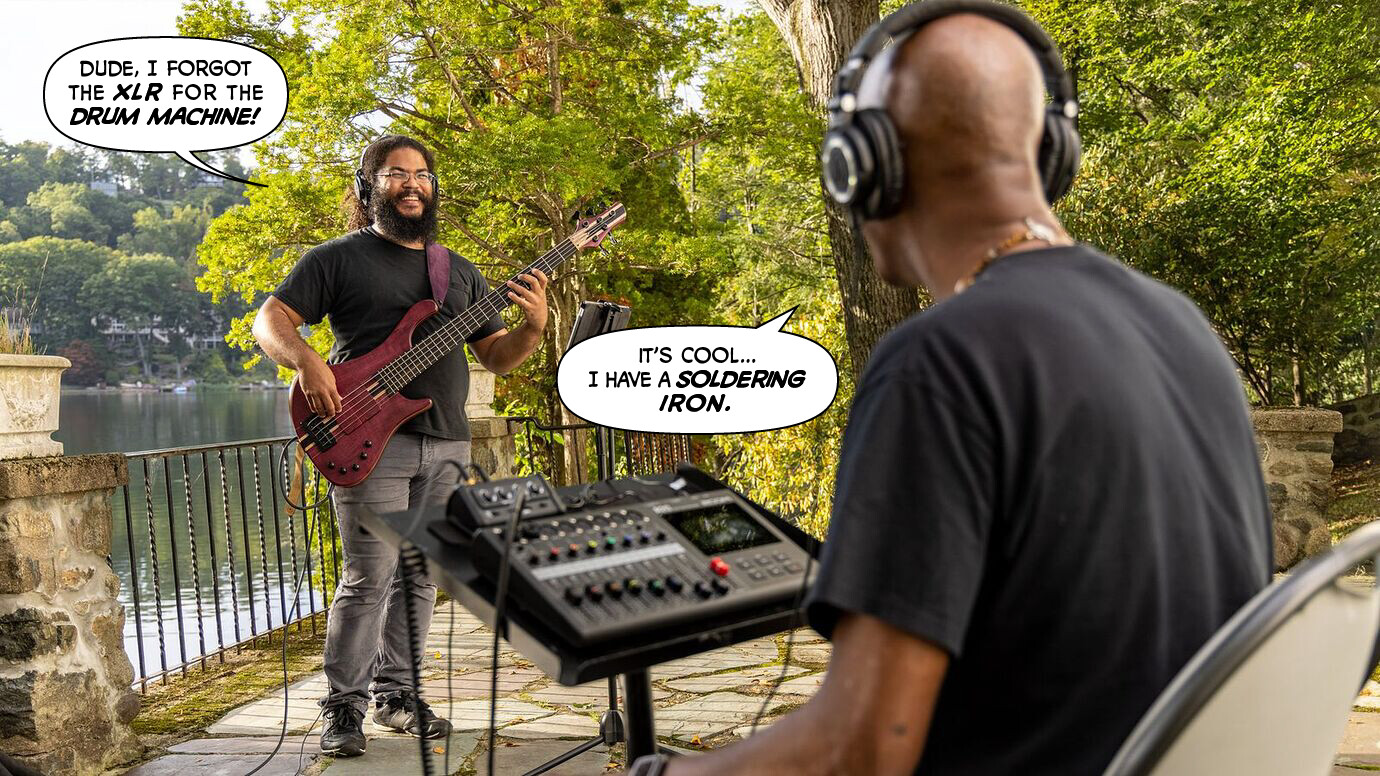
This has to be my favorite pic from the web page. Remember on their Livetrak series when they gave you like four headphone outs. Yeah, you get one here, and they have to use a headphone amp so the bass player can hear what is going on also, haha. This is already looking like a clunky setup. Now wait until people have to get plugging in adapters and maybe some DI boxes and whatnot because of all the XLR inputs.
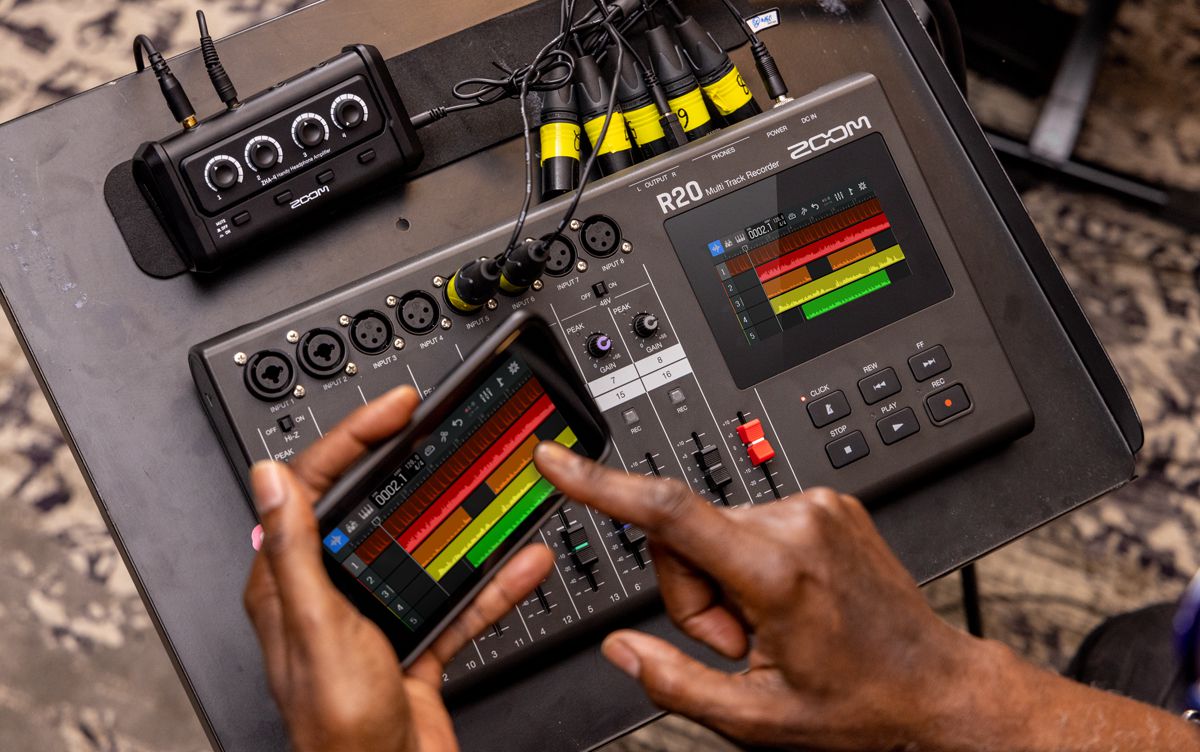
And then this one here is like, hey, be prepared to take that snake of XLR adapters wherever you go. You will need them!
Ugh XLR
Close but no cigar in my book.
Seems a bit too fixated on live instrumentation(in the strictest sense)
Guitar player + Bass Player + Drums: that’s all thats accounted for
The device seems too fixated on that instead of being malleable to other players/formations
That guitar bloke in the picture is having so much fun and all because of the r20.
Got to love marketing.
For a brief moment there wondered if this might be a worthy successor to the old SP808 4-track that I loved so much. Sadly, it isn’t.
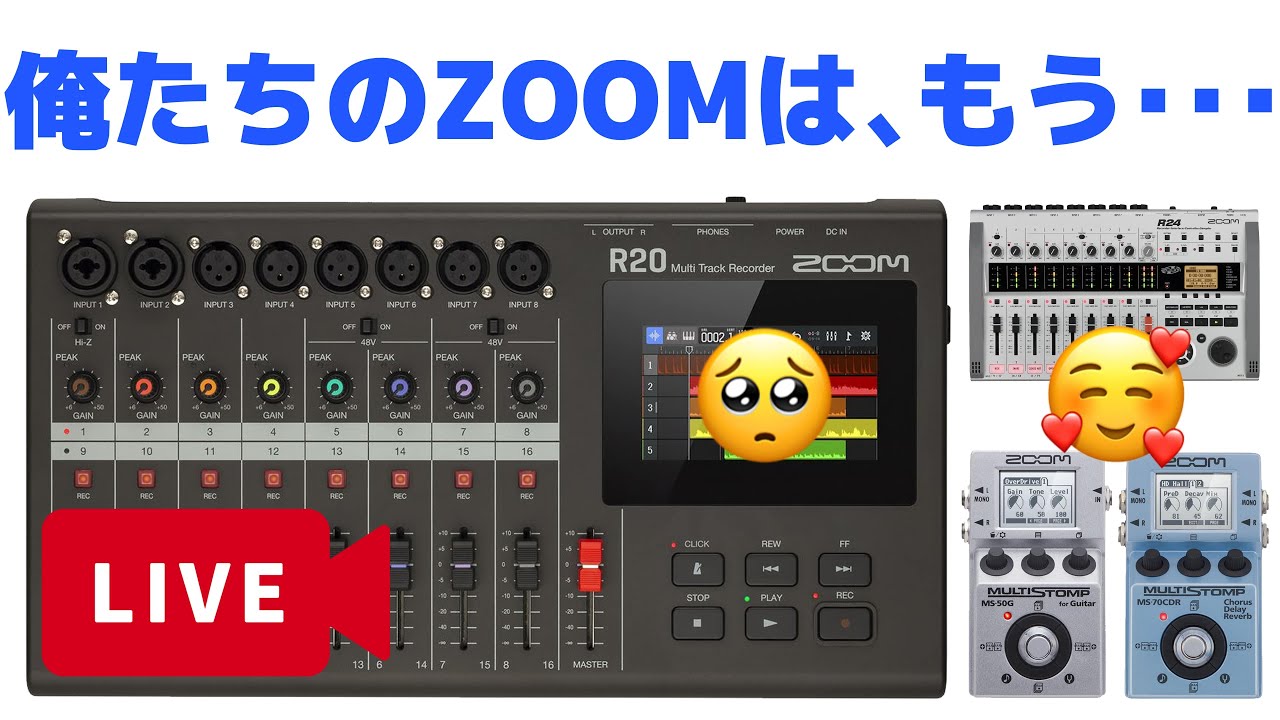
YouTube has a video with it in from Gakuchannel that shows it for sale at 49800 yen - currency converter tells me that is £325. If it has midi sync this would be GAS worthy for me!
No midi either, right? Maybe over USB only.
nope - combis, XLRs, Jack sockets… in the Neutrik format they’re all essentially the same size barrels on the back. I think this is actually a design choice from Zoom - they evisage this for ‘band’ recordings. As long as those channels have the correct impedence range or can be padded down for line use it’s no biggie really. Plenty of pro stuff has XLR only ; the Yamaha DM-1000 desk in my commercial studio is all XLR, but we’ve got a host of line level kit plugged into it.
…in fact looking at this again, I think the only reason the first 2 channels have combo jacks is because they are Hi Z switchable ? So you can plug a guitar / bass straight in with a standard instrument lead.
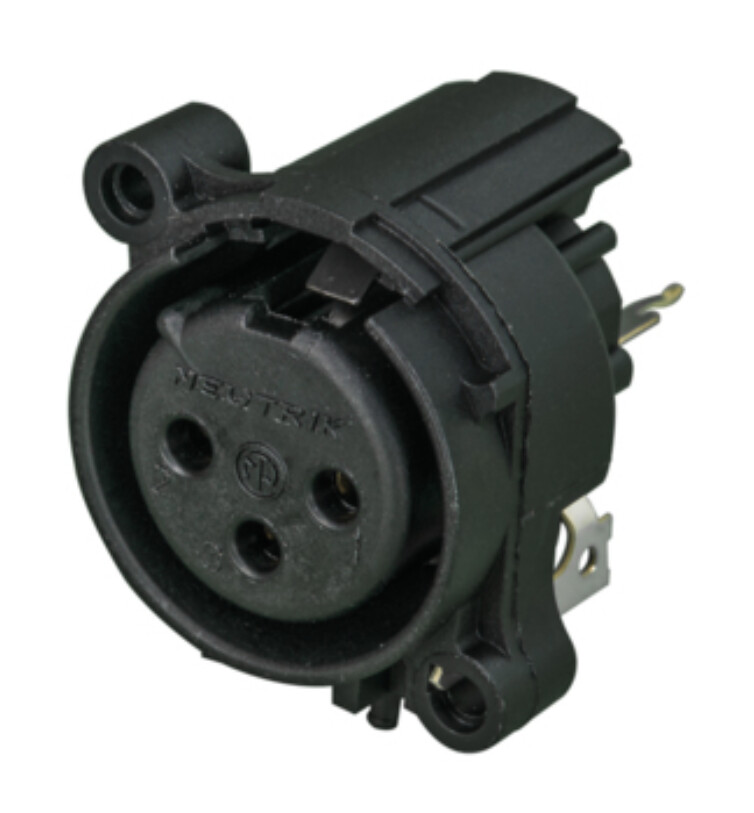
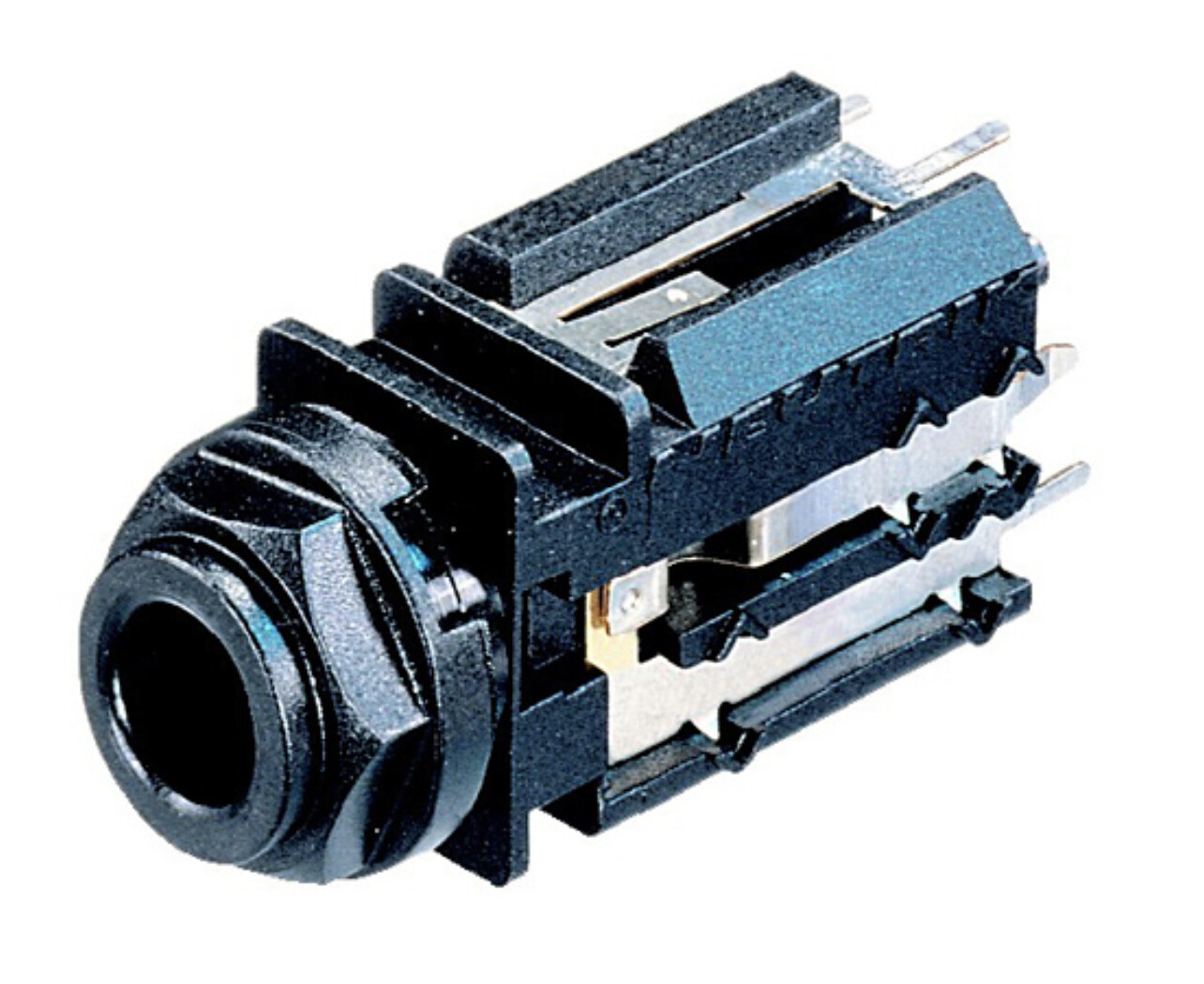
I don’t know. I mean, the three prongs of an XLR are much shorter than the single long prong of a 1/4”, right? That would seem to indicate a 1/4” jack has to accommodate more room behind it.
Like this:
Vs. this:
I guess I don’t see the advantage of going XLR-only as a design choice. I have plenty of gear that’s XLR. I have plenty that’s 1/4”. Especially on older stuff there’s no rhyme or reason to it. And it all boils down to the same copper in the end (though XLR does force balanced connections — are they worried about handling the unbalanced signal of a straight TS instrument cable?)
Especially on a portable-ish device where you get on location and realize you don’t have all the cables or connectors you want, the flexibility to use either is quite valuable.
Come on guys soldering cables is a piece of cake and is much more neat anyways since you can cut them to fit your setup.
A lot more strength in those XLR connectors too for durability, a win win in my book 
Move MIDI to 1/8” jacks, move audio to XLR.
Where exactly is the industry going?