Can we change the thread title to MAT 16X8?
Nice to see it available
Can we change the thread title to MAT 16X8?
Nice to see it available
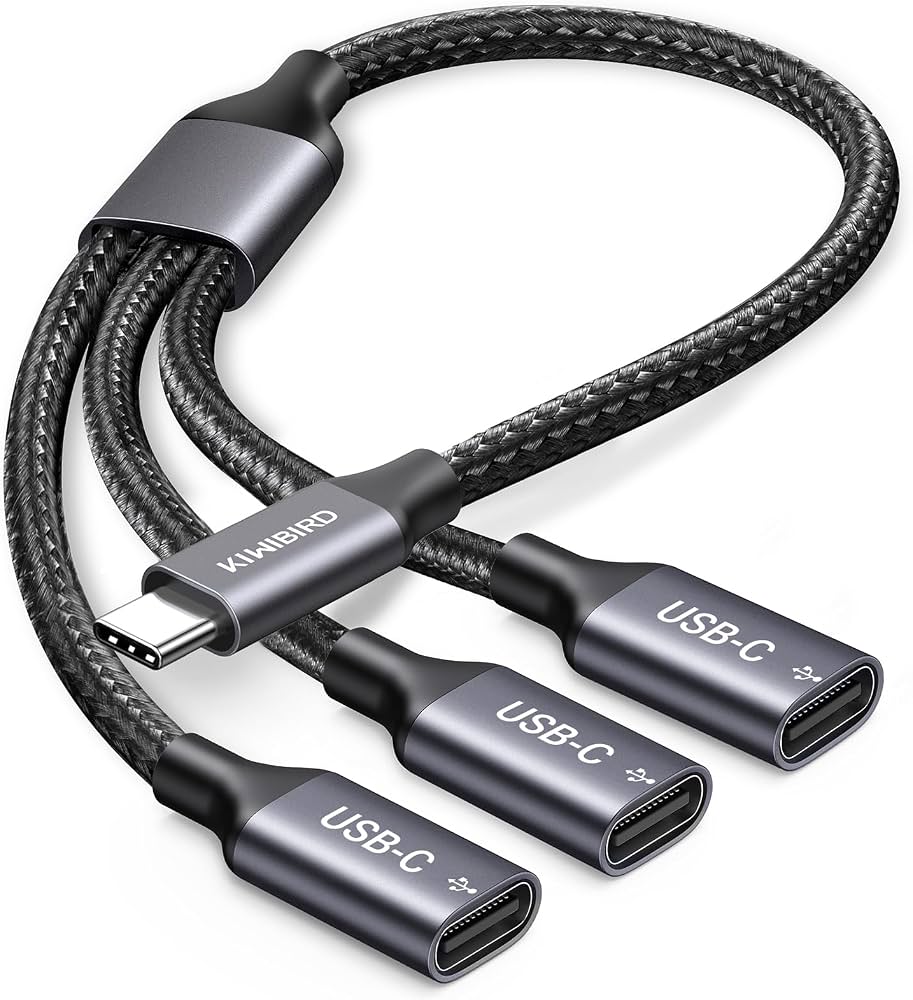
As an iPad user, I feel it could be even cooler with an integrated USB hub and power delivery passthrough. That way, you could connect USB MIDI controllers and external power directly to the interface, and then connect the interface to the iPad without any hubs between them.
Apparently usb splitters work just fine as it only draw like almost 2w/400mah from the iPads usb port. I use splitters a lot so I don’t have to deal with powered hubs.
I also don’t care about my iPad batteries. By the time it burns up enough charge cycles, I’m basically ready for an iPad upgrade anyway.
Batteries are also fairly cheap to replace, and when Apple replaces a battery, they just give you a new device, so you also get a nice new screen and enclosure too. (Refurb of course, which I don’t have a problem with either. In better shape than my iPads considering how I treat them)
Might swap out my volt 4 for this. Use it just with iPad
Hi, I finally set up an account here so I can reply.
I’m the developer of the MAT 16x8 and I’m really happy about all the positive feedback. Let me try to address a few topics here in one post:
Power supply: I actually originally planned to integrate a powered USB hub. In the end, the risk of picking up interference in the audio range was too high for me, and bidirectional power delivery (since it also needs to work without external power) isn’t exactly simple either. On top of that, it would have made successful CE/FCC certification harder and cost me even more time and money. It’s not super elegant, but just use a small USB-C dock with power delivery. They’re available from around 30 bucks and work flawlessly — they charge the iPad and provide additional USB ports for controllers. I use it that way myself most of the time.
US tariffs: This is a very annoying topic, and honestly I didn’t expect it to hit this hard myself. The problem is that customs authorities consider the country where the boards are assembled to be the country of origin. The fact that the entire development happens in Germany, the software is developed and flashed here, I assemble the devices here, manufacture the housing, and do quality control — unfortunately none of that is relevant. I have to label it “Made in China,” and that currently results in substantial tariff surcharges, especially for the US market. I’m already looking into having the board assembly done in the EU so the next production batch can be declared as “Made in the EU” or “Made in Germany.” But since production costs would then be higher, it might not actually help much, because exporting from the EU to the US also comes with high surcharges. Fun fact: the most expensive components in the MAT are from Texas Instruments, USA. Crazy world.
I‘m already in contact with local dealers and we try to find a solution…
Standalone operation: My initial priority was to develop a lightweight, high-quality, easily portable audio and MIDI interface. The combination especially with an iPad is unbeatably flexible. I mainly use AUM to mix everything and fine-tune the sound. Recently we had a session in the park with modular systems and two different speakers. One of them had 25ms of latency, which we only noticed on-site right as we were about to start. The sound was terrible because of it. In AUM, I was able to artificially delay the signal for the second speaker, and everything sounded perfect again. That’s just one example of the incredible flexibility of a setup like this. What standalone hardware would have been capable of that?
That said, I do see a certain appeal in running the MAT without a computer too, and I’m already experimenting on the side with firmware that would allow level control and stereo cross-mixing via MIDI commands. DSP functions like EQ, limiter, etc. are also conceivable. We’ll see. Right now I’m very busy with production and sorting out distribution matters.
Subscribe to the newsletter on the MAT website and you’ll be notified as soon as there’s news. Or check the News section on the site every now and then.
Best regards,
Martin
This looks interesting, but price is definitely up there even for Europe. I guess components ain’t cheap these days.
Standalone operation with levels/sends via MIDI would be huge and make it pretty much unique on the market. Personally, I’d even use it as a MIDI-controlled matrix mixer on my guitar pedalboard. Really looking forward to it! 
Hi Martin, hope the launch has been going great for you!
I’m strongly considering ordering it for a live hybrid setup (few Elektrons, maybe some pedals living on a send channel, all running from Ableton Live on a M1 Pro Macbook) and I have a few qs, mostly connected to your
Headphone out impedance: the specs list 15 kΩ output impedance for the headphone jack — is that a typo for 15 Ω or am I misunderstanding completely? I’d be using 120–150 Ω headphones and want to make sure they’ll tick. I continue to be absolutely dumbfounded by the actual meaning of these values so apologies if I’m off.
Second headphone feed: since the line outs are fixed-level with volume controlled in software, could my bandmate and I each get an independent monitor mix — me on the headphone jack, him on a line out pair? I assume the line outs (spec says >5 kΩ load) can’t drive headphones directly and he’d need a small headphone amp — correct?
In demos, I saw this interface mostly operating with AUM on an iPad - this may be a dumb question but does it behave equally with Ableton + ARM Macs setups?
Thanks a lot, and congrats on getting into production! It seems like a great fit for a problem noone else seems to have solved properly yet)
Hi! Do you think this thing will work with Push3 standalone?
You are absolutely right, its a typo. I removed the entry. The Amplifier delivers 50mW at 32 Ohm load. I have the DT 880 Pro with 250 Ohms and yes, they are quieter as other headphones but work absolutely fine except for DJing in a loud environment. The Line outs are powerful enough to also drive headphones, but it might affect the sound quality a bit. I tried that also and I think it’s fine, but its not the intended usecase for the line outs. Hard to say, if it’s fine for you also. But using small headphone preamps would be better, they also mostely offer a dedicated volume control. This is a bit citical on the line outs when using headphones as you need to rely on the software sound levels. And yes, it works with every sound processing software like DAWs, AUM is just very nicely made for mixing and routing. You can use all the software you like… and nearly every computer or device which has 2.0 class complient audio capabilities like MacOS, iOS, Linux and derivates (MPC, Push 3, …). for Windows, there is an ASIO driver available on the website to get best performance.
Yes, I’ve tested it and it works great including dual Midi out. But you need the latest firmware on the Push 3 standalone. It also perfectly works with the MPC line.
Congrats on the release of the interface. I can’t wait to get it in the US.
Quick question: Can you switch the interface from 48 to 44.1khz? The MPC in stand alone only supports 44.1khz audio interfaces.
I only ask as i only saw 96khz in the specs and no mention of the range.
Thank you.
It supports 44.1, 48 and 96kHz. The setting is made on the host side (or is just fixed). On the MPC, there is a special 32 channel mode you have to select and then reboot to use all 16 ins and 8 outs. I‘ve tested that, works great.
Awesome. Thanks for the clarification.
Hi, would this work with a Polyend Play+ ?
The Polyend does class compliant USB audio, outputs separate channels to ableton but the connection has been buggy.
I’ve been looking for a hardware output alternative for the Polyend. Initially looked at the Elektron Outbox but somebody suggested MAT16x8 which is already available.
Wrong direction. The Play+ works as an audio interface itself. The MAT is just an audio interface too. The Play+ would need the ability to handle (host) external audio interfaces like the modern MPCs or the Push 3 standalone does which seems not to be the case.
Hello! Your product is fantastic, and I wanted to congratulate you on a successful launch! I have one big questions, will there be any plans for a 8x16 version in the future? So 4in/8out? This would be a perfect product for having an iPad and a DJ mixer
Hi, I assume you’re referring to an 4x8 version. Actually, I’ve already thought about a 8x4 or 4x8 version; the current design already uses only the bottom half of the circuit board which allows a smaller form factor. Unfortunately, however, this would also mean having to go through the certification process again, which is quite costly. The resulting product wouldn’t be significantly cheaper. I think the current number of inputs and outputs is a very good compromise here and is the most widely accepted option. It’s not the hardware that determines the price of the products, but rather the development and certification process, manufacturing, and distribution. That also applies to a smaller version. For me, it’s still a long road just to recoup my external costs in this project. And that still doesn’t cover the time and effort I’ve put in. But I wanted to do this for myself, so I did it… yet it turns out that it’s really hard for a one-person business like mine…
Hey! I didn’t want to come out as rude:  I am a big fan, and admirer of your work and try to share the word everywhere.
I meant a 8in/16out version when it comes to channels, you it would have 4 stereo in and 8 stereo out, which would let it drive a big analogue DJ mixer all from a laptop and have enough space for returns for fx
Still this is the best interface out there for compact and price to performance ratio! Congrats once again
Thanks, no, you didn’t come across as rude. I just wanted to explain the reasoning behind it. Now I understand better what kind of use case you have in mind. Funnily enough, it’s exactly the opposite of what I had in mind. I didn’t want a big, heavy analog mixer for all my synths; I was looking for a solution that’s super portable and extremely customizable. With an iPad and AUM as software, it works perfectly for me and always fits in my backpack. Add a MIDI controller to that, and you can map the sliders and knobs exactly how you need them for live performance. You can save your settings, and it even supports multitrack recording.
But yes, of course your approach is interesting as well.