Mic a guitar amp into Digitakt line in

I am sure this has been covered many time, but my forum search is not finding the info I am looking for. I know that folks will mic a guitar, or guitar amp in my case, into the Digitakt for sampling, but I am wondering about what is required in the chain? My assumption is a preamp of some kind is needed. I have a Zedi8 mixer that in theory could be used as the mic pre amp, as it has two mic ins with preamps, but I don’t know if specific specs are needed to be successful.

Just trying to figure out what I would need. I need to get a mic, cable and stand as well. Thinking of keeping it simple with an SM57 unless there is reason to go in a different direction. Thanks for any guidance. I am specifically looking to mic guitar amps and not run an IR in.

Hey!

Was going to suggest a amp sim, but ok :smiley:

So you will need all that you mentioned: a microphone and a preamp. Plus obviously the cableware and a mic stand.
The microphone and the preamp give a specific colour to the sound.

BTW, do you want to mic guitar amp or an acoustic guitar?
In the first case, the SM57 (dynamic microphone) is one of the go-to candidates; many others can be used, though. In the second case, you will need a more sensitive microphone, maybe a static one.

Not sure what you do/don’t know: static microphones are more sensitive than dynamic ones. Static microphones usually need to be “phantom” powered. If you go this way, make sure to either have a preamp that provides this phantom power or to have a separate power unit.

Hope this helps!

1 Like

Thank you for that info. The Zedi8 has two mic ins with preamps and phantom power for both. I did not understand what that was, so will read up a bit.

I am trying to mic electric guitar through different tube amps that have particular sounds. I know it wont all covey through a mic and it will be altered, but I want to capture as much of it as I can since I know how to produce the sounds I want through those. For me that is simpler than an IR where I will need to start from scratch finding sounds I am happy with.

Between a static and dynamic mic, is one more likely to be easier to work with or, just different color. 30+ years of playing guitar but I have never had a mic!

just to be perfectly blunt, the act of sampling your guitar amp mic’ed direct into digitakt is certainly doable, but it will be infuriating. First off, the signal chain is going to be noisy and the digitakt gate is either going to be too sensitive or not sensitive enough. You’ll end up with a bunch of false recording starts, or a recording that starts with a slightly clipped first note, particularly if you want to record any kind of distorted guitars. You would need to add (at a minimum) a limiter / noise suppressor kind of pedal and that can ruin the sound of a guitar if you’re looking for a certain tone or ambience (in my experience).

The next problem is the physical back and forth, which is certainly also doable, but using the digitakt to monitor with your headphones plugged into it and also having the mic and amp and other cables around you while trying to not hit anything or bump the mic stand with the guitar or headphone cable is also a challenge.

And to exaggerate the situation, the digitakt’s normalization cannot be disengaged, so if your playing contains any nuance, you’ll lose part of it just by nature of the way digitakt hears and processes sound. If you can live with all this stuff, sure you can do it the way you’re proposing and you can trim your limited audio recordings and keep redoing them until you’re happy.

The better way to do this (just going by my opinion and experience) is to get a micro recorder if you don’t already have one, a zoom or some other recorder with a micro sd card slot, you can mic the amp into your mixer and have the recorder in line with the mic because you don’t need a preamp for a lot of recorders to use something like an SM57 even if you don’t want to use the recorder’s built in mics. A lot of them have some degree of available phantom power but it’s mostly for lapel mics and such.

You can run the recorder in line to your mixer, monitor with headphones from your mixer and have DT also sending audio to the Zedi8, that way you can play along with your digitakt track in your headphones until you’re happy with what you’re hearing. At that point you can start your loop on the DT, engage the recorder, and wait for it to loop back around before you start playing, then record as many takes as you want into the zoom or other recorder and when you have a take you’re happy with press stop.

There are 2 ways to proceed from here, you can put the audio into audacity or another daw and clip what you want, then load the audio into DT via transfer, or you could clip the audio and put it back onto the recorder (or play it right from your computer) and engage the DT auto-record gate without all the line noise for a better line-in sampling experience. The latter method will still normalize the audio, but moving your audio by way of transfer no longer is constrained by limited sampling time and is no longer normalized.

Both ways are viable, but the way you’re proposing has some huge disadvantages, not that it can’t be done but just that thinking differently may save you some time and headaches. Good luck, let me know if I can help with any other questions about this workflow.


8 Likes

Haha, no shame to have :wink:

Sensitive mikes are usually more difficult to manage… if you record something little noisy. For a guitar amp, I think you won’t notice anything obvious in terms of usage. Sound is another question though.
And @shigginpit remark make perfect sense: I don’t have any DT so I’m ignorant on that topic.

Just to share it: I once had a live project where I used a MDUW and an electric guitar, the former being used for live-sampling the latter. I used Tech 21 SamsAmp units (which I still love) and found it very convenient: no computer, analogue, cool sound, controls reacting as on an actual amp, no mike to manage. Now I can totally understand you wanting to use the real thing.

1 Like

A looper pedal would do the job quite nicely and be a much more on-the-fly sampling workflow, and has the secondary benefit of making cabinet micing a much easier and more enjoyable experience.

4 Likes

That’s also one way to go if you don’t have any other use for a hand recorder, I haven’t tried it but I’m sure you could probably get the same results with a sm57 into a looper. You’d be limited to mono signals, but to mic a guitar amp with a single mic that should work fine.

Modern loopers have high quality recording capability and I know that I can plug my looper into the usb port on my computer and import the recordings so it’s probably about the same in the end.

2 Likes

Still need a a mic pre* but a looper could also midi sync with the DT for hands free operation!

  • Sounds like OP has the mic pre covered with the mixer though!
2 Likes

I want to throw support in for a suggestion above: use a smaller recorder to capture the amp + room sound, don’t mic the amp. I say that assuming that you want the room sound of your tube amps more than the mic’d. In my experience, those two things are worlds apart and if you haven’t recorded a mic’d amp in the past, you may be frustrated/disappointed with the initial result.

But! If you are going to go that route, skip the SM57. They lack character and warmth and will do absolutely nothing for your tube amp sound. If you’re on a budget go with the Se X1 S.

Another 2 cents…
I am not sure what DAW you are using, but I use Logic, and for recording guitars to be used along side other instruments, their sims are excellent. And there are several other options out there, whether amp sims or pedals, or preamps. My tube amps are used for pure fun these days.

1 Like

This is worth highlighting. It’s the biggest hurdle for me when sampling guitar/bass into my DT. Everything normalizes to the peak, so anything played with dynamic range becomes very quiet indeed.

2 Likes

stasiuk with the assist!

also, the sm57 has long been a standard mic used in many a studio, but like everything, it has it’s time and place. If you have the luxury of using 2 mics, pointing an sm57 just off the cone and a decent condenser mic a bit farther out with pickup pattern pointed towards center, then you can mix the 2 signals in post for a nice blend with plenty of character. Even as a solo mic, it depends on the tone you want to achieve.

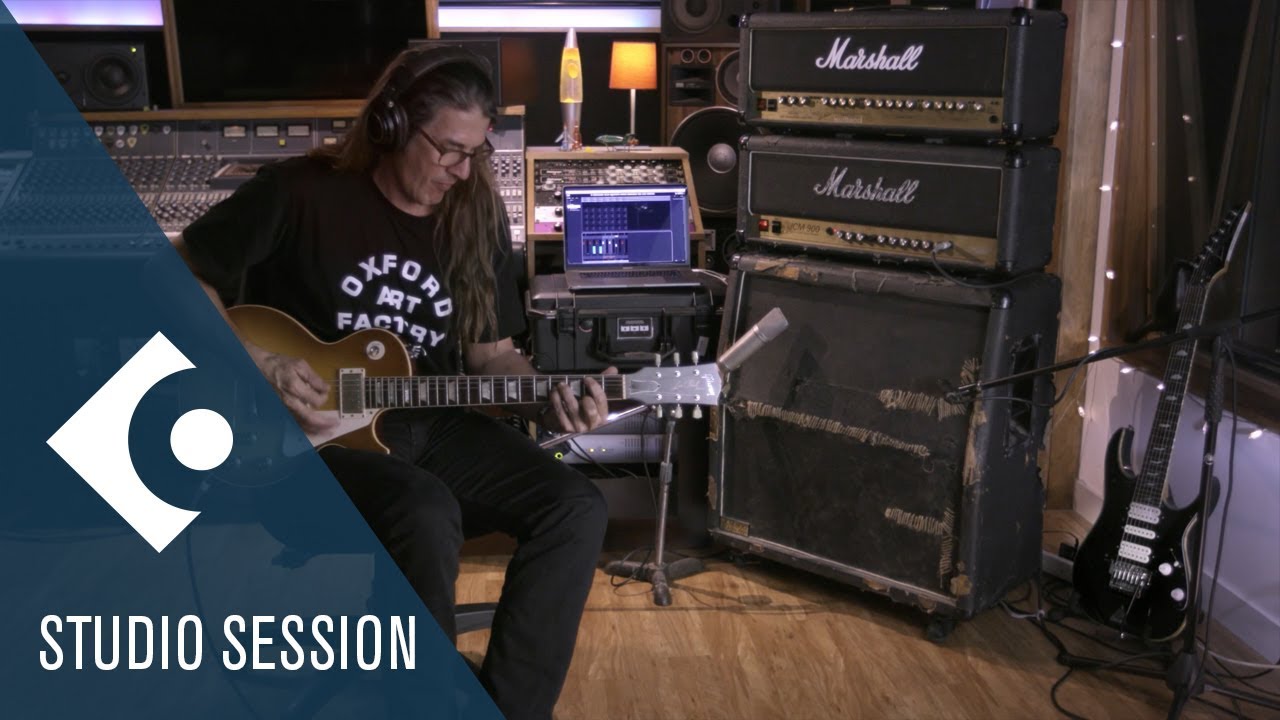
Acoustic guitars or clean, glassy, blooming sounds? Not the best for those. Watch dude’s mic placement technique in this video, it’s not too long and is very informative.

for rock tone this is what you probably want to do.

2 Likes

Thanks folks, this is all excellent information/schooling. I think I was focused on using a mic into the DT simply because I had read references to others doing the same. I had not given any thought to recording it via an external device and then bringing that into the DT. I would not be opposed to getting a recorder and probably have other uses. I also think I have an older Edirol R9 recorder that might at least do a workable job to test the method.

I was not at all tuned into the various limitations I would face going direct into the DT, and it sounds like it would be frustrating for me based on how I am understanding it. Will try recorder, and if that works look at a more recent recorder options either with internal mics or external.

In terms of working with the final product, it was asked what DAW I am using and the answer is none. I am still a neophyte at this only having a little over a year of messing with this kind stuff, but I knew I wanted to have a computer free setup (and still feel that way despite seeing all that Ableton can do, I just cant tolerate more computer time). My current setup is a Digitakt with Digitone, Typhon with a Keystep 37, and also use a Subsequent 37. This stuff is all tied together via a BlueBox. Probably a bit of overkill for being so new to it, but I am having lots of fun learning and I absolutely love the DT and DN.

2 Likes

For free, audacity is good for simple cut and paste type editing and you can import, get things cut to size and then export the audio again really easily. For just a little bit more, something like $60 for reaper will have a little steeper learning curve but is more capable, especially with midi.

I use an older zoom h1 recorder, I don’t think it’s necessarily about whether or not the recorder is new, but something that can interface with your computer as a mass storage device and record to SD card is good.

It’s sort of difficult to separate the fact that digitakt can record from the fact that it’s not a recorder. Think of a sampler as something with the capability to record samples, but that the quality of the samples you put into it is equal to the quality of the sound you get out of it. That way you know that if you sample something, you can learn what sort of sounds you can sample live without any real impact to the final audio and which ones will incur unnecessary losses.

I like the idea of being able to sample from external sources, but if I really care about the fidelity of what I’m using as a sound source, I bring it in through transfer where it will retain the highest quality and the same characteristics I intended to bring into the project.

You’ll figure it out, just takes a little knowledge and a bit of playing around. And to get a good tube amp sound it does matter whether you want to capture room ambience as well as the sound of the speaker itself, because it may be necessary to incorporate a third mic to get what you hear in your head onto a recording, however it’s not necessary to do that (room placement mic) to get a good sound, it’s just about knowing what you want to hear and how to get that sound.

As it is though, sounds like you have some good gear to work with and I’d think you can do most of this out of the box without a daw. I don’t know how the audio editing works in bluebox and it may be possible to do everything there, however it will be easier on your eyes and your patience to do the cutting in some sort of daw and there’s no way to use the elektron transfer software on bluebox, so there’s also that to consider. Basically, you’ll already be on your desktop for that.

2 Likes

I just wanted to follow up to say don’t let me or anyone else talk you out of trying or doing this how you want, there is no wrong way as long as it works for you. I just wanted to share some of my experiences and since you’re talking about mic’ing amps and not going DI into the DT I thought you should know some of the facts. If it feels better to do it the way you intended and has more of an organic or interactive workflow with the box, and you prefer having more control over that aspect above having control over the audio samples, it may work better for you the way you planned.

Just didn’t want to come across as saying “don’t do it that way” because that’s not my intent, just try different things until you get what is inspiring to you or what feels right. If learning how to use the daw functions to clip the sounds is intimidating or sounds like it would add extra work beyond what you’re comfortable with then that’s absolutely something to factor in, but I can tell you that I feel like it’s pretty easy and if you want to download audacity to try it I can even give you some basic steps to follow that will get you through at least that one activity. I just don’t like when people act like there’s only one way to do things or that one thing is right for everyone, and I hope I didn’t come off that way before.

1 Like

This is a good point. I don’t know how easily you’ll be able to distinguish the noise floor from the start of playing with a hot mic. Sounds like it could be pretty frustrating.

The DT doesn’t have a MIDI message to trigger the sampling process, does it? I wonder if a decent workaround would be to set the recording threshold low, keep the external mixer input level at 0 and then raise it via a MIDI CC to start sampling. I never tried this though… I usually sample guitars into the OT

1 Like

@shigginpit as usual has some great advice, so I just want to fill a couple of gaps. Amp recording is a skill all by itself and it’s a little frustrating when you’re both playing and recording, let alone sampling on top of that. Getting even a cheap looper means you can just leave it play while you adjust the mic and monitor via the mixer (good headphones are a huge benefit here) and as I mentioned previously, it’s a much tighter workflow than recording and sampling as separate processes.
I’d also recommend using the Digitakt on a send, so you can sample from anything that’s connected to the mixer, like your phone, cd/tape player, etc. You could also have the looper on the send, which opens up many other creative possibilities, and gives you the eq and gain stage of your mixer before the looper for better control and much greater flexibility.
I say this because being able to work on the fly like that is absolutely necessary for me, ymmv but it’s really cool to just be able to play a few notes, sample, add some more, bring in a snippet of dialogue or noise, and never break the flow or have to leave your playing position.

I’ll also restate my support for an sm57 as first mic, it’s amazing for guitar amps and also just generally useful, pick up a condenser or cheap ribbon down the line for sure, but get good with a 57 and the rest will fall into place much quicker.

2 Likes

I appreciate the depth of all of these responses. It is telling me I have much more to learn than I realized, but I am getting good ideas for what might work best for me (or at least good starting points for me to experiment with). Thank you!

On the idea of using a looper, I am assuming it would be placed in the chain between a mic or recording device and the DT, so that output could be looped back for adjustments and eventual sampling once everything is sounding good? I have a couple of inexpensive loopers, so that would be easy to try.

On using a mic on the amp., it was just what I thought was the likely method of sampling a particular guitar/amp combination. I have zero experience putting a mic on anything and knew there would be a learning process to get acceptable results doing that. I am liking the idea of recording the room rather than the amp, and it sounds like using a recorder as a first method makes sense. That method would also require a smaller footprint of stuff. However I may revisit the mic as an alternative method if I find I am successful and like sampling the guitar (maybe I will hate it and will abandon this idea, who knows).

At this point I just have ideas for sounds I would like to incorporate into some patterns I have been working with. I am guessing that as I get something working to get guitar samples, my needs and interests will evolve. At the moment I don’t think it will require much precision. I can imagine using a recorder to get a bunch of content ideas, and then working with the recordings after the fact to sample the bits that might be useful in a particular pattern. Of course I will need to do some experimenting on the location and recorder settings to optimize what I am starting with.

I occasionally work with guitar and Digitakt. Best workflow I’ve found is to have the DT playing it’s loop repeatedly and play my guitar part recorded to the DAW (multiple takes back to back). Then I go back and sample the best take. This removes having to start the recording and then immediately begin playing guitar or fool with input threshold. Also helps get the timing right. Since it’s not the OT and you (probably?) aren’t trying to do this live, I see no reason to buy a looper.

Hell, if you don’t mind going lo-fi, you can record and sample an acoustic guitar from a cell phone or iPad (I’ve done both)

3 Likes

As you have some loopers, you could have one just before the amp input, and one after the mixer, so you can use the first to play with mic positions and the second the capture your sampling material. There’s no right or wrong way really, so try a few things and experiment.
It might be useful to focus on microphone placement first, and taking a photo of each attempt and linking that to the recording somehow will make the process easier - it can be tough to remember exactly what you did a week or two after the fact!

1 Like

try running the effects loop out to the digitakt. I do that to sample guitar onto my mpc.