can someone suggest any listening companions (reading detailed descriptions/analysis of the compositions)? I am interested in classical, electroacoustic, concrete etc.
thanks in advance
1 Like
didn’t know such things exist but there’s a new subreddit for Musique concrète and the mod posts all kinds of detailed posts about compositions, techniques, etc., maybe not exactly what you are looking for but worth checking it out
5 Likes
…this hits pretty close to home…
BUT…apart from the fact that we could all need a listening companion from time to time, especially in all these post band everybody works mostly alone bedroom producer world we’re living in…WHAT EXACTLY DO U MEAN by LISTENING COMPANION…?
for my part, i’m not too bad in giving reflected and professional feedback for any particular project, if the conceptional mainframe for it is clearly communicated…
let’s elaborate… 
1 Like
It is actually rather clear:
I am also thinking reading Pierre Schaefer’s book while listening to some recordings of his.
Anything that can get you into deeper understanding of the composition or the composer’s context/mindset.
6 Likes
back in the cd era, I remember a friend having a big collection of cds with classical composers, it was a series with a title such as: 50 important composers of the 19th century, or something like that. well, each cd was accompanied by a quite extensive and detailed booklet with information on the composer, their work and, most imporantly -and this is what I was asking about- analysis of the composition to read while listening. each booklet took the listener by the hand and explained each part of the composition with terminology, theoretical background etc
so, my question is whether you are aware of any similar booklets/books
You could start with Solfege by Pierre Schaeffer.
Usually in that kind of music the cds have very detailed booklets with all the information ones need .
Also this site is a good starting point . They have excellent descriptions and info about the works.
2 Likes
Possibly you could find a lot of cds and books in the university s library of musical studies department .
1 Like
Not sure i understand exactly your quest, but i’ll throw some things out with a specific piece of provocative listening in classical music, and you can react.
John Adams 1985 orchestral piece Harmonielehre.
First watch this high level ( and short ) analysis by David Bruce. You probably should write down a few of his ideas to keep in mind. Also give the Wikipedia article on this piece a look as well.
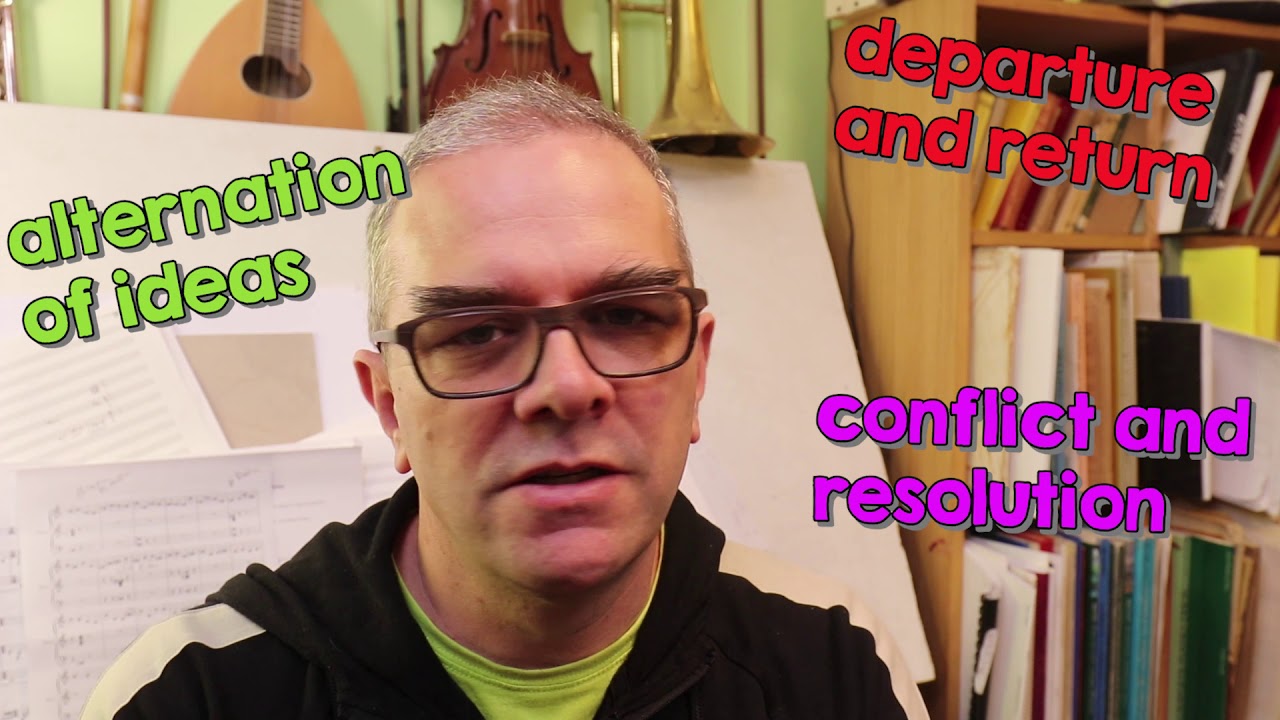
Then listen to the actual piece with the score. First time through, you may just follow along loosely, but feel free on subsequent listenings, to stop and perhaps play a section or moment on piano or whatever that catches you attention. Or just drum out a rhythm on a table. ( Like for instance those opening measures. ) While listening muse back on what Bruce was talking about.
Then you may find yourself going off in other directions, perhaps with another piece of minimalist music, maybe Philip Glass. ( Or maybe from this piece to other non-minimalist music like by Sibelius or Mahler. ) Or maybe you get ambition to look at the other Harmonielehre, by Schoenberg, dense as it is, but perhaps opening other approaches to understanding. Or check out his Structural Functions of Harmony. There are plenty of shorter orchestral moments examined in these books, if you want to get into the nitty gritty.
David Bruce has other videos. I like his approach. He also looks at other music rather than just classical.
Also i highly recomend listening to music with scores, there are lots of those available, more perhaps for piano pieces. Often to you can find the music scores available, often for free, and you can go from there.
There are plenty of others youtube video makers that look at music, particularly other than classical.
If you are looking to learn how to play, i can make a recommendation for a book, that takes you from an intermediate level to play and examine musical elements on piano This is a great way to get this sort of understanding more in depth and in “your hands”.
3 Likes
Who is Moondog ???
3 Likes
Seriously, you’ve never heard of him?
Lucky you (if your question wasn’t rethoric).
Here’s a track for you:

A new door has opened, let us know what you’ve found
The video you’ve posted remarkably describes an interesting facet of some of his compositions.
Pay attention to track signature(s), how melodies intersect, and to the timbres.
Born during WW1, Hardin was influenced by Native American percussive sounds.
Accidentally got blind as a teenager, he dedicated his life to music, composing and creating instruments.
He spent some time in NYC in the 60’s and 70’s, dressed as a Viking, playing in the street. Ended his life in Germany.
He thought we should protect life and be cautious with “progress”.
Minimalist music lovers owe him a lot.
4 Likes
this looks like a very nice resource, and very close -if not exactly- what i was looking for. now I have to find a way to get my hands on a copy, thanks very much
thanks a lot for the extensive reply, I had never heard of this David guy, quite interesting channel! also, the other resources you mentioned, they seem stimulating, I will begin exploring those which seem closer to what I am looking for
1 Like
Not sure if you’ll be interested in these, but I read the David Bowie ‘Low’ book and it was a fun quick read
2 Likes
If you are based in Athens I could borrow to you cd s of electroacoustic music
with fotocopied booklets. I made copies from a university s library years ago. I hope they are still working.
I have also Solfege but without the book .pm if you interested . Maybe you could find it online .(the book)
N.B oh and be careful with that music ! Your mind will blow away. Your aesthetics and perception in music will change for ever
thanks for the tip but it’s a bit late for that, you should have warned me earlier 
it is true that you can’t listen to popular/conventional (or whatever we may call it) music the way you used to listen to and enjoy it.
on the other hand way I compose still follows core conventions about time, rhythm, it’s hard for me to write something without a beat and drum samples, which I don’t necessarily think its a bad thing, just for the sake of the conversation
1 Like
Hehe happened also to me after I started listening to electroacoustic then I couldn’t listen anymore to techno, beats, loops etc for years.
Now I like to jam techno on electron machines . Sometimes , not so often I listen to classics electroacoustic masterpieces from the pioneers. They are always inspiring.
1 Like
ah thanks but I meant a hard copy, I am a bit old fashioned when it comes to reading, I prefer getting my hands on them, then placing them on the shelf to collect dust and silently bragging that I read them
but, seriously, I saw that it’s out of print and a pdf might be the only solution, so I found one already
1 Like
Oh, really? It seems some of these links work, might not send to Athens though…
oh nice, I guess I was looking at an older edition
1 Like