then from my experience I can advise you to buy Syntakt for simple and intuitive synthesizing perfect kicks/snares/hats/perq…
1 Like
Just keep doing it till you make really nice sounding kicks that you really like.
Sorry but, thats kind of best way to learn, experiment. See what works, what doesnt.
5 Likes
sorry, but i really want to do this with my A4 since i already own it and i just know it is a very capable machine for this
1 Like
you are absolutely right! just looking for some help 
1 Like
pls share examples of yours kicks which you don’t quite like and your reference kicks to understand in which direction to think…an hour of practice is better than a week of discussion
1 Like
it depends on the track and what’s going on
you can have a great kick and fuck it up with a bad arrangement or mixing
experimentation is key
2 Likes
You are very right.
There are many tutorials on internet to understand the principles of how to synthesize a precise thing. It is then just a matter of experimenting on your own gear and converge towards spots you appreciate and fit your track.
Check this video from @djst, you might find elements.
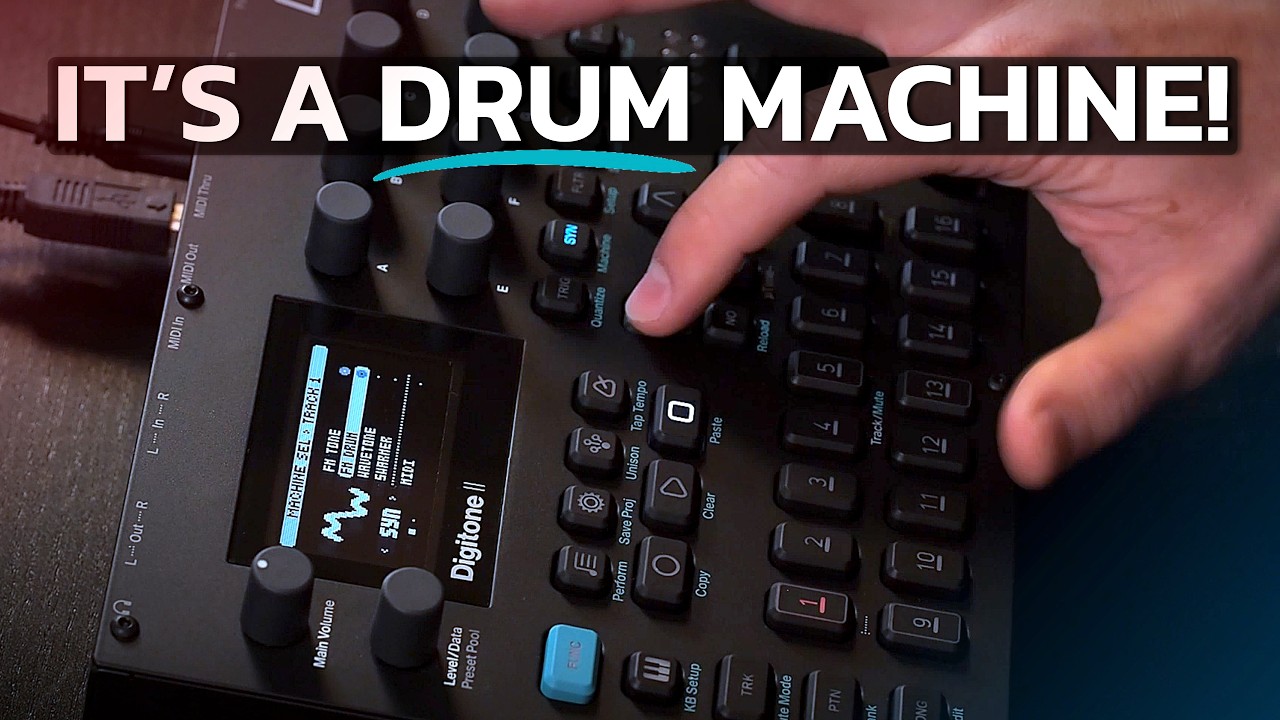
I a shell, you need
- a sweeping tone, so a envelope on pitch and/or resonating filter
- a transient to give your kick some attack
- possibly something in the early seconds to refine the transient and add character
- fine tune the decay so that it isn’t too long and mask the other instruments (do you prefer the queue of a kick or the bass that is incoming?)
- I personnaly like some distorsion on top
If you want to dig the subject, check Gordon Reid’s SynthSecrets:
5 Likes
one thing we discovered yesterday that can help to make the kicks sound better is to lower the level of the kick in the A4’s mixer quite a lot and turn it up on the external mixer
Whatever style, hold it with deadmauß advice. Make it short
5 Likes
I would probably recommend something like Sonic Academy - KICK 3 for visual clarity your actions and the influence of actions on sound.
but if you are asking in the context of kick design specifically on A4…that’s another story.
1 Like
It’s mostly precise envelopes and timings.
I found to know how it looks, then help with a analyser tool like, can really help to engineer the kick drum, knowing the frequencies of few kick drum like Roland kicks and the relation in terms of how much Pitch Modulation can help as a starting point :
- schulz oszillos-mega-scope (Mac)
- Psyscope PRO (PC)
Then regarding the whole process I can’t recommend enough this tutorial, you are gonna learn everything you need :
- Kick drum design
- Distortion
- EQ
- Compression
- Limiting
- Transient control
- Tube saturation
- Clipping
This is the absolute best tutorial on Kick drum from the synthesis to the final processing I’ve ever seen. I’ve learn a lot, pretty much anything you need to know
Also knowing the difference between kicks in different music genre (if you do one subgenres of electronic music)
Kick seem pretty straighforward and easy, it’s just the range of kicks with just few moves that is just crazy…
3 Likes
the only thing i use my pc for is recording when it comes to making music
very interesting stuff, thanks!
1 Like
very helpful indeed, thanks!
what about mixing?
Maybe you haven’t found this. Works well as a starting point.
1 Like
Oh, another thing: there is a lot to learn from the minimalist musicians.
People like Alva Noto add some very high frequencies on top of the kick, to balance the sub-frequencies and give some very distinct personality to the kick.
Lots of things to play with ^^
Same school of musicians show that what is most important is what you remove/refrain to add, to let the sounds breathe.
It’s important to balance your sounds, that’s what gives the punch. If you go all in on the kick, you’ll have little space left for the rest…
5 Likes
nope
1 Like
bought the course, and it already helped me to work more systematicly when building a kick. can’t wait to hear what else he has to say!
Something about the snares I guess.