Help: I can’t hear compression!

When compression is not used as a deliberate audible effect (ducking, sidechaining, etc) it can also be a good thing that you won’t hear any (noticeable) differences between the original and compressed signal. Visual assistance with metering RMS values and graphs will help to see if the compression has any impact on your sound when you can’t hear it.

Compression can be used on each source channel as a tool to create headroom, change sound character and/or to make sounds fit better in the mix. The individual channels might sound “the same” but the total mix will sound more balanced and cleaner, but you still won’t be able to “hear compression” when applied slightly.

2 Likes

yeah, when in DAW, using volume automation is most often better for mixing, but within the OT for example it get’s difficult to really go into detail (it’s possible but time consuming with the AE…)

Good call! No compression is better than having your mix ruined by wrong compression (which could also lead to all sorts of unnessecary ‘fixes’ that could make things even worse). I had a time during which I didn’t use any compression in my mixes, which in turn made me focus on levels, panning, frequency spectrum and sound design even more.
I learned a lot about the relation between the sounds I chose and the role they can play in the frequency spectrum and thus their role in the mix.

Often, a balanced mix comes mostly from choosing your sounds wisely and setting levels and panning appropriately. Compression being the cherry on top.

During those times I often had to get rid of sounds I carefully crafted, change melodies I programmed, change the drums etc. and I spent too much time trying to make it work.

5 Likes

this is when a track starts to breath, i have no other expression for it - when it gets sometimes airy … in pop-music from the eighties/early nineties this feeling comes up when i listen to some artists like Simple Minds (Something got me started), Frankie goes to Hollywood (Relax) and various others … maybe because of the arrangement being more voice-centered and the overall relaxed tone and positive vibes by this kind music … i don’t know

but, you know :heat: sometimes it is great to smash everything into smithereens

Another compression noob here! Laughed a lot here in the thread, super recognizable.

I’m wondering if maybe the type of music/instruments actually is also an important factor in the discussion?

As in: I understand the need of a compressor for traditional instruments that have varying dynamics/levels. Like the difference between slapped notes on a bass guitar and some softer notes during a live take; I understand how a compressor would be great to pull up the notes that might otherwise get lost in the mix.

But how about sequenced electronic music; we can all dial in the volume of each note and instrument track, no?

Or is compression then still valuable for the “air” or “breathing” that was just mentioned?

Yes, absolutely and with the amp envelope you can shape each note exactly like you want to.
You don’t need a compressor to even out the levels of sequenced electronic instruments.

But different compressors sound different, react differently, distort differently etc. and there’s so much more beyond volume automation/levelling that can be done with compression. :slight_smile:

Then I’m back to “mysterious” :wink: Haha no I believe y’all

1 Like

I think when you’re incorporating some bit of randomness into your patterns, the compressor can tie outliers a bit nicer into the groove? For the kick hat snare constants compressors don’t see much use except occasionally for sidechain stuff – like you said there’s all these envelopes at your fingertips that you can animate.
But for any less static and unpredictable grooves, the compressor can work nicely I guess.

2 Likes

I feel that a compressor can help static rythms get some groove. As the kick triggers the envelope in the compressor, and “ducks” the next hits a bit. I did a very basic test when i got my bus comp on a boring flat rythm, an felt it gives some groove after running it through.

Can notice this on the hihats in this example. Not a musical piece. Just my first test of the compressor when i got it!

4 Likes

I think compressors can be one of those things that seem pretty basic, but alot of people might not understand completely. I sure didnt before i started doing som geeky testing because i thought there was something wrong with mine. Just happen to be “user error”, but the testing did help understand what the different parameters do, and how they affect eachother.

I read a great description on using compressors on individual tracks. Its from Mike Senior’s book mixing secrets for the small studio. He describes it as balancing the faders. And a good tip on when a track needs a compressor is when you never find the perfect fader level for that track during the song. If it seems fine in the start, but too loud later, it could need some compression.

Another thing is that compressors can actually increase dynamic range at certain settings.

2 Likes

Ah that’s interesting so the comp doesn’t have to be so quick as to be back at zero again before évery individual hit. Resulting in varying levels between different hits like these hats that were all static before. Nice example

1 Like

Yeah. Attack and release plays a role in how the compressor reacts. And at the “right” settings it can help getting some groove on a drum bus or mix bus.

2 Likes

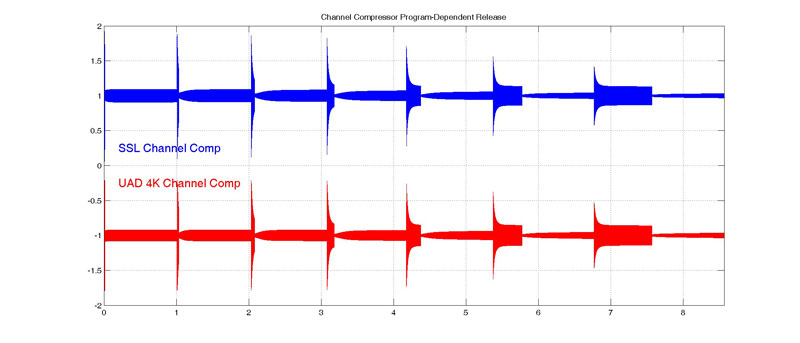
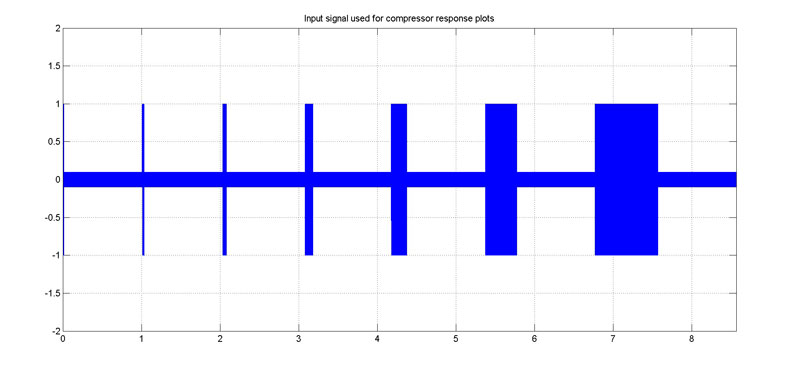
Here is some waveforms that shows how a compressor acts. It was a bit of a eye opener for me. Pretty geeky stuff, but it shows how the attack, hold, release phase of the compression.


3 Likes

Ha, sorry! I didn’t mean to play mysterious^^

For example, you can shape drums/percussive sounds. If you let the transient through by setting a longer attack time, but let the compressor pull down everything after the initial hit, pull down the body/taill with a short release time, then pull everything up with the makeup gain, you increase the punch, the initial hit of a drum sound. That’s usually how you give punch to a kick drum.

With a very fast attack time and fast release time, the compressor will immediately pull down the transient, go into release and as a result the compressor has levelled down the initial hit and equalized everything after it.

Actually, the video I posted explains both with A/B comparison (after the first part in the video which explains how a comp works).

You can have a compressor on your drum bus and by deciding what you let through/when the compressor will start to pull the waveform down and how you set the release time, you can form the whole drum groove.
When your comp has a filter for the detection circuit, you can make it react less to bass frequencies by using a high pass filter which on your drum bus will make it react less to the kick drum. Probaply best to just play around with a drum loop and listen to if you hear any changes.

Then there’s of course all sorts of sidechaining, to clean up a mix. You can sidechain after reverbs, especially useful with long reverbs that overpower the mix. If you get it right, you can maintain the feel of the reverb, but without all the mud. The way the comp pushes and pulls the reverb can become part of the aesthetics of your track.

People often use two compressors in series on the mix bus, one to catch the peaks and one to control the ‘body and movement’.

And then there’s this whole ‘adding glue’, ‘air’ or ‘whatever’ stuff. Even software compressors can sound and react quite differently, and each will do some very specific things to your sounds.

Looking at waveforms is a good idea if you want to ‘see’ what the comp does at various settings (@thomaso posted some nice pics above). Easy to do in your DAW.
You can also do that with the master track comp on the Octatrack btw. Just resample T8, look at the waveform and either use a midi controller or scenes to control the compressor.

2 Likes

What a great thread - very informative with some excellent links.

I’m nearing the stage of mixing down quite a few tracks my partner and I have been working on for quite a few months now.

Great tip! I’ve been wondering about this. I usually follow convention and use two reverbs on send for multiple tracks. But sometimes, reverb for one or two individual channels. I need to experiment using various SC sources, not just kick, but other drum lines and even bass or other (sparse) melody parts.

More generally, I’ve realised I should approach compression as more than just a taming and tool, and more as a method of enhancement, if that makes sense.

And I’ll defs be trying starting out with a compressor on the main bus when laying down a new track.

1 Like

Mixing into a bus compressor can make a big difference. Slapping a compressor on a finished mix can throw the balance off. And when mixing into it i feel it can help balance the mix a bit. If you have a track that you want to be pretty dominant, you can start increasing it untill the rest of the track starts to drop. And then back off some.

Sidechaining can be used in a different set of ways. Like if you have a lead vocal, and want the focus should be on that. Then you can use that as a sidechain signal to keep the rest of the mix in check. Like ducking, but gentler. Can be used with other signals as well.

1 Like

Good thread about mixing into a compressor on Subsekt:

Mix Bus Compression Guide, scroll down for part 2 or click here.

2 Likes

@jemmons posted a link to it earlier - an enlightening read!

1 Like

Thx, I need more coffee. Definitely.

Not to revive an old thread, but just saw this and thought it was an excellent primer on not just hearing compression, but it’s character, tone, and specific jobs it can do in a mix.

It’s doesn’t hurt that most of the settings on these are so gonzo that even I can hear them :slight_smile:

2 Likes