I will start this thread with this video from Loopop, but it is only meant as a place of beginning – he talks about six options mainly, but opens doors to others too.
I will start this thread with this video from Loopop, but it is only meant as a place of beginning – he talks about six options mainly, but opens doors to others too.
Regrettably I can’t find a feature which goes into depth about the custom software itself, but gestural music making has allowed guitar legend Jason Becker to continue making music despite tragically and famously suffering from early onset ALS.
He’s able to transcribe music, note by note, with the assistance of a computer and special software designed in part using a communication system made up of eye movements which his father helped develop and programmed by a family friend software engineer.

I mentioned this briefly in the do companies take disability access into account thread as well, but it’s really inspiring and shows that gestural music making is more than just theremins and light sensors etc.
Just a few gut reactions. Not to yuck anyone’s yum. But…as a player of acoustical instruments, I am aware there are elements of tactile resistance in almost every musical instrument…that are absent in the gestural hand motions shown in the video. Interacting with a real instrument involves touching it, and with touch comes the sensation of touch, missing from the gestural music. Furthermore, propioception (the awareness of the body in space) that happens on a tactile instrument may be absent while making musical gestures.
Comparing these gestures to something like, for example, playing the classical guitar, the gestural music ends up seeming very un-fun to me.

Clara Rockmore
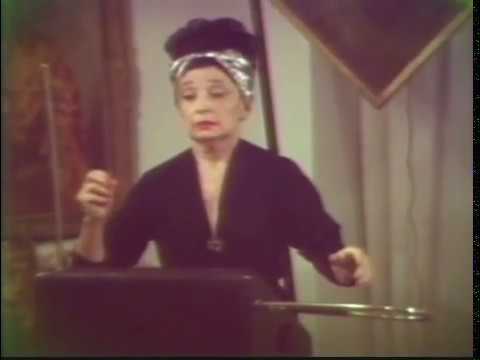
The Theramin is 100% based on proprioception.
All acoustic instruments provide feedback via vibration to the player.
Things like Theramin do not, and so can be seen as requiring a higher degree of skill, proficiency and sensitivity to play
Cool AF video!
I agree that the Theremin must take a lot of skill to play (not speaking as a player of one).
But to say it takes a “higher degree of skill” is IMO a stretch. The technical requirements for all instruments can be considered high when viewed through the lens of what is possible and what has been achieved on those instruments…the musical equivalent of the quote, attributed to the cyclist Greg LeMond: “It doesn’t get any easier, you just pedal faster.”
That said, the learning curve on the Theremin must be very steep.
Regarding proprioception, I’m incredulous at your claim that the Theremin is "100% based on proprioception. Taking that claim to its logical extreme, a skilled Theremin player could perform the same music without hearing the audio output. I only tried a Theremin once. It seemed to me that physical response to audio feedback was fundamental to its performance. Not to mention that the player faces the Theremin and receives visual feedback about how close they are to the instrument.
Yep.
Nobody needs to say shit about proprioception til they’ve seen Yamantanka Eye and his glowing lightning balls of doom.
To describe it as gestural seems pretty reductive. Fucking transcendent mate.
Unfortunately, decent recordings are few and far between, but seeing it live all them years ago (2004 I think) changed my fucking life.
First 10 minutes or so of this video…
Even without the lightning balls, Eye’s performances have always been about 70% gestural, guy’s a pure conductor. Of everything.
I’m very ignorant about this subject. Why is gestural music making an important thing? I don’t really see why it would be more interesting than just being skilled at playing a ‘physical’ instrument (I assume both modes of playing require high skill and practice). I’m very happy to be put right about this and learn something.
Yamantanka Eye!
Nothing is important.
Sometimes highly gestural performances/performers are cool though.
Might not be to you, might be to others.
He might be a twat. He’s also one of the most influential and groundbreaking performers alive.
I’m sure he’s not a twat, it just looks a bit silly to me. Reminds me of those twats who spin glowing balls round at psy trance festivals. Horses for courses and all that though.
Edit - I’ll give it a proper watch later.
Its not.
Sadly there are some people that need to make a dichotomy where none is needed. Or dig at anything that isnt what they perceive as being superior.
All music is ultimately air pressure against our eardrums, interpreted by the brain.
Fucking boring when we reduce it to that.
Fucking amazing when we devise different ways of making air move.
… letting someone who understands …
This is from Imogen Heap in a NPR Tiny Desk performance.
BTW : Imogen also performs acoustic, watch the earlier part of this.
Also BTW this is from nearly six years ago.
Jaw-dropping, that the entire performance is only voice plus hand gestures in the air.
With lyrics that go with the gesture. Gesture that goes with the performance.
Gestural music performance the showbiz way:
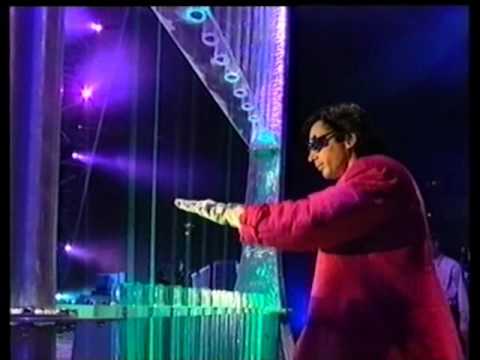
I think air gestures lend themselves perfectly for dramatic performance.
On the other hand, as a controller for actual music making, gestures have to be really precise (eg theramin) to bear any musical relevance and in this context they are usually less dramatic and perceptible. The ear is all you’ve got with such instruments, making them very difficult to learn.
Always important to back up your arguments with examples!
This is using to gestures as a remote control rather than for making music or as an expression dimension.
If someone was using an octatrack to record loops, add effects and control parameters during a performance, would you describe that as a remote control?
are you refering to free will / puppetmaster theories?