In my case, Osmose has killed (already in 2019) my GAS for the Continuum. I own a mini, which has a very different playing surface than the bigger Slims, and together with the Osmose, I can’t see for the moment that I’d need anything more. Maybe a few years into the future …
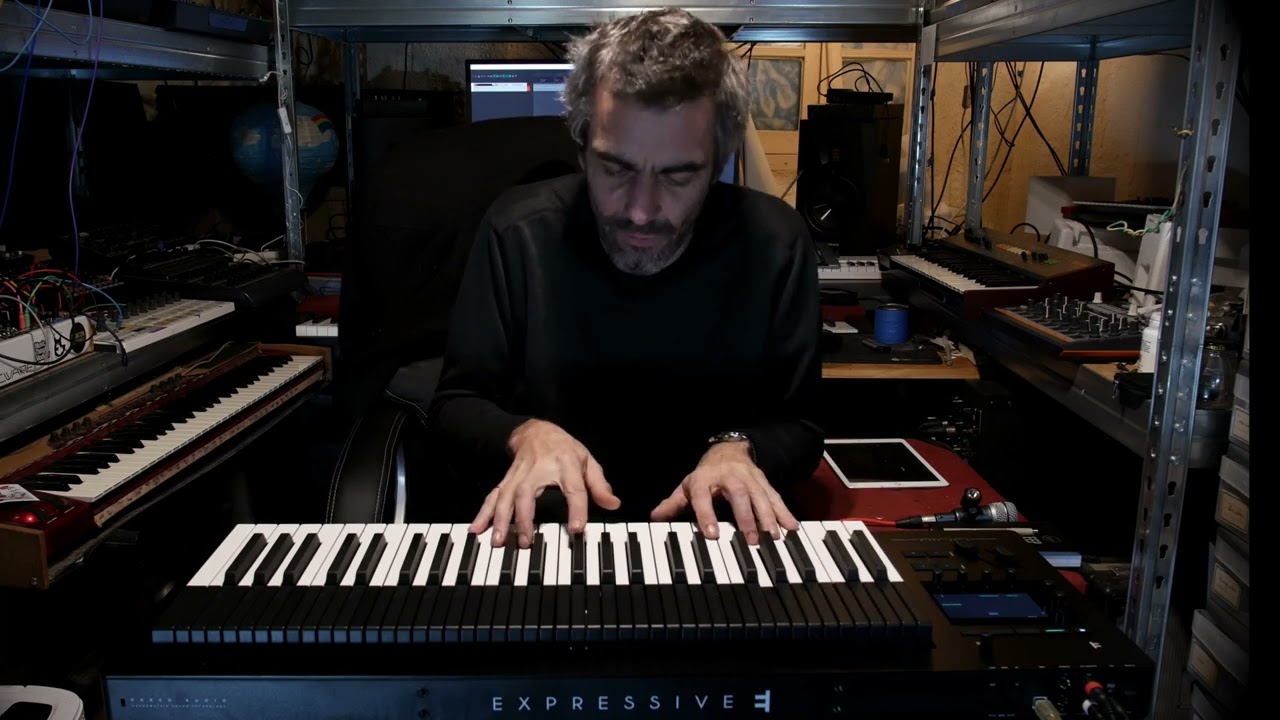
I dont know if it has been already posted but this is the best demo i found :
2 Likes
I very much like the constraint of the pitchbend via pushing the key L-R a limited amount rather than what I imagine a continuum would be like.
Gives someone who has basic keyboard skills a chance to add a lot of realistic (or unrealistic) flair to their playing rather than a challenge akin to learning a multi-finger fretless instrument for the first time which is beyond my ever hoping to achieve
2 Likes
I’ve often read that playing chords on the Continuum can be a challenge. On the Continuum(ini), there is a rounding function which discretises the X range in favour of the actual notes and thus reduces the microtonal range between the notes. In an extreme setting, the Continuum would behave like a traditional keyboard.
different surfaces have different pros/cons… they are also pretty much incomparable. the osmose is fantastic, and also familiar , but the depth of feel/y axis and other things are really appealing on the continuum.
(I never really liked the feel of the continuumini… for me, its nothing like the continuum, like the osmose, its only commonality is the sound engine)
so yeah, the osmose won’t scratch the itch of the continuum’s feel… only the sound engine 
the reason for my interest in the eagan matrix module is the opposite.
I have other expressive controllers (eigenharp/erae touch), so as I love the Eagan Matrix module, and plan to dive in to it…so, its kind of ‘doubling up’ on investment of time.
also… the one part of the EM, the Osmose lacks is sound input processing… which, arguably, is the focus of the euorack module.
but for sure, no rush decisions… Im just going to enjoy the Osmose, and use the EM via it for a while to come, before making any decisions. ( * )
anyway… definitely a time to enjoy what we have… and the fantastic work Expressive E have done along with Haken Audio.
(*) I’ll also say, having a decent screen on the Osmose really improves (for me) the immediacy… I think I could miss that on both the continuum and module. so perhaps worth waiting to see if Haken reconsider this.
1 Like
There’s a good video on how the various things instruments make easier/harder tend to affect the kinds of music played:
4 Likes
Let me check tomorrow when I am back in the studio. When I recorded my first track, day before yesterday, with the Osmose, I had to dial back the master volume as in Bitwig the levels where +1.5 dB …
I have the feeling the Osmose/EaganMatrix does have a rather large dynamic range depending on the patch. Some patches, especially when playing the second level aftertouch, become really loud.
1 Like
Yeah, I’ve noticed that the sustain pedal sometimes interacts strangely with the aftertouch/pressure, nullifying vibrato or giving unexpectedly loud bursts. Occasionally, it seems the sustain pedal action introduces delays to note triggering, esp when the voices are maxed out, although I haven’t explored that much yet. Still, it’s a fab thing, incredibly playable.
I think this kind of brings up some points I always wonder about MPE and how far it differs from subtle introduced randomness at times. Like the idea that you can control the expressiveness of 5 woodwind instruments at the same time VS a similar reason we like analog synths just subtle differences in every note. I feel like especially with individual Xaxis and Yaxis there really is only so much you can modulate your fingers in separation, I suppose it does mostly come down to the 2 hand entities and subtleties between the fingers.
1 Like
to some extent I think the randomness is true…we get minute differences due to finger positions.
BUT the key difference with expressive controllers is you are influencing this, its not ‘just’ random…
this is also the difference with expression vs using automation (env/lfo)… again YOU are part of the loop.
… and that (for me) is what its all about.
I think yes and no…
for sure, getting 10 fingers to do different things is going to be nigh impossible. but you can get a few fingers to do different things.
(how much this is, really depends on controller … e.g. this is a bit easier I find on the eigenharp)
however, a lot of the expressiveness (for me) is that these modulations are ‘under your fingers’… any finger, at any time, without moving your hands from the notes they are playing.
be that for individual notes, or for a chord under one hand…
and I think these two things combine, to help you feel attached to the sound, to control/influence.
again… just my opinion, Im sure others feel different.
3 Likes
luckily, EE wisely included an EQ and a compressor, on my mini I have an external volume control to avoid my ears from falling off 
btw my Osmose has arrived and I’m relieved to conclude that it won’t render my mini redundant 
1 Like
yeah, its got a very large dynamic range…
Ive been playing with the Eagan Matrix this evening, creating some presets… it can get really loud if you are not careful… esp. when the filters get involved.
its also easy to make mistakes and suddenly go from what you think is going to be quiet, to deafening… so need to be very careful.
(sounds like perhaps, I should see if I can use the compressor as a limiter whilst doing sound design)
2 Likes
La Voix du Luthier has been making acoustic resonator/amps for the Haken Continuum crowd for a while now. This will be their most affordable model yet:
4 Likes
Does it really matter whether randomness stems from a clock generated seed or an émotion du moment? How much wood would a wood-chuck chuck if wood-chuck could chuck wood? 
of course…
randomness is never truly ‘just random’ … just like noise, it has a distribution.
consider just 3 different scenarios…
- digital random… its seeded, may well be using a particular distribution
- analog random… might be temperature related
- fingers… will very likely be pressure related
none is better, and many may not care… but they are different, and depending on how they are patched in, may, or may not, make large differences to the sound.
1 Like
One of my keys, more specifically the next highest A#, is behaving differently than the other keys. When bending it to the left, the response is way to sensitive, meaning that I get more of a trill when trying to play a vibrato. I’ve opened a support ticket with Expressive E.
The Omega is pretty heavy-duty but it’s rock-solid and more comfortable to sit at than an X-stand. Also it can go pretty low, so if you are shorter it’s great. There are also a ton of add-ons like a laptop arm, music stand, shelves, and I think even a drink holder, though these can get expensive pretty quick. Not the cheapest stand but a good investment if you get worried about your expensive keyboard(s) ending up on the floor. No matter what you pick, though, congrats on the Osmose and enjoy it!
Receive yesterday. Never thought the day would come!
Really loving it so far. Build quality is excellent and the sounds are great.
Was lamenting the lack of a full manual, although found this which is an online manual of sorts.
https://expressivee.happyfox.com/kb/section/65/
Wonder what/where section 3 is…?
A couple of things I would like to see in a firmware update:
The ability to switch between mono/stereo output on the hardware (so don’t keep having to plug/unplug the R cable If wanting to record in mono or stereo accordingly). Could easily be added to the global settings page.
As others have noted, the ability to add tags to presets - even a favourites list would be good.
2 Likes
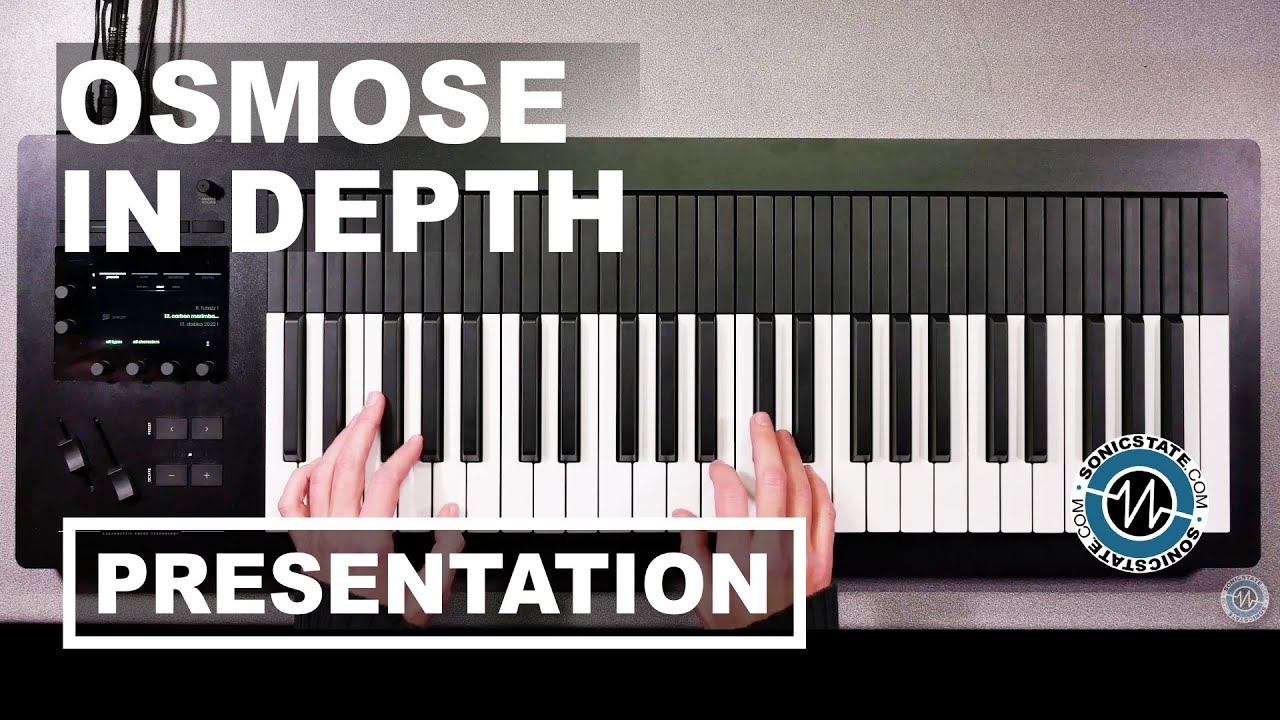
section 3 should be pressure & sensibility settings, and maybe arpeggiator.
5 Likes