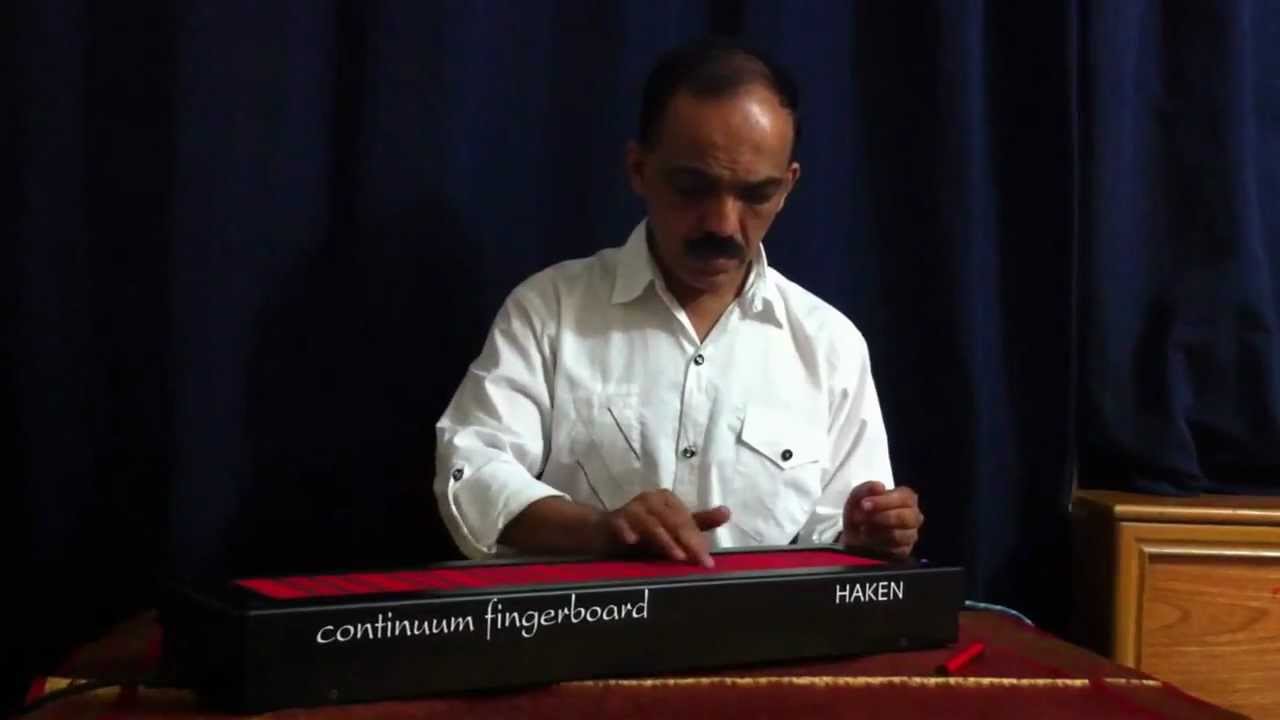
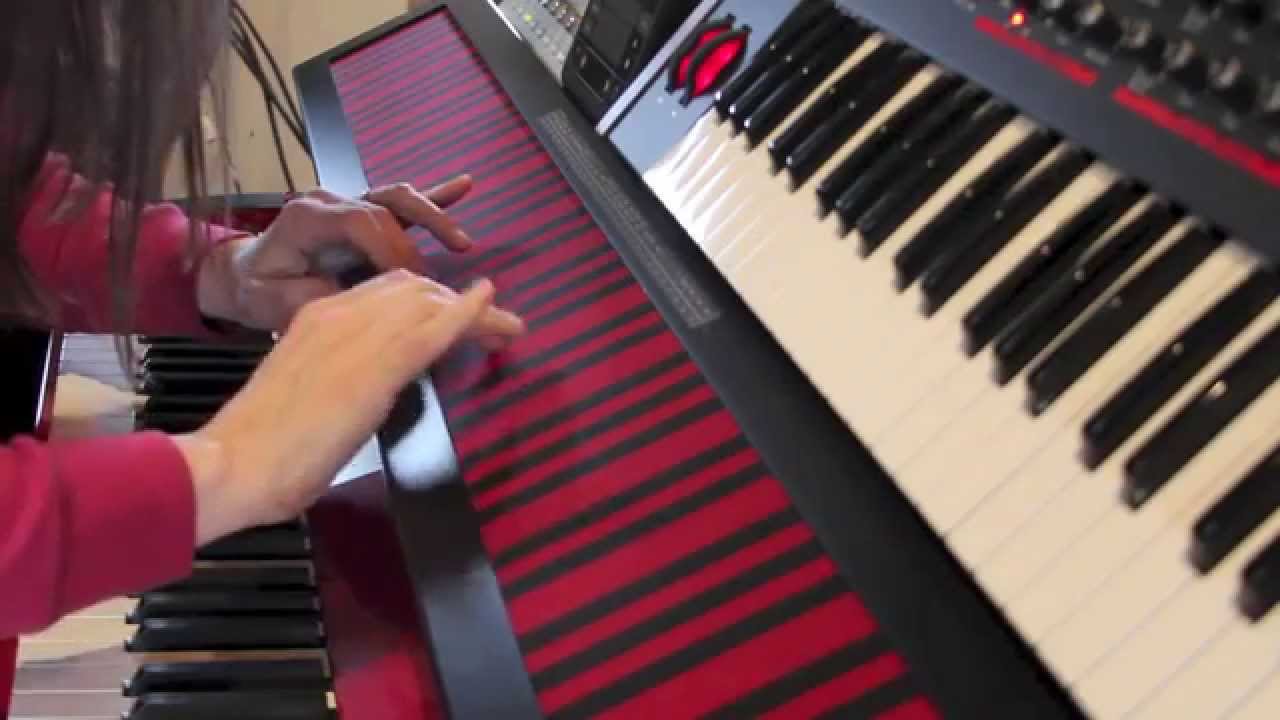
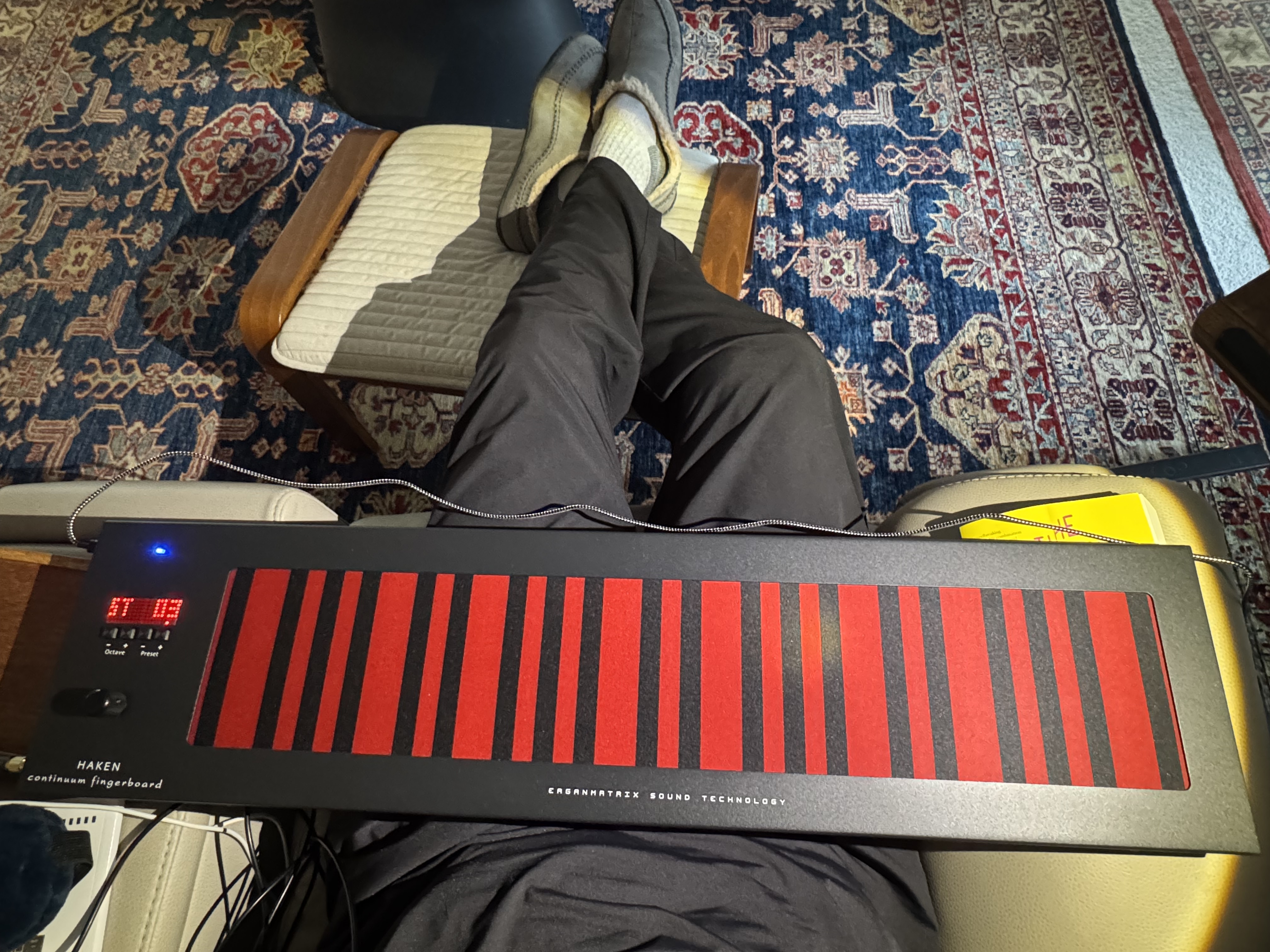
I only have a 'mini and am finding it pretty wowing once I decided to fool with it everyday especially after I hooked up a sustain pedal to it. I don’t fool with the Matix much or if at all but might have to look into it as I quickly found out that each preset has a different implementation for what the pedal controls. I am predisposed to confusion but am I mistaken or does some presets act differently as to the sustain if the pedal is pressed before or after a note is held? I do have this slight issue with the Matrix not launching when it’s connected to my Window’s Surface with a USB cord, maybe it’s the cord itself but have yet to investigate.
I am curious to hear any and all opinions, tips, etc. from Continuum owners. Favorite presets and such, and anything really anything that might assist me in learning to be more competent when playing it. Are these sounds which are sometimes produced when the surface is struck with some amount of force, boingy type sounds, user error or actually built into the sound engine to mimic certain aspects of playing acoustic instruments in perhaps an unconventional fashion?
I’m sure most owners have already seen this video below, I watched it more than a few times and always find it inspiring…
I have and love a Half-Size with the old rack-mounted CVC. If I can, I hope to get a Slim within the next 12 months. The Eagenmatrix editor is critical even if you don’t want to edit you patches in the Matrix. You can do things like adjust the recirculation of the reverb, change the range of the octave switching, and adjust the pitch rounding to your tastes.
Lots of the patches react very differently depending on whether you use a swift tap or a sustained pressure. Sally Sparks shows off this sort of thing in this video:
I am eagerly awaiting the new DSP upgrade boards that will allow current half-sized and full-sized instruments to get the DSP and I/O of the Slims. Supply chain issues have slowed production to a standstill, though.
Quality tech help (including getting the Haken Editor running) is available via the Facebook group. Facebook is awful for maintaining an orderly archive of trackable threaded discussion, so it’s surprising and unfortunate that players and engineers at this level of competence have settled for such a lowest common denominator. It is responsive, though, and frequented by people with deep knowledge of the instruments.
I’m reviving this dead thread for my own nefarious purposes…
Well, not so nefarious but I’ve acquired a Continuum Slim 21 and wanted a better place to share thoughts on my Continuum journey other than the new gear thread. See my previous initial thoughts on the Slim21 here: [1][2][3].
Note that there is now a Continuum Users Discord server:
It’s not too busy yet, but Richard Kram and a few other folks are answering Q’s there.
I’ve started in on Richard Kram’s programming the Eagenmatrix video series, and I’ve created my first Eagenmatrix preset!
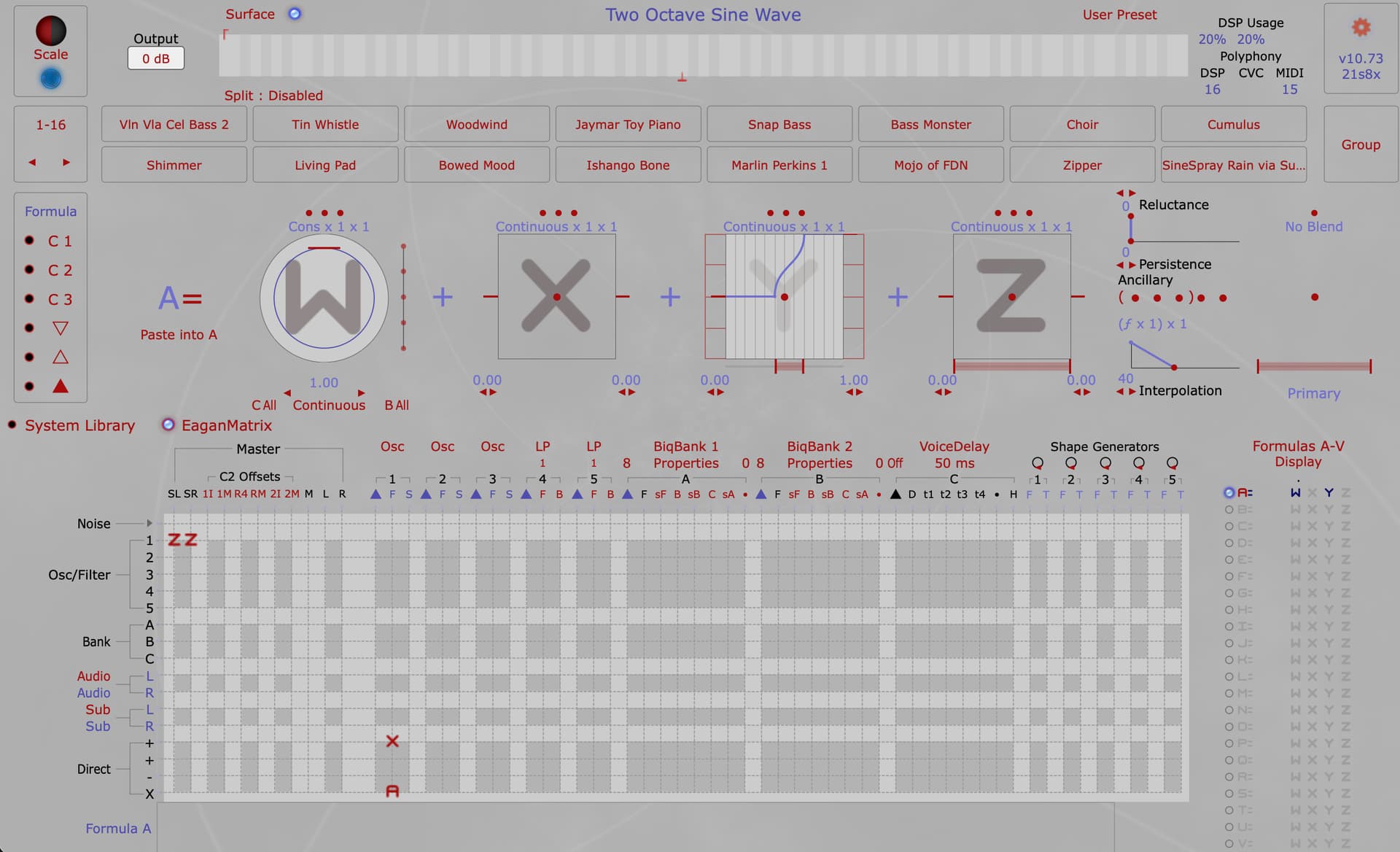
It’s a dead simple extension of the basic sine wave patch, but it splits the playing surface in half along the Y-axis. The upper half of Y plays one octave up. The transition zone uses a steep sigmoid function for a bit of smoothness as you move up/down an octave.
This was an experiment to see how playable the Continuum is when the Y-axis does double duty. Turns out it works pretty well!
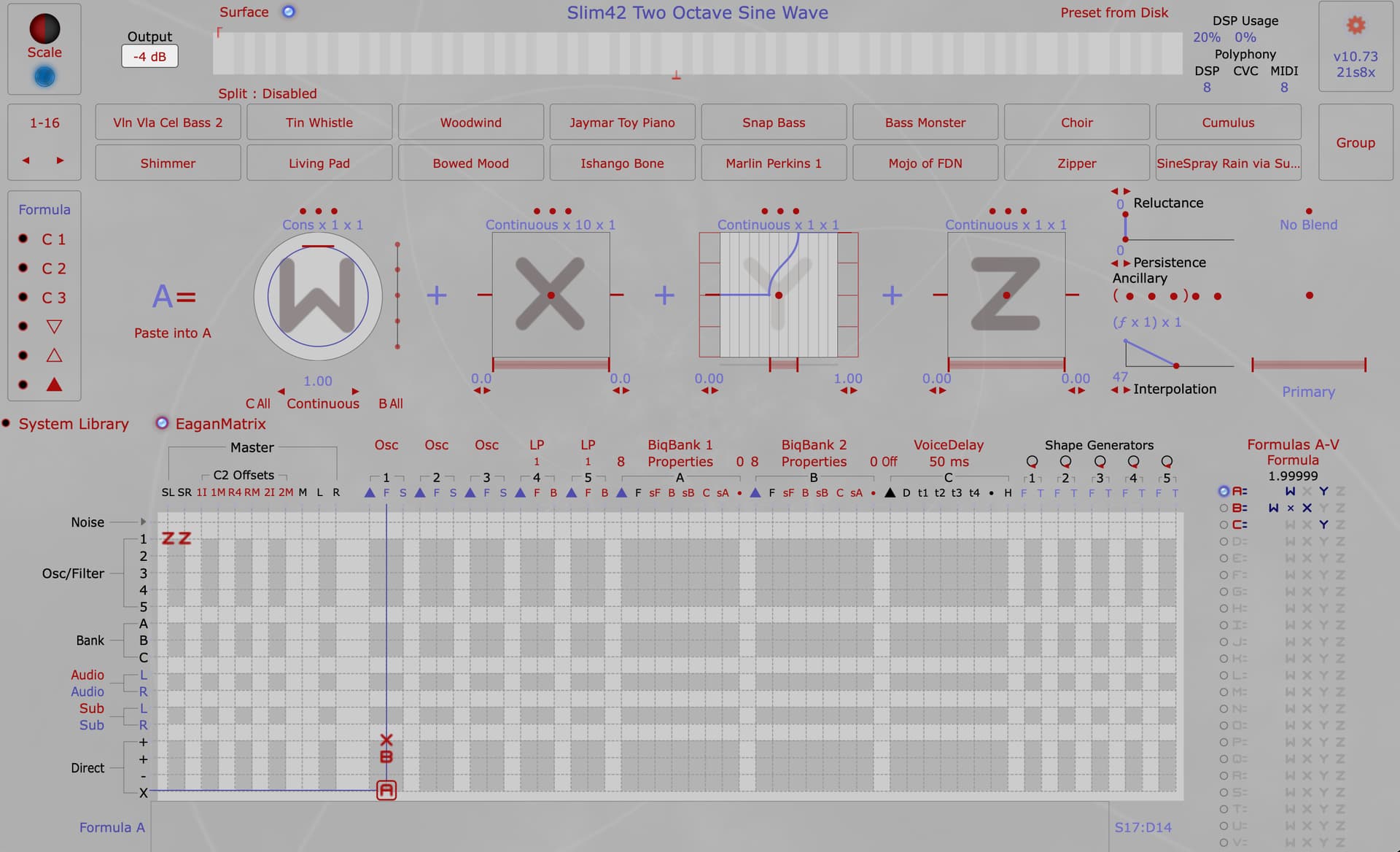
Building off my “two octave” split Y patch above, I built another patch that turns your Slim 21 into a Slim 42!
This splits the Continuum into an lower and upper row, but with the upper row being an octave + perfect fifth above the lower row. That’s super convenient because it effectively doubles the length of your Continuum (but ignore the color of the stripes when playing the upper row!).
Here’s what the patch looks like. Again, it’s pretty simple (though it took me a while to figure out as the Eagenmatrix isn’t the most beginner friendly development environment):
I can’t say I really understand what you’re doing here inside the EaganMatrix, but like Scot said, it’s an impressive launch into it considering how (not) long you’ve had the Slim21. Go big!
As I said in the other thread, I’ve been wondering for years if it would be worth getting a Continuum if I have no intention of messing around with the EaganMatrix (e.g. using it merely as an instrument and maybe also a controller for other gear).
Absolutely. The presets are excellent and there is a lot of variation to be had from the instrument’s performance features. The Eagenmatrix is quite intimidating if you want to roll your own patches from the ground up, but it’s pretty easy to customize existing patches to make them your own. And of course you can control external gear with it (it’ll give new life to an old analog synth. My Minimoog is my Continuum’s best friend). Plus, it takes processing very well. Continuum and Analog Heat is a divine combination. There are lots of happy Continuum devotees who never delve into the Eagenmatrix.
For my part, I’ve not programmed the Eagenmatrix as much as I’d like in my 10+ years of owning the thing, though that’s due to having a Kyma system, for which the Continuum was originally intended before the Eagenmatrix was added. I know Kyma pretty well, so it tends to be my go-to platform for making custom Continuum-controlled things. I’m saving for a new Slim now, and I’ve promised myself I’m going to spend more time with the Eagenmatrix if only out of guilt for spending so much money on the thing!
I should note that I’m pretty pig-headed about making my own sounds. I almost never use presets (“almost” because that PPG vocal patch is irresistible) and I rarely ever save my own patches (I tend to start each session from scratch) And yet I am perfectly happy to play Eagenmatrix presets. They are beautifully designed and the performance parameters are very well thought out.
This is very encouraging. I now know myself well enough to be more realistic about how intentions so often do not match later reality. A very long time ago, before Apple owned Logic, I was going to really get to know how to “program” (use and tune) the Environment behind Logic. I dabbled, read manuals, started to scratch into it, and then got distracted, bored, intimidated, and ended up just using the front side of Logic and mostly left the Environment alone. I had a free copy of Max that came with something I bought long before owning Ableton–same thing. Dabbled, bought some kind of course on it, then… Other examples include Reaktor and Bitwig’s Grid. All very exciting, powerful, and also for me, takes more time to learn than I am willing to give it.
I also already have an Osmose, so I know what you mean about the way the EaganMatrix can feel very different to play than other software underpinnings in terms of expressiveness. I haven’t even cracked open the EaganMatrix for the Osmose, although I do use the Osmose to control several of my other synths.
I am currently leaning pretty heavily toward waiting to buy a Slim46. I could afford a Slim21 right now, but think it likely that I will eventually wish I’d waited until I can afford a Slim46. My favorite way to play when I am not tinkering with knobs is to close my eyes and stretch my hands across the keyboard (or push pads) and randomly find chords and note combinations that appeal to me. I have always imagined this being how I’d want to play the Continuum. It seems so well designed for this. On the other hand, the portability of a Slim21 for travel is attractive. Right now, I use a Linnstrument 128 along with my laptop when traveling.
It sounds like you own an Original (not slim) Continuum. Just out of curiosity, why are you saving up for a Slim?
As I said, my old fat Continuum (46) is over ten years old. The DSP was updated, but the new models are more powerful. At some point, my old one will likely be left behind the by firmware updates that will take advantage of that power (not to mention any chance of repairs as parts for the older units become scarce). I guess I’m making an attempt to future-proof. I also prefer (some of) the I/O and interface of the Slims.
I might keep the old one and dedicate it (and the CVC) to controlling my non-MIDI analog synths.
I am guessing both of you already know this, but in case you don’t, and also for others looking at this thread, I just discovered the Facebook group for the Continuum user community (not a fan of Facebook, but might be worth joining): Redirecting...
Hi there!
It’s been a while since I came here. Since I got my Continuum actually, somewhere around 2019 and I didn’t have a clue there would be a topic about it here!
After a long musical and technical journey through samplers, DAWs & midi controllers, I discovered the Haken Continuum & the EaganMatrix and immediately fell in love. Now, I work, play and design sound almost entirely with them. I like the idea of this instrument being a creative constraint.
For those of you who are tempted to dive into the Matrix, here’s a series of tutorial videos I made. They start from the very beginning. And if you prefer, I also propose one-to-one online lessons.
I’m also finalizing a specialized editor for EaganMatrix powered devices which is called MOTIF. Specialized editors (Haken Audio calls them ‘Overlays’) let you craft presets for Continuum and Osmose in a specific orientation (FM, drums, etc.) with a more user friendly GUI than the Haken Editor.
MOTIF, for example, lets you design random looping patterns and craft the link between the sound evolution and the gesture. Here’s an overview of it. I’m quite proud of this graphical interface.
If everything goes well, it should be available on the AppStore in a couple of weeks.
And if really don’t want to DIY, I’m also working on preset banks for EaganMatrix that I will release here on Ko-Fi.
Thank you for doing these videos. I’ve watched the first few and plan to watch the rest. And thanks for doing them in English too! They are informative, thoughtful and helpful for starting to think about using the EaganMatrix.
Weird thing here. I was trying to use the Continuum as a controller for Live Suite 12 using the USB Data port. Saw the midi note indicators lighting up in the track info (under “All Ins”) but nothing happening with VST (MPE Enabled in the instrument). Happened across multiple instrument tracks. Then turned on Push 3, and wallah, worked. Doesn’t work unless Push 3 is on, even though I am not using Push 3 as my audio interface (using Arturia Audiofuse). Any ideas? I might also post this over at Ableton thread or Facebook Haken Audio community, but trying here first.