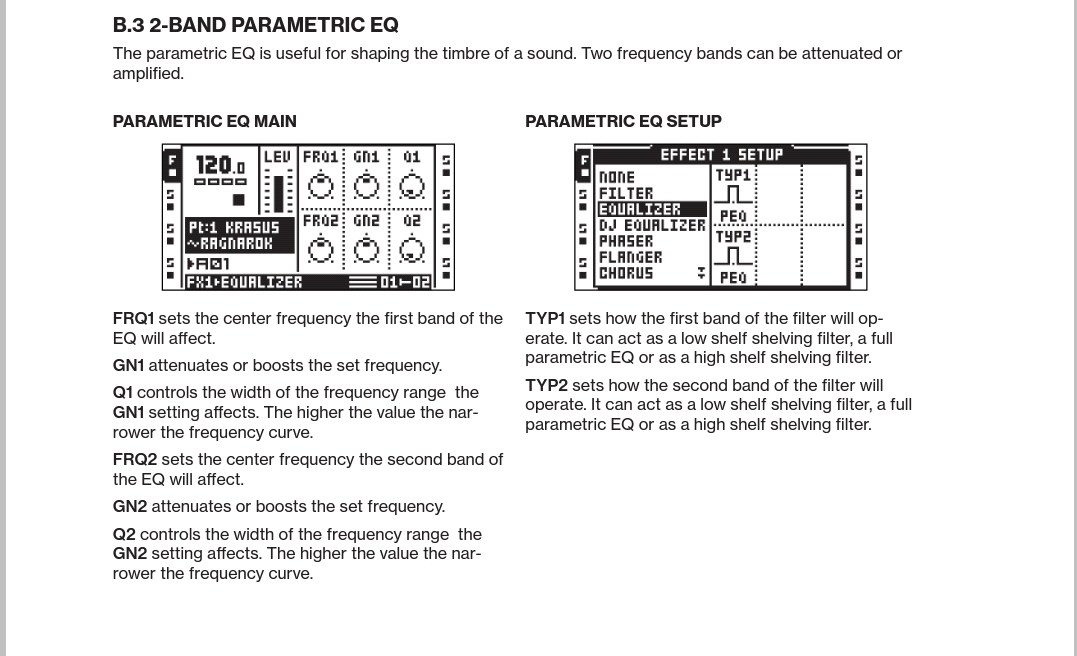
This is going to sound so noob but anyway. Can anyone explain what, in the equaliser, GN is doing on low and high shelving filters.
I’m not asking about when it’s parametric - that’s all clear.
I use shelving filters elsewhere and it seems simple - eg. in fabfilter proQ.
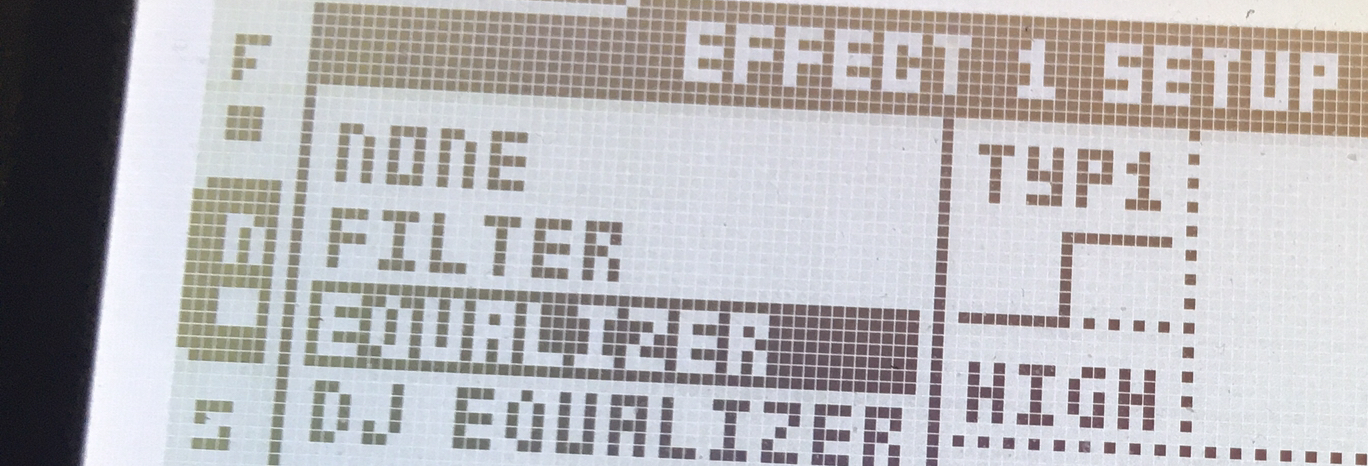
In the Octatrack they seem to behave opposite to their names (hi more like Lo and vice versa).
I get that Q might do nothing here, but I’d hope it could set the slope. Seems not. Also I’d expect to get an audible result leaving Gn neutral and tweaking FRQ, but it seems maybe that’s the slope? At least when in negative values & Not a boost or dip at the frequency like it is in parametric.
Anyway - the closest I can get to a useable high shelf filter is to choose TYP LOW (!), Set GN about -15 and move the FRQ up from 0 until I hear the sub dropping away. Somehow I’m not convinced - especially as I seem to be using the opposite shelving filter type! Also it seems to affect high frequencies more than it should. A more severe negative GN and it just seems so crude …Okay I should look on an analyzer…
I’m really after an alternative to using the BASE and HP shelf controls in the filter, which I often use just to roll off sub frequencies - pethaps I can get a more transparent result with equaliser? You’d think so
Anyway if someone can explain how TYPs LOW and HIGH are not mislabelled and what GN/Q are doing /not doing let me know! Thanks!
Strange. I just tested again with white noise. Works like expected. Even with gain set to -63 I can clearly hear and see the effect when I adjust Q on the shelf filters.
Yes quite a bit - very musical frq bands - definitely my go-to for cutting mids.
Think if I could control slope on parametric I would use it for low cutting more. It just sounds like a very gentle slope that I can’t seem to improve on - but I’m rapidly concluding it’s just me!
It took me around a year or so (I know super pathetic) to understand how the EQ “works”. I don’t even know why … but I guess it’s because you really have to understand how it works since it doesn’t give you any visual feedback (besides the values). Every parameter needs to be well understood in its function. Sit down and learn what each knob does in detail.
Afaik that’s a common depiction, the ‘raised’ part in the graphic is supposed to show that it’s a high shelf (or the opposite for a low shelf), I guess.
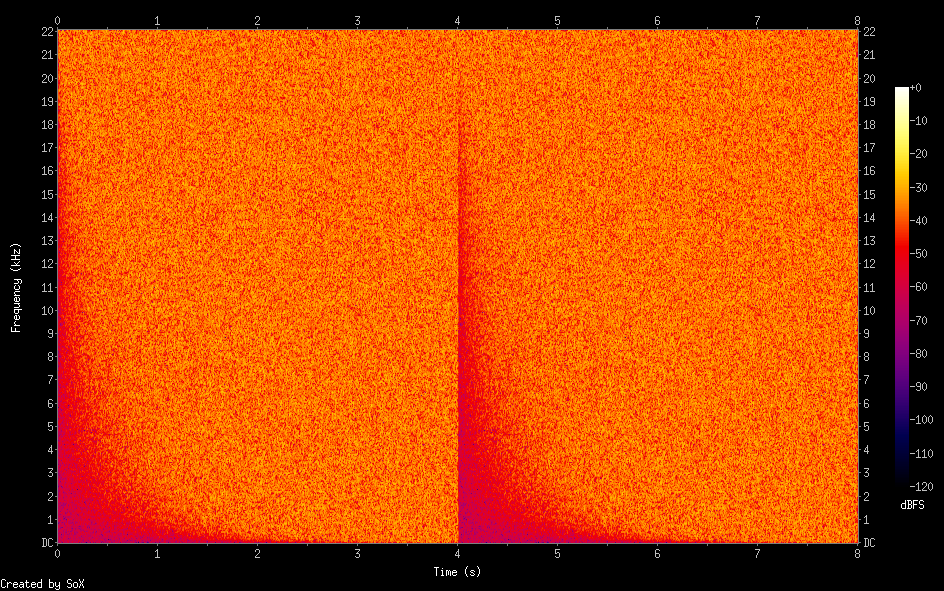
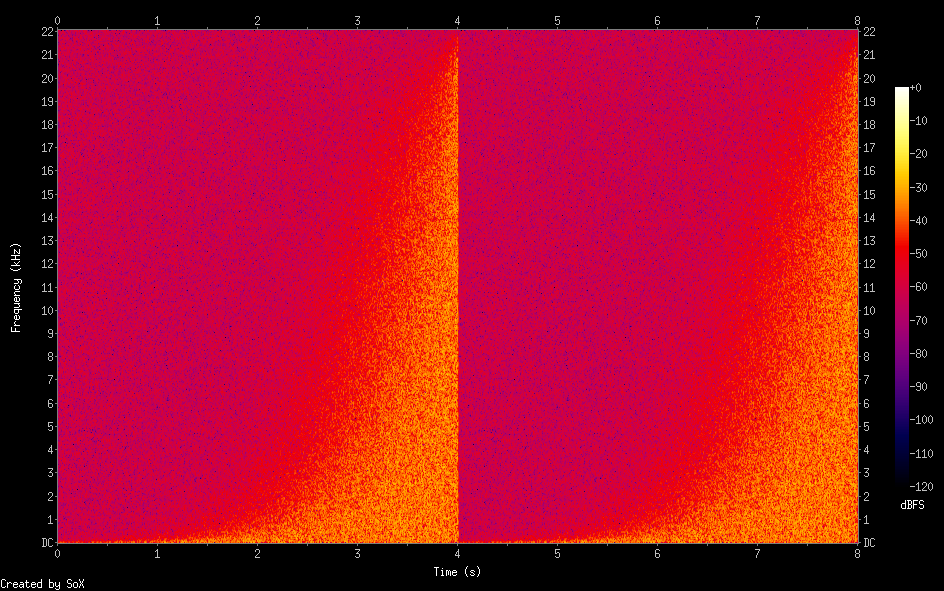
Just play white noise on your OT (loop it or use a long sample) and monitor the output with a spectrum analyser.
Pull the gain up and max Q, sweep the frequency from high to low, then do the same with Q all the way down to -63.
It was really obvious on my spectrum analyser how Q changes the eq curve.
Seems like a pretty flexible eq that can cover a lot of ground btw.
Doing this with white noise. Looking at Pro-Q3 spectrum analyser. Can’t see or hear any difference between Q max and Q min when sweeping FRQ with GN at max…
Just to be clear - I’m talking only about the high and low shelf filters, not the parametric. Q has obvious effect on parametric.
I just loaded the same white noise sample, because I wanted to post screenshots of how Q behaves, but guess what? No dice…
That is pretty strange damn… last time I posted here I was sitting right in front of my OT, turning knobs while I was telling you it worked, so either there is a bug or the matrix has me…
Unfortunately I reloaded the part right after I did those tests the last time. So this is on another bank, another part. I’ll try to find out what’s going on, though.
It’s also in the manual, so I’m no throwing my sanity out of the window, yet.