There’s a lot of papers and theories around why the major scale is perceived as happier than the minor scale, e.g. (source)
Noteworthy is the untrained ability to hear the affective valence of major and minor harmonies (chords, melodies, keys). Even non-musicians who claim they “know nothing” about music can hear the characteristic (dark, sad, negative) sonority of the minor mode and distinguish it from the (bright, happy, positive) sonority of the major mode – suggesting that the ability to perceive harmony is an inborn trait (although perhaps not developed in some musical cultures). Whether harmony perception is inborn or awakened with exposure to diatonic music is uncertain, but the bias to hear a negative valence in minor chords and a positive valence in major chords is pervasive in the East and West.
This made me wonder: if these emotions are so deeply rooted in our brains across cultures, does that mean we share this with some animals, particularly mammals like cats and dogs, but also potentially birds?
Looking a bit further, I found it interesting to read that infants don’t seem to prefer major over minor, only consonant over dissonant melodies: https://doi.org/10.3758/BF03342673
This seems to be true for some other species as well: doi:10.3389/fpsyg.2016.00594
… but it doesn’t really answer your question.
From my own experience, our cat doesn’t seem to care about music at all (only volume). And I’m often surprised by music my kids (2 and 4 years old) like or dislike
Love this subject! I don’t have anything valuable to contribute but I’d like to follow along.
I definitely know when the birds in my garden are angry that the food has run out…
Edit: Oh I did just remember that Starlings like to mimic mechanical noises, sirens and the like. Always found that interesting in contrast to some of sweet melodies their brethren enjoy.
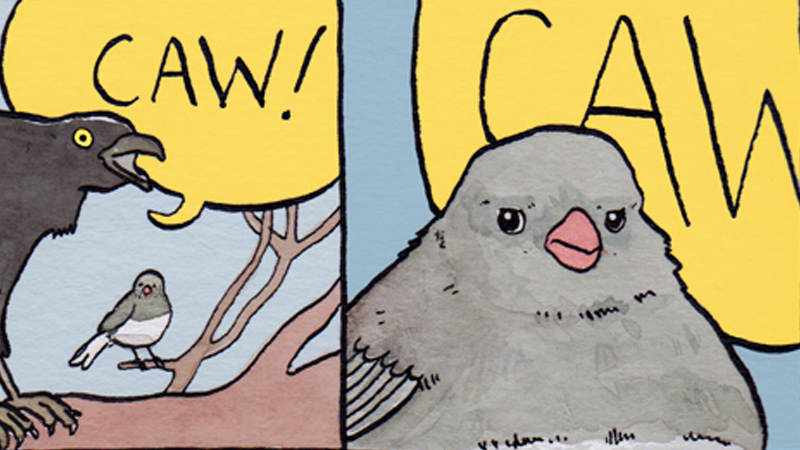
Would it be fair to describe a Crow’s song as discordant? No offence, Crows.
Off-topic, but it makes me wonder (as I have done for years, intermittently), why some cultures make more use of them than others… and in particular why Middle Eastern music makes so much of the modes with all the scrunch and gloriously bittersweet cadences.
(I confess I am lazy and havn’t explored that music too much, so maybe I’ve missed lots of straight major/minor stuff)
Yes, the major chord is included in the first 5 harmonic overtones (root, octave, fifth, octave and major third), so essentially every tone has it embedded, that’s why it’s so familiar…
One of my earliest memories is of being at daycare, must’ve been 3 or 4, and at nap time they would always put on this classical piano piece (can’t remember by who, I’m uncultured) and it was definitely in a minor scale of some sort and always filled me with a deep dread and sadness accompanied by my own confusion trying to process the feelings. I didn’t have any particularly exceptional exposure to music at that point. Just thought that case may be relevant 🤷