Let’s discuss success and failure with “networked” audio gear: any situation where more than one audio interface or converter is networked over ADAT, AVB or other audio-oriented networking. If there is interest in computer-to-computer audio networking over computer networks then that probably deserves its own thread.
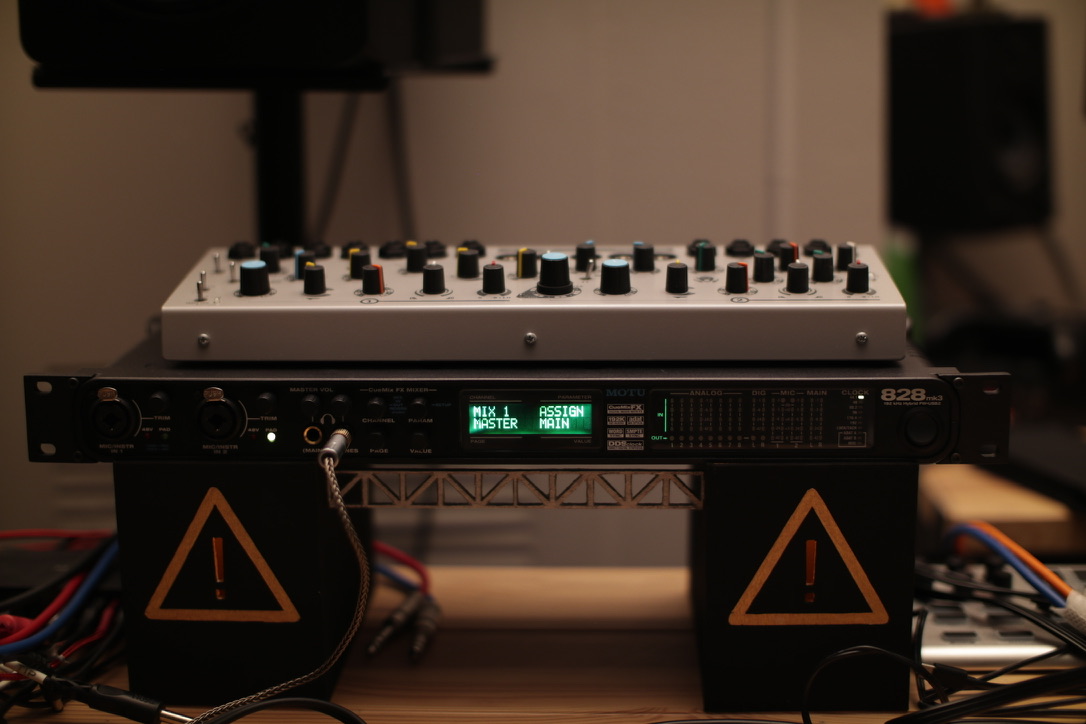
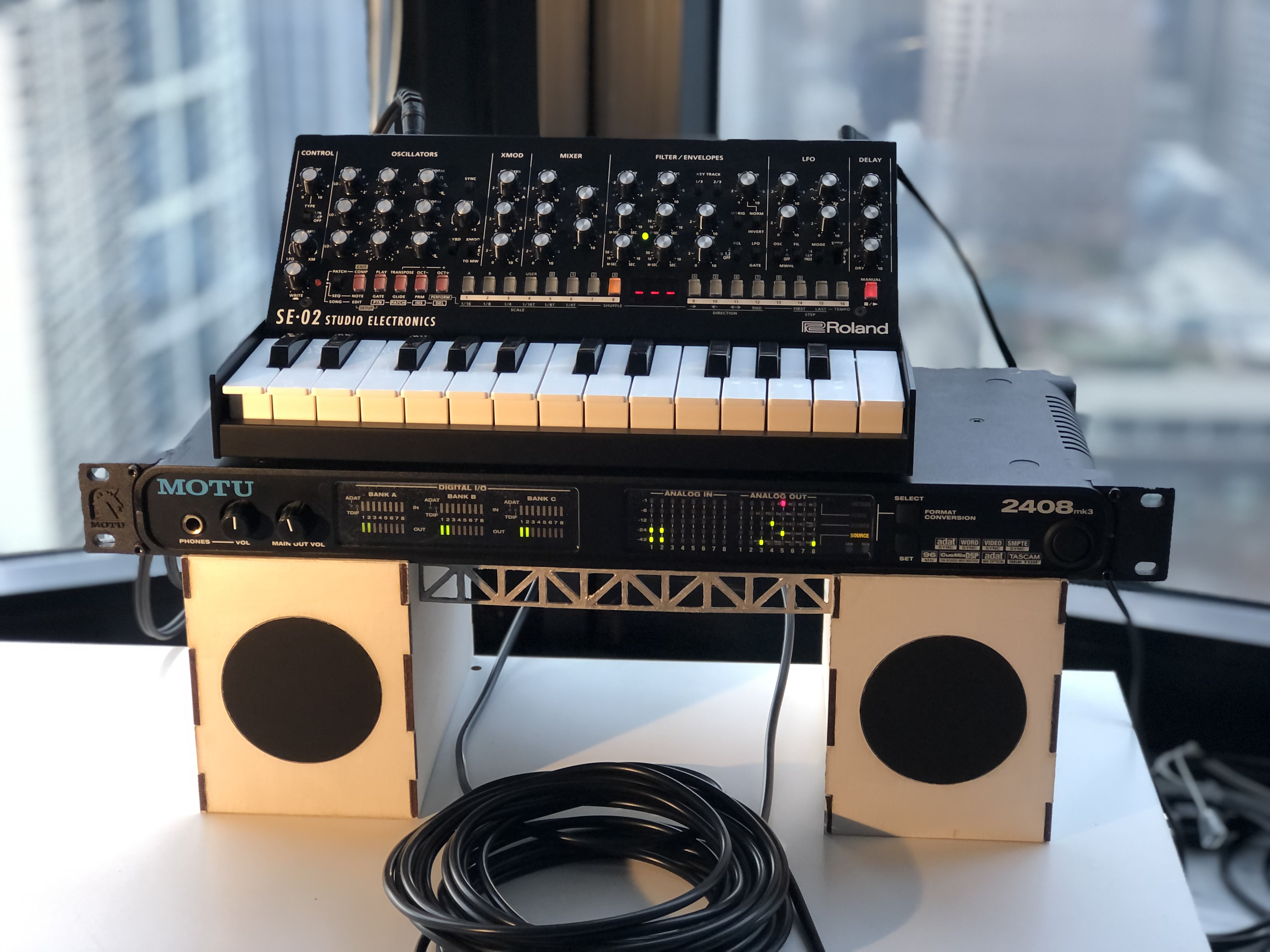
Today I added a MOTU 2408 as a A/D converter to my MOTU 828mk3. I configured everything from the front panel controls of the two units. I picked up the 2408mk3 from eBay for a bit over $130 including shipping. I plan to expand this setup further as I come across great deals.
I think this is in the spirit of the thread (forgive me if not), but this has been a point of thought and pain for me the last few weeks. I’ve been rocking 2 2nd gen Focusrite 18i20s connected via ADAT for a total of 16 inputs for a few years. Their B-stock sales are nuts. ADAT clocking and such is kinda weird, but not too bad after the initial learning curve. My big pain point has been Focusrite’s software - it’s absolutely horrific. Every time an issue arises, it takes a whole weekend to solve. As an added bonus, according to their support, if I want to use the outputs I have to disable some of my inputs, which… ugh.
It all really makes me want to just get something with more inputs so I can ignore Focusrite’s horrible software (or any software after the initial setup) and not have to think about ADAT networking stuff, but that seems to double or triple the amount of money I’ll have sunk in an interface, which hurts. I’ve considered switching systems and going with a dsub or e3 connection interface or something, but that’s all a whole different ballgame to what I’m used to and would require a ton of research.
This is exactly the kind of discussion I was hoping to encourage.
It looks to me like ADAT is the way for home / hobby studios. The 1U MOTU and RME interfaces seem to max out at roughly 8 analog ins and outs, with a bunch of ADAT I/O to get to their advertised I/O count.
My thinking right now is to max out my 828mk3 with MOTU gear from the same era. When MOTU stops driver support, I’ll either get a top of the line MOTU or a midrange RME and use the stuff I’m acquiring now as ADAT converters.
As I understand it, clocking can occur via ADAT or Word Clock. I’ve got some 75 Ohm BNC Tees coming from eBay so I can run some tests and find out whether Word Clock or ADAT clocking is more trouble free. So far things seem to “just work” which is both relaxing and kicking off alarm bells in the IT part of the back of my head.
In our venue, we’ve got an SQ6 with the Dante card and one of the 48kHz SLink 24x12 stage racks. The stage rack does all the analog inputs and one auxillary zone speaker set. The main speakers, main sub, the other three auxillary speaker zones, and the digital audio input for incidental music and cued playback are all on Dante, using the Audinate stereo output dongles and USB 2x2 and the Neutrik analog 2x2.
Network is all Ubiquiti kit, with an XG core switch and six other switches; all the Dante devices are at most four hops from each other. End to end guaranteed latency is 2.7ms from Dante in to Dante out, including mixer latency.
The Dante stuff has a bit of a learning curve especially on a more complex network. I’ve found (I think) most of the failure modes at one point or another — most recently, having messed up the core switch layout which gave me about 600μs of jitter, enough that about one sample in a million was over the latency limit, giving an audible pop every ~20 seconds. Fixing the switch hierarchy eliminated it.
When you’ve got the bugs out, the Dante stuff is absolutely solid — it’s been a real joy to just never have to think about it, and being able to drop a stereo pair anywhere with just an Ethernet cable is really nice.
Given the choice, I’d love to put all the studio stuff on Dante too, but the SQ doesn’t really fit in the space on the studio side, and getting that many Dante inputs isn’t cheap. I do have hopes for the Ferrofish A32 Pro Dante as offering a semi-affordable and dense Dante-enabled digital mixer at some point; we’ll see what happens with the DSP upgrades there when it comes out. For now, I just use the Neutrik box to get a reference pair in and a studio feed out off my monitor controller, and mix with the Bluebox.