Conrad Schnitzler, synth wizards please

dear all,

yesterday a friend pointed me towards a record by conrad schnitzler, I like a lot of the music he did but this one blew my mind. especially one synth sound catches my attention, this sound recalls a lot of memories and I want to know more about it.

you can hear it in “paracon 3”. the sound is starting in the lower register and after 25 seconds it jumps into higher territory, pitch shifting up and down, the volume envelope has a very subtle shape, it always made me think of a trumpet.

I am just thrilled by this sound, kind of flashback, it’s very emotional, transporting me back to the time when I was starting to discover electronic music, listening to “heathen earth” by throbbing gristle almost thirty years ago. this track from the “heathen earth” record features similar sounds:

this sounds have something I cannot put into words that made records feel “electronic” to me. it’s weird because I know cosey played the cornet on “heathen earth” and maybe one of the sounds that contributed to my very personal idea of “electronic” wasn’t electronic at all. the older I get the more I realize the impact chris carter synth sounds had on me. in the case of schnitzler it’s definitely an electronic sound, don’t think he played the cornet ,-)

both records date more or less the same time, do you think it’s an aesthetic sensibility that is specific for synth pioneers of this period? maybe manipulating pitch is one of the more obvious things if you start to dive into synthesis? (although they where no longer newbies when they recorded this tracks)

no idea what synths schnitzler had available, did he just play with pitch bend, glide, reverb? or do you think it’s more sophisticated?

don’t know maybe this sound is so simple that you had to stumble upon it? we talk about a time before presets, did people use some kind of patch recipes for example how to make a trumpet sound?

as an excercise I will try to make something similiar, I really want to understand why I gravitate towards this sound and why it gives me this “electronic feel”. don’t know if it’s the timbre, the shape of the envelopes, the sense of space (reverb), or if just related to personal memories.

it became a long post, maybe confusing and too many unclear questions, in case you can somehow relate, have feeback or informaton I would be very happy.

thank you,
boris

4 Likes

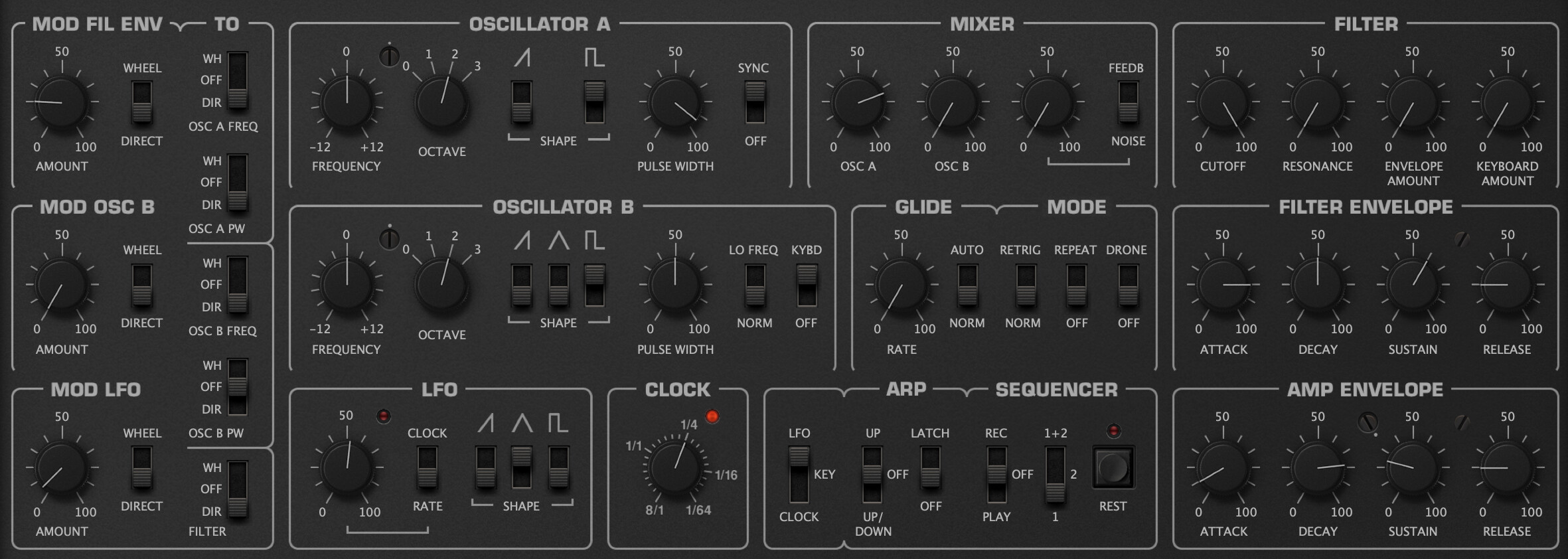
I gave it a try, and I think you can achieve this kind of sound using sync and a PWM square wave. This is probably why it sounds so electronic :slight_smile:

For example, if you have U-He RePro1 (or a Pro One, or any synth that can sync and offers pitch and PW modulation via enveloppes and LFO), I get similar sounding results (I insist, similar, not identical :)) with the settings depicted below.

Hope this helps!

2 Likes

A slight improvement is obtained if you also set OSC B to pulse, with a narrow width, and increase its volum in the mixer. Quite gnarly.

thank you, nice idea to use sync, haven’t thought about it, will give it a try

If you could cut out the exact sample it would be easier to grab, which sound you really mean.

There are such quick bleeps, which seem to play a very fast arpeggio, because to my ears it didn’t sound like random.

There are “melodic-fart”-like sounds. Something like this could be created by having a basic sound from a VCO, apply a quite fast and squarewave shaped modulation of the cutoff frequency, and have some resonance of the filter applied as well …

My method of creating such kind of sounds is by audio-frequency modulating the the cutoff frequency of a 24db LP filter and having the resonance at mid to high levels. Works best with analogue gear.

there is this sample and hold stuff going on and subtle deep base line, what I mean is the “melodic-fart”-like sound, it always reminded me of a trumpet, the attack phase has the quality of a blown instrument (at least for my ears) kind of glissando, from very deep to high frequencies, at second 25 it’s very dominant and easy to identify

Thanks for reminding me of Schnitzler. I have never listened to him extensively, but I think that this would fit my mood currently!

Then I would suggest to try the mentioned method of fast frequency modulation of the filter. Since the “fart”-part is very differentiated, I guess he used square-waves.

I made best experience with modulation sources, which can generate different pulse widths to search for the sweet spot.

Since the sound is very organic, I assume analogue gear could replicate it much better then a plug-in. My experience with plug-ins is that the sound of this kind of modulation may become quite harsh and machine-like, where the analogue circuits are smooth, melodic and much more organic … if this makes any sense … :wink:

thank you for your thoughts.

probably it’s the sound of square waves that gives me this “electronic feel”. makes me smile, why not, sometimes things are really simple. when I started to listen to electronic music I didn’t know about square waves a all, it was just fascination for these soundscapes. listening to the schnitzler record yesterday I had this fresh excitement again, like a flashback. the surgeon interview mentioned in another thread today comes to my mind, that music shouldn’t be not so much about technicality.

regarding the technical side, your attempt to work with filter modulation brings me more in the direction of the bleepy, stepped, random/ not-random sequence in the track. using sync adds nice texture.
I definitely should start my analog four again to continue this experiments.

for testing I used the grid in bitwig, because I spend a lot of time learning the software and start to find my way around. sending the note input through a lag module and playing very low and very high notes notes on the keyboard created some extreme glide effects. I know it’s super simple, but the modulation of pitch is crucial for the quality of the sound.

I was always extremly attracted to pitch sweeps. I think it’s not only the sound of square waves that gives me this strange “electronic feel”. it’s somehow related to pitch sweeps, for example the intro sequence of “robots” or even better “ferne sterne” by kraftwerk:

and of course one of my all time favorites by mika vainio:

3 Likes

Can’t say anything about the actual sound. But someone who mentions Schnitzler, TG, Kraftwerk and Vainio has a good taste.

2 Likes

Just came to say RePro is so damn good. I don’t have any particular nostalgia attached to vintage synths but I do like the sound of them.

1 Like

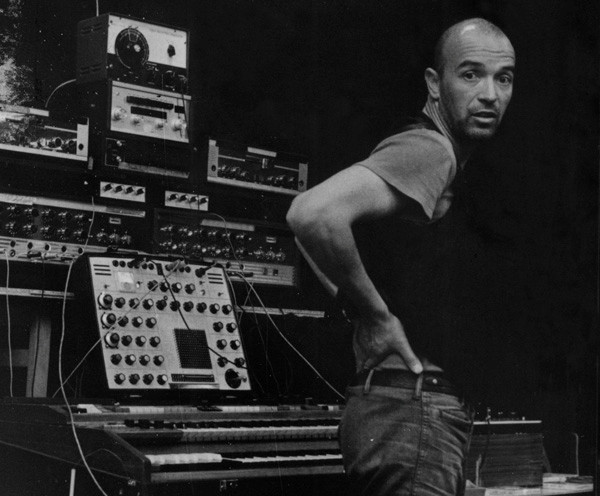
btw… Conrad used a lot of various gear during the years and was always ready to put his hands on something new and exciting. But also he kept his “live” and “real time” style of performing and recording, and using tapes, manipulations etc.

one of the most serious influences, and not on me but on many and many great techno / electronic artists of 80s and 90s. Often hear his name mentioned in discussion like “what was your early inspiration…”.

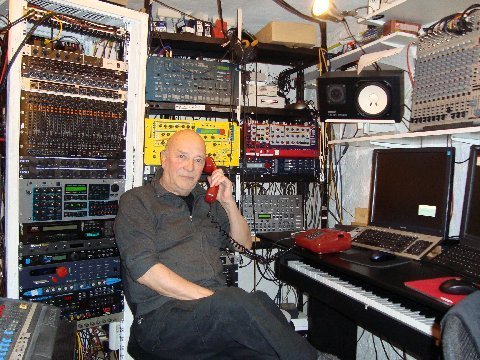
one of the greatest!74bbbd25e00d28a940d45bd3a0c7debb29bb0547 con_studio_phone1

2 Likes

RePro is a killer in my book. It is the only vst emulation that I use daily. The sound is fantastic. They really nailed it, event the extreme settings do not produce significant digital artefacts. A fantastic synth!

1 Like

Big fan of Schnitzler here :slight_smile:

1 Like

Hmmm … I couldn’t resist, switched on the synth, and made a little demo, which is all but perfect. It’s just a quick and dirty try … on a single pitch … unprocessed

That’s what I meant … :wink:

Maybe that gives an idea of what’s possible with filter-FM-modulation at audio rates …

thank you for this test, it’s very smooth.

my quick tryout on the computer was bubbly. I think because you said audio rate I had my modulation source set to fast. at the same I was hitting the filter too hard, should have used some kind of attenuation. filter-FM-modulation at audio rates is definitely something I should spend some time with.

it’s not my attempt to emulate this sound, it’s more about a deeper understanding of influences, about very personal experiences and perceptions of electronic sounds. but of course it’s nice to give it a try and get some hands-on insights.

when I discovered this kind of music many years ago I didn’t have access to synths, I didn’t know anything about synths. I just thought “ok, this is the sound of electronics and I love it”. then I learned that people used synths to create this sounds and so on…

the throbbing gristle track in my first post was my introduction to electronic music. this track had such an impact on my perception of electronic sounds. the schnitzler track recalled all these memories.

yesterday I decided to ask chris carter if it’s the sound of the cornet or a synth sound. he told me it’s the sound of a processed cornet and he played with the pitch of the effects unit, getting a sound that is somewhere between a cornet and a synth. for me it’s quite satisfying that the answer isn’t a simple yes or no.

it made me aware that when I think about electronic sounds I have a picture of someone operating a synth im my mind. in the future I will differentiate between electronic sounds and synth sounds.

2 Likes

Keep in mind that analogue circuits have the tendency to generate a pleasant chaotic behaviour. Most plug-ins dont’t. The timbres will be quite different. They are even different, if I use different analogue synths. My example was done on a Voyager.

Here is what comes out of Repro, to give you an idea. Hopefully I have identified the sound you were looking for, and got close enough.