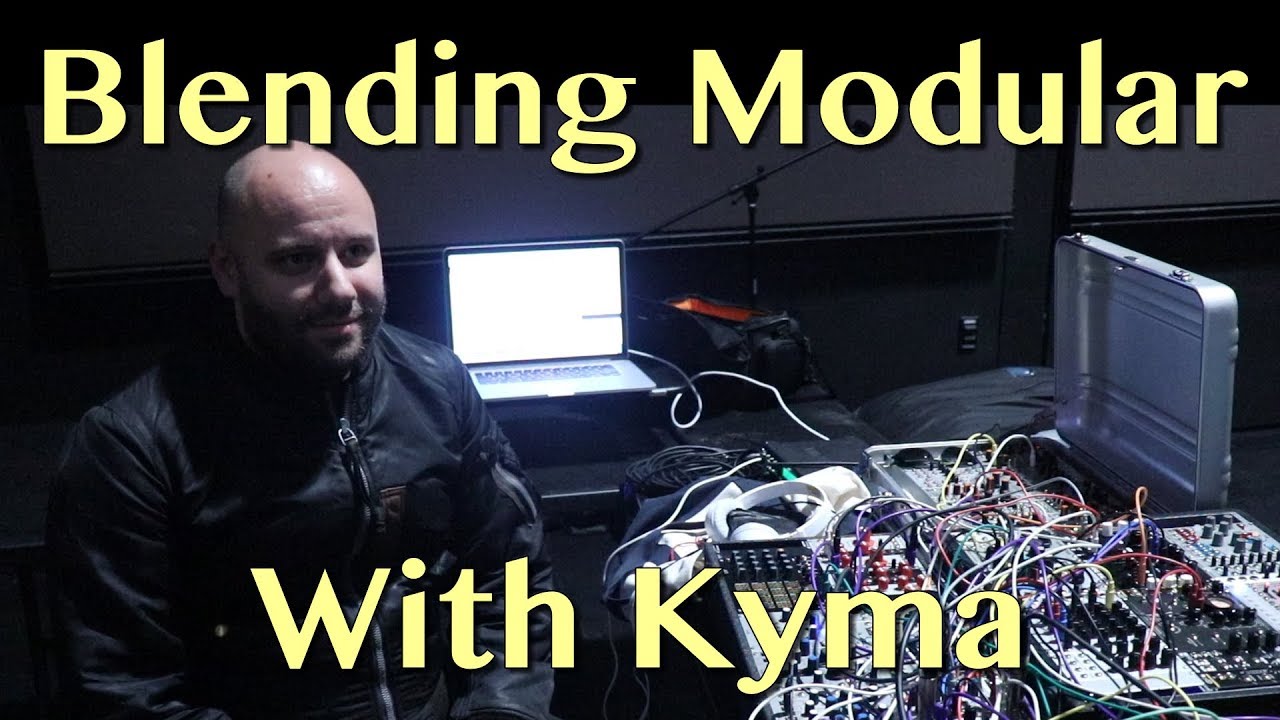
Any Elektronauts using Kyma for sound design/processing?


i’ve been thinking of grabbing an APU unit and going in, but would love to know if there are any fellow elektronauts already deep in it and if they can provide any tips or pointers for someone completely fresh

would I be ok getting an older unit if I don’t plan to do anything too processor heavy?

there is sooo little “mainstream” info about this online. To be honest, i think a lot of pro sound designers are “gate keeping” this device from the general public lol

anyways hope i draw some attention to it as it seems like a wonderful experience…

“Every morning, Kyma selects some Sounds from the Kyma Sound Library and puts them into Sons du jour.
That way, you can start each session exploring some fresh new Sounds!”

such a great idea, i think more companies should adopt something like this

7 Likes

Just bookmarking the topic since I’m in the fence about learning Modalys for the kind of same reasons : few tutorials and documentation, state and future of development.

1 Like

If I can trust my memory, I remember @Scot_Solida talking about a few months/years ago.

3 Likes

i’ve linked this to the portion where the gent speaks about using Kyma for live looping and adding cross fades on long texture samples, really really interesting right down to the mapping via the partner app

this video tickled my fancy hella, i’ve had excellent history programming in various object oriented languages (my brain likes to think like that) so i feel like i can take a tiny leap. the most recent APU is like 3-4k USD. Actually not terribly expensive considering how much higher end FX units cost these days.

I might start saving my pennies for this thing either way. The good thing about lack of hype and influencer style marketing is that it looks like it’s readily available

some more stuff on the sons du jour thing

1 Like

Paging @Scot_Solida

3 Likes

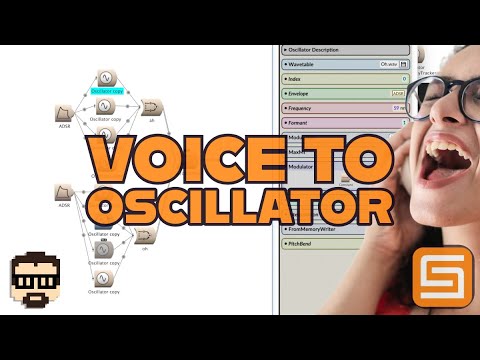
Ok this got me interested and I watched this video. What’s being done here can be done in a DAW in a very caveman-type, of course (go check it out there are tutorials). But i agree professionals who make real $ (like in movies, shows etc.) are probably using this kind of surgical and more precise techniques with perhaps much better user interfaces. This is like playing God with samples perhaps.

1 Like

I’ve been using Kyma for 20 years, and I wouldn’t want to be without it. It’s a crucial part of my studio.

Don’t plan on mastering it in a single lifetime, and you don’t need to. Kyma has been in ongoing development for many decades and as such is a vast environment with a seemingly unlimited number of possibilities. You won’t use them all, but whatever you need is probably there or can be made with the available tools.

If you are comfortable writing code, you’ll have a leg up, but it isn’t at all necessary. I don’t and I’ve never run out of ideas or inspiration. Kyma offers many possibilities for using expressions, but there is a large library of pre-made expressions available, plus good contextual help functions.

Don’t expect to find a bunch of included pre-fab emulations of famous synths - or even a bunch of complete devices with all the bells and whistles, such as you find in something like Reaktor. Most of the factory ‘patches’ (they’re called ‘Sounds’ in Kyma) are designed to do a single job or type of job, i.e. “Sum of sine Flanged”, “Filtered Saw”, or “Sample Reshuffler” (I’m paraphrasing, but you get the idea). There are some full-blown synths and effects in the user library (including a few rudimentary creations of my own), but the focus is on giving you the tools to complete a task efficiently and without comprise. Kyma is a favorite among Hollywood sound designers, and that shows in the sorts of things on offer.

Which isn’t to say there aren’t plenty of things available for the electronic musician - there are! They range from low level tools (if you know Smalltalk, you’ll be right at home) to one-click instant gratification devices that can transform the humblest sample into a deep ambient soundstorm.

Kyma is ideal for sonic experimentalists, though it also makes a good jack-of-all trades for the studio owner.

Like a lot of graphical programming environments, Kyma works on two levels. On one level, you patch together your Sounds and the user interface you desire, then send them off to the hardware, where that Sound can be manipulated in realtime via the widgets you’ve designated - you can control it with an iPad, Linnstrument, Continuum, or any MIDI controller you have,

Definitely not. Symbolic Sound are a small but open and friendly company with very helpful users. However, it is not the sort of system that appeals to a massive user base. You can’t buy it in stores, and it isn’t cheap or immediate. Because of that, there are simply fewer Kyma users out there than there are, say, Elektron users and many people that use Kyma are professional sound designers for the film and game industry who are focused more on meeting deadlines than promoting themselves on Youtube or whatever. This is, admittedly, one of the drawbacks. There aren’t a lot of tutorials (but those that are out there are pretty good, if a bit niche), and there aren’t a lot of examples or demos. That makes it a bit difficult to figure out if it’s right for you.

As for the hardware - yes, you can get a lot of older hardware. A Paca or preferably a Pacarana would go quite far. I rarely hit the wall with my Pacarana and when I did, I could make a tweak or two to the Sound, and stay on track. However, it must be said that the Pacarana is now 15 years old, so keep that in mind. A Pacamara Ristretto would be a better bet, but it’s only $500 less than the full Ristretto Pro. I personally see no reason not to pony up an extra few hundred buck to get the far more powerful Pro version when you’re already spending over $3k.

I could write reams on Kyma. I truly love it. It’s not for everyone, though. It is a labor of love for its creators and it is designed to do work, not to appeal to the eye. It’s interface is utilitarian, to put it mildly, however, once you get used to it, it’s quick and friendly and, most of all, fun and inspiring.

Make sure you budget for a compatible interface. I use a Focusrite Scarlett to get audio and MIDI in and out of my Ristretto Pro (it also has USB ports into which you can plug a MIDI controller).

Whew. I hope that helps. Excuse any typos. I am way too lazy to go back and proof read that!

21 Likes

Also, there is quite a lot of information in this thread:

4 Likes

thanks so much @Scot_Solida this gives me plenty to think about and consider. appreciate the thoughtful response and explanation of why it’s not so popular as say max. i think i will try to read up some more on it and eventually buy one in 2025, i do have the metric halo lio8 which would be perfectly paired with this

2 Likes

Thee is a list of compatible interfaces, and I’m pretty sure that one is supported (also, understand that Kyma’s interface has to be a different interface than that used for you main computer interface. You can use the Pacamara (but not the older Paca or Pacarana) in a limited capacity without an interface, but it isn’t ideal)

2 Likes

i think the interface side i should have covered, teenage engineering tx6 (surprised to see it on the list) and i think i could get the eventide h9k to work as well

the metric halo should be able to pull in the 8 channels from the virtual host inputs you can create then its free routing for me from there as it’s my central hub of sorts. maybe i can find a use for that network port on it finally with the pacamara

is there any issues folding down 8 inputs to a stereo channel (2)? I imagine there’s no kind of limitations between how live audio vs processed audio is routed to and from the virtual ins and outs

When the Ristretto came out, I sold a bunch of gear to buy one. I had always wanted to play with Kyma, and it seemed like a good time to start.

I’ve had it for a couple of years now, and couldn’t be happier. I use it mostly for sample-munging, and as others will tell you, the thing is really, really deep. I have barely scratched the surface. It is definitely an “instrument” – not in the sense of a physical instrument like, say, a Linstrument or a Roli Seaboard, but to get the most out of it you need to practice daily, and even then you’re left realizing that there’s an infinite amount to learn, and only a finite amount of time you can invest.

I’ve found the user community to be wonderful. I am not a professional sound designer, or a professional musician, but an amateur making weird sounds that upset his wife and cat. Nonetheless, everyone has been really helpful and supportive – I’ve met professional sound designers far and away better at all of this stuff than I am, and everyone has been absolutely wonderful about answering my really dumb questions. It’s not an exclusive group of users by any means, but it does take a bit of doing to get connected. Symbolic Sound has a Discord you can join when you get hardware where the developers hang out and answer questions and such, and there’s a separate Discord for users who run regular Zoom sessions to hack away at various Sounds and learn more about using Kyma in general.

As @Scot_Solida mentions, you probably won’t find a lot of YouTube videos on how to use Kyma, but the few you can find will get you going OK, and provide you with some idea as to what using it is all about. It’s true that most users are busy using it, rather than convincing others to use it by making videos or forum posts, or busy marketing themselves as users. In a way, now that I’ve learned more about it, that’s a bit of a relief – when you find something about it you’re usually talking with someone who has either done exactly what you’re curious about, or can give you good pointers, and is more than willing to give you both good news and bad news if there is any.

The book Kyma and the SumOfSines Disco Club is a reasonable introduction as to how to use Kyma and find your way around, although it’s a little dated. There’s also the user documentation, which is fine for what it is but is woefully incomplete — which points to the fact that Symbolic Sound is small and focusing on advancing the hardware and software. That bothered me at first, but within about twenty hours of using it I realized that you could read about this thing all day and not really master it; mastery was in the using. And there’s a lot of useful online help and more examples than you can shake a stick at.

My only regret in getting it is that I just don’t have enough time to do it justice. Although it doesn’t get as much use as it probably should, it would be difficult for anyone to pry my Ristretto out of my cold, dead hands.

5 Likes

:hugs: thank you for writing this, i definitely am more like yourself than any “pro” so it’s great to hear your feedback regarding the community. Sounds like my kinda peeps!

4 Likes

I got a Kyma Paca processor 15 years ago and have had a lot of fun with it, but I’m not using it any more. After getting Max it has lost its relevance for me, although the two are hardly comparable.

Kyma is a lot more fun to just open and explore, and you can get good results quickly and with very few modules. I love the parameter fields where you can put just about anything, from a single constant to a full on scripted sequencer or some crazy chaotic function, all available in the sound browser.

Max is a lot tougher to get going with and rewards you for having a clear plan before you open it, in my opinion. It’s a lot more flexible though…

5 Likes

https://news.symbolicsound.com/2025/02/generative-sound-design-in-kyma/
Carla Scaletti talk on Generative Sound Design in Kyma is now up really good intro to what kyma can do and the thought process behind making sounds in Kyma.

5 Likes