Alternative keyboard layout

For completeness and similar to the Exquis above, is the Akuto Chord Machine. It is also currently going through Kickstarter.

The keys can be isomorphic, or a two octave standard arrangement, or as seven groups of four chord types.

A major difference though is that the Exquis has MPE in two dimensions. Far as i can tell the Chord Machine has none.

Thread

Home page

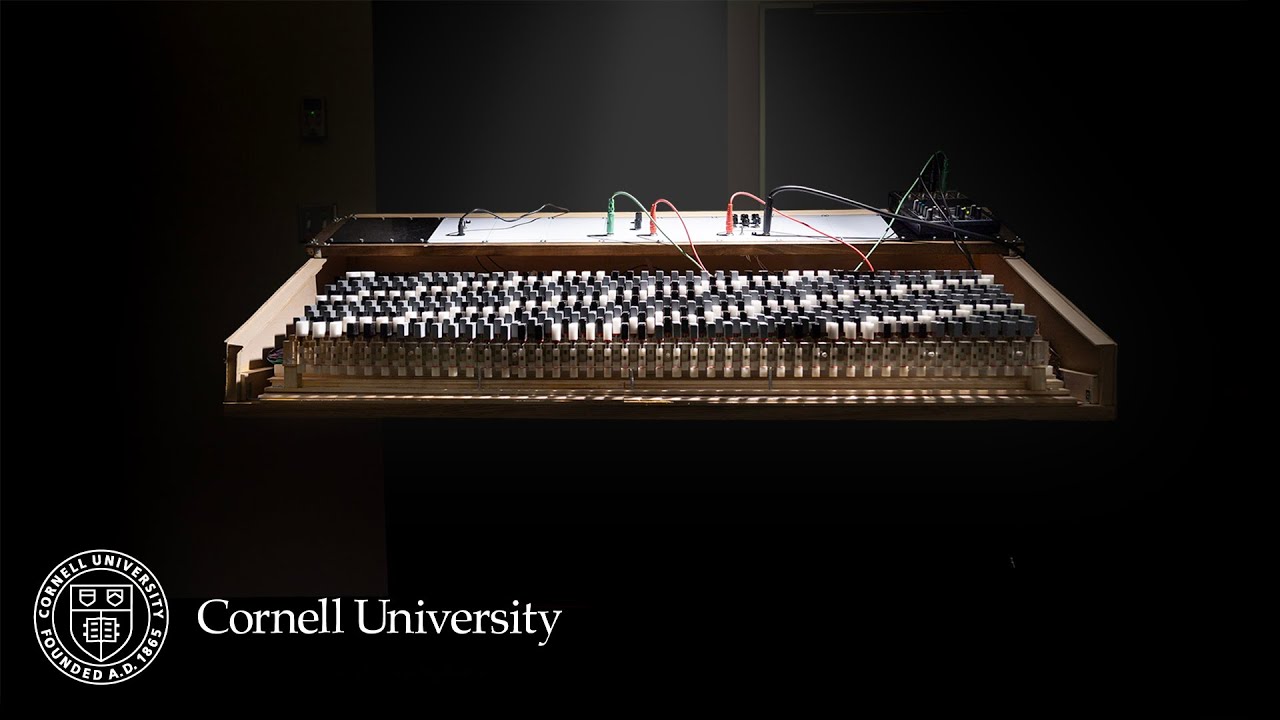
Another wild alternative keyboard by Bob Moog, this one reinvented and restored !!!

How do you notate music for something like this. Good on Cornell for doing this.

ADDED : It occurs to me, this is exactly the sort of situation, a recreation supported by a major university and some passionate creators, of a project from fifty years ago, by a person long deceased, that might be made at least partially open source. One could hope anyways.

AND MORE : Found another better article on this from CDM. The synth in this uses a divide down technology.

And even a better article :

3 Likes

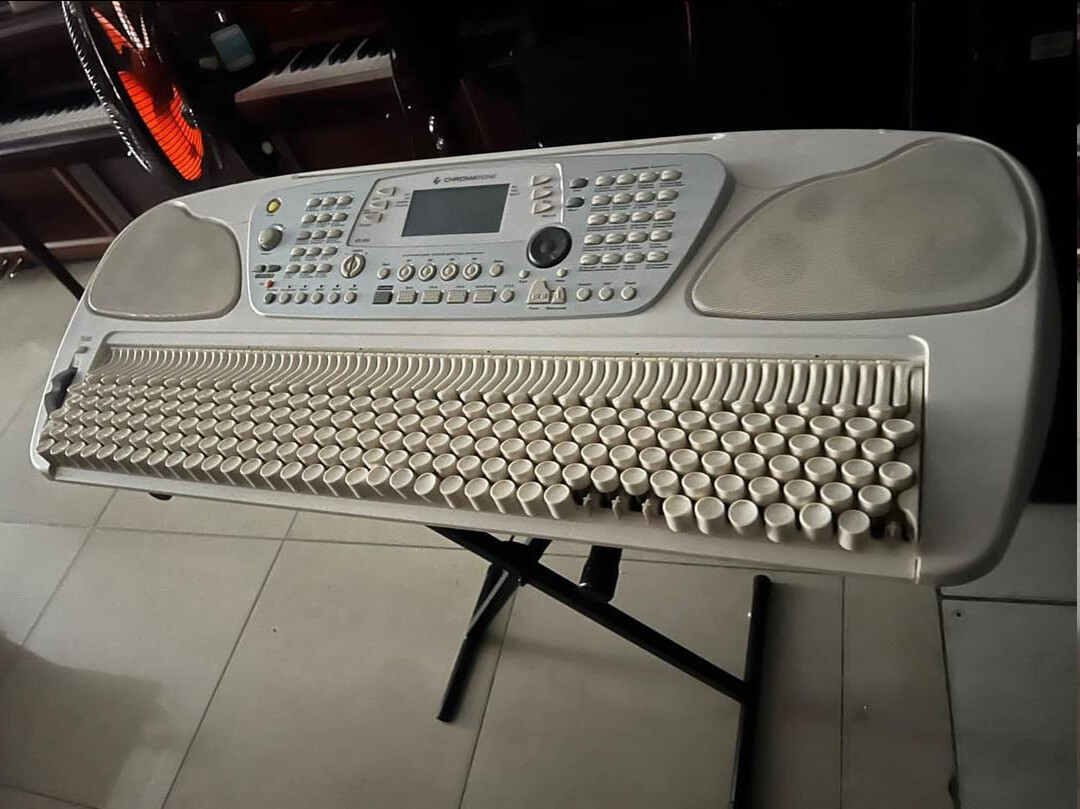
A guy I know is selling this Janko monstrosity, can’t be expensive. I’m half-tempted, but no, I’m not buying it, haven’t even bothered to ask about the price.

2 Likes

The Striso Board

This is MPE with 61 multidimensionally sensitive keys and an isomorphic note layout (closely related to the Wicki-Hayden layout).


Note Layout

This is mostly a one hand thing, sure you can use both too, but with its compact arrangement you can span octaves with one hand. See image :

They have implemented alternative tuning methods and have a double keyboard ( called Duet ) in development.

https://www.striso.org

Still made ( and available as best as i can tell ) and reasonably affordable.

2 Likes

An interesting discussion of an alternative (symmetrical) keyboard layout

https://www.le-nouveau-clavier.fr/english/

And an interesting demonstration of the concept

Makes a lot of sense!

1 Like

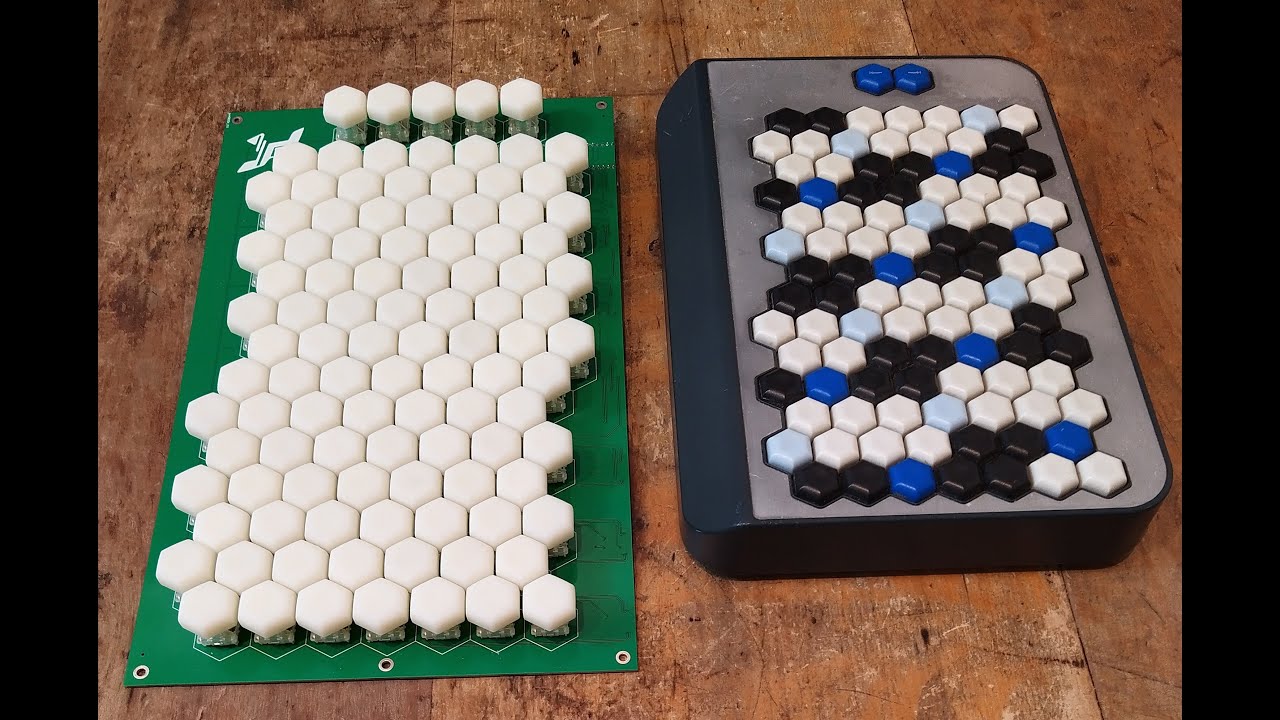
Midihex from Gullsonix.

This comes in kit form. More info at their website.

I see they will be exhibiting at Syntheast in Norwich Feb 21 - 23, 2025.

They list their expansion plans :

Once the basic version has been established there are plans for further models with expanded keys and controls, and built-in sounds.

The source code is open source, which allows for customizing key layout. The potential exists to implement MPE.

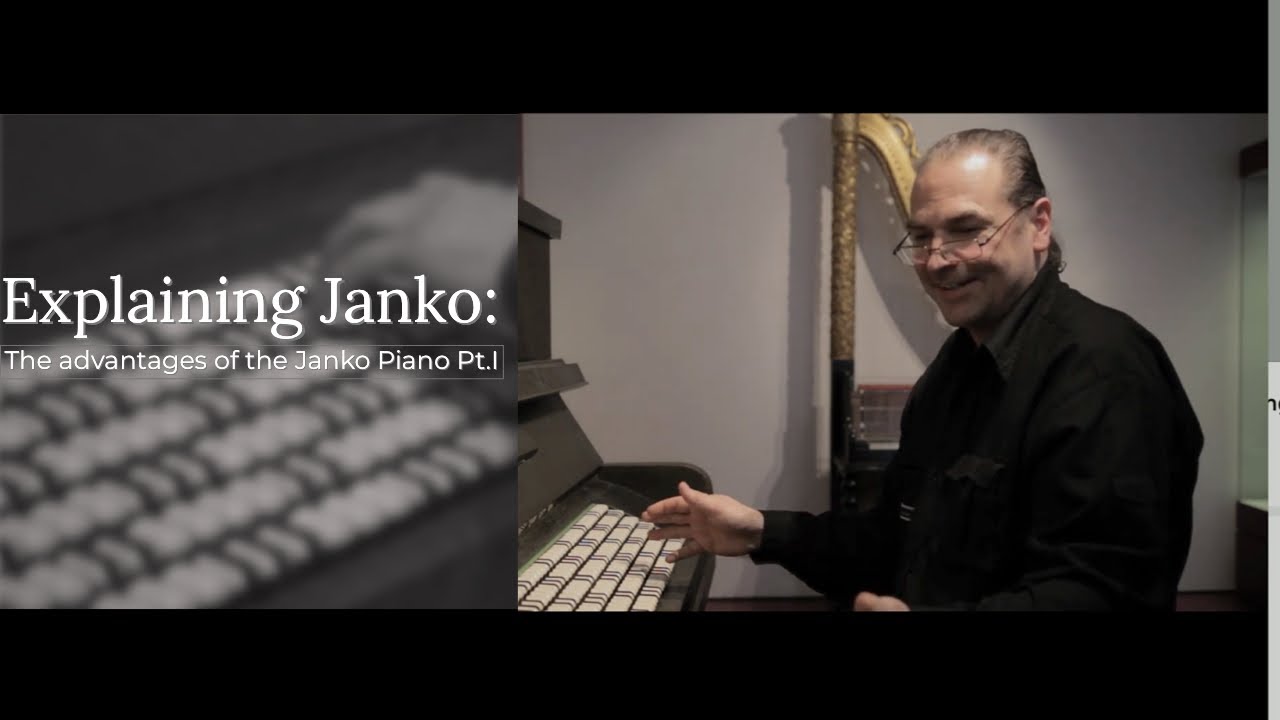
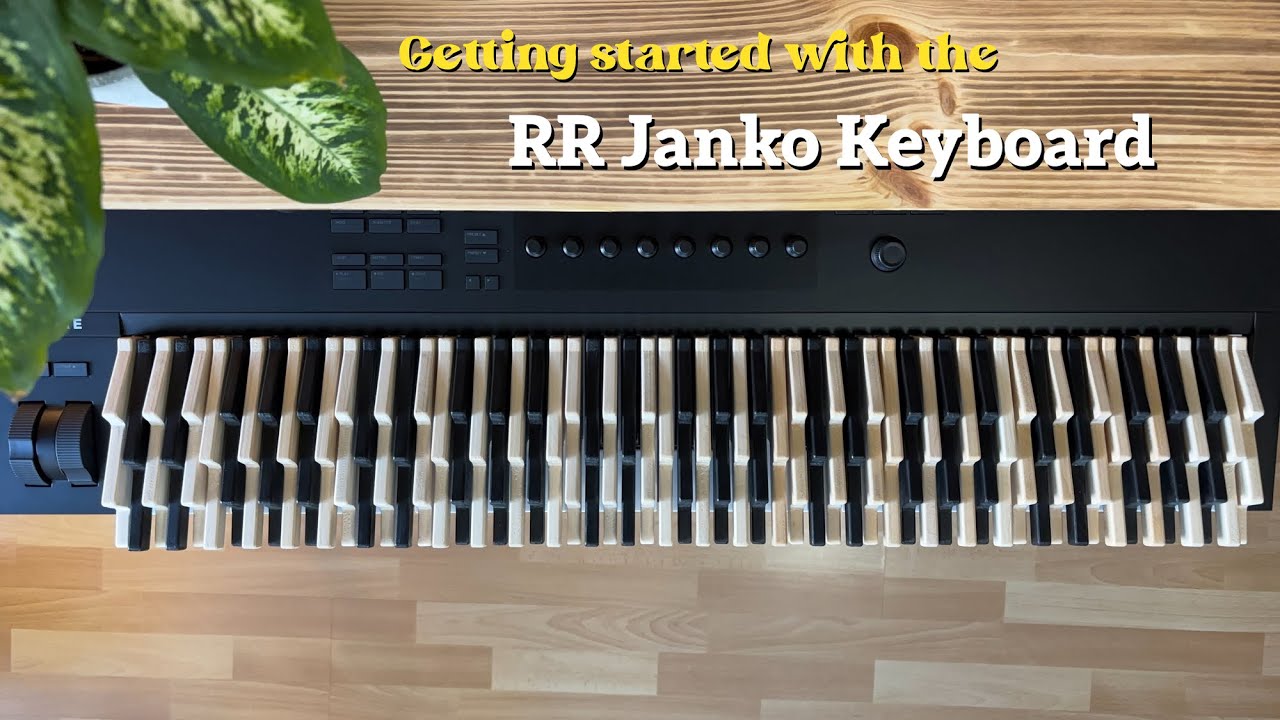
Just came across a nice video explaining the benefits of the Janko layout:

2 Likes

Demo of the latest version.
Website with the latest version.

1 Like

I can hear, in the video demo, the near impossibility of playing at speed with a steady rhythm. What this interface is missing is the feedback of pushing through resistance. How many computer programmers have we met who prefer typing on an immovable surface (such as the glass screen of a tablet)? Most, I’m assuming, prefer a tactile keyboard. And I also assume the same dynamic applies to most musicians.

Since everything on the surface of the tablet feels the same, the user must keep constant visual attention on the interface. My eyes and neck hurt just thinking about this interface.

Perhaps the hands of the person in the demo are large, but the keyboard layout seems pretty cramped.

1 Like

So your comment is about the iPad and touch screens ? Playing precisely to rhythm is an issue regardless isn’t it ?

Feedback of pushing through resistance. You mean like on a hand drum ? Or playing a drum head with sticks ? Or the vibraphone, the marimba, and the xylophone ? Or like on the Linnstrument or the Embodme ERAE 2, or even something like the Sensel Morph, which at least had a squish factor, and a physical relief and feel, and velocity and aftertouch.

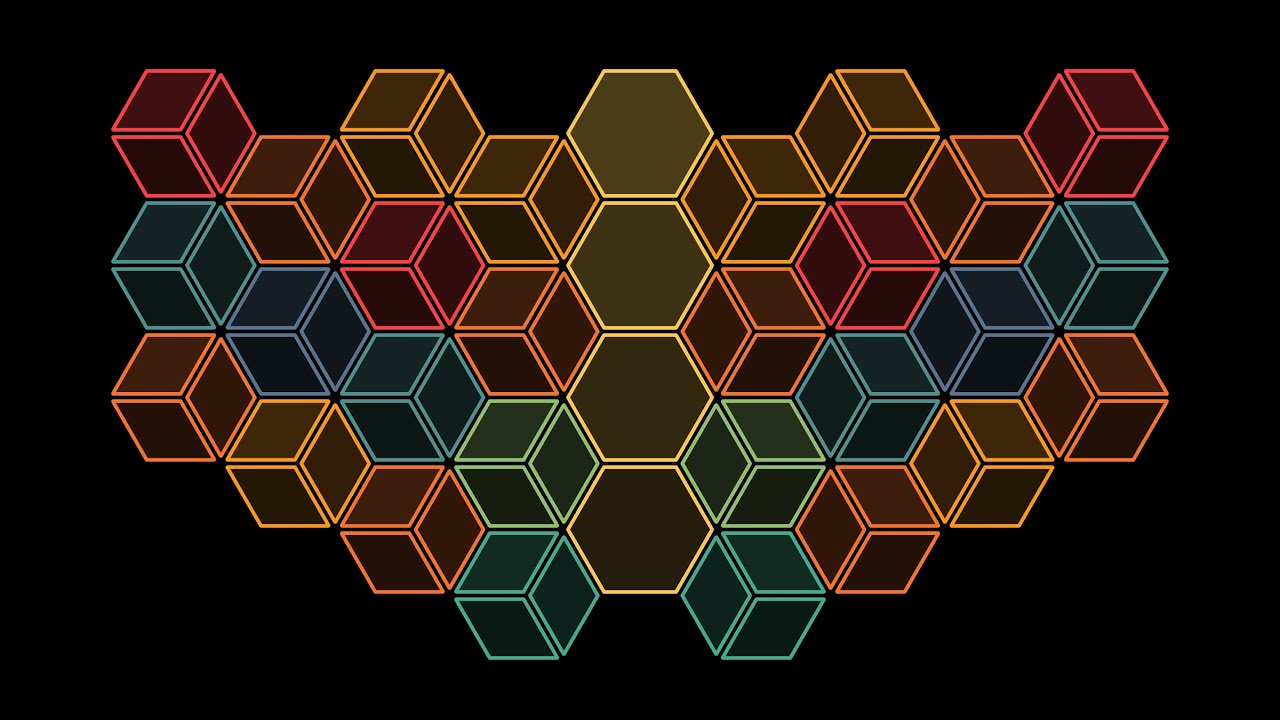
I find interesting the hexagonal and ā€œcubeā€ shapes on this interface, and how this gets mapped to notes and microtones. The ā€œcubeā€ shapes have an intuitive understanding from the visual interpretation we put on them.

Chiel Zwinkels the creator of the Arithmophone ( who posted up thread ) has other arrangements – seven of them on the website – and other arrangements have been experimented with as well in the past. There was thought about a physical hardware version ( non touch screen ) for this as well. The poly-aftertouch and velocity sensing possibities of other interfaces is important.

The touchscreens used does have the advantage in that it is so available. It facilitates access for the chance for more people to actively experiment with many alternative layouts.

NOTE : I had the wrong link above. Fixed that. Go play the options there.

1 Like

Funny you mention these instruments. One of my music teacher colleagues had to play xylophone in the auxiliary percussion section of our fifth grade honor concert, recently. We had a short discussion, then, about the difficulty of playing accurately on mallet percussion without the resistance factor. So, yes, other perfectly good instruments exist with the limitations I described in my previous post, but that doesn’t make them easy to play.

A hand drum player can place their hand on the drum without making a sound. This helps them establish feedback about the distance between their hand/fingers and the drum. This is not possible on the Aritmophone; doing so would trigger unwanted notes. Also, a mallet or stick holding percussionist has the weight of their stick as a means to moderate the speed and the direction of their strike. And they strike with more follow through and force than would acceptable on the glass screen of a tablet.

Maybe we are arguing apples and oranges. Yes, I suppose the layout of the Aritmophone would be an enlightening tool for understanding intervallic relationships. But for technical and expressive performance, not so much, imo.

2 Likes

So what interface / instrument then is easy to keep on rhythm ?

A drummer playing a LRLR steady beat with sticks will most likely lift each stick a consistent distance above the drum head during their stroke. To the extent that they do this, they will be removing a variable from the equation, so to speak…imposing a physical constant on their technique. A violinist might find that playing in a certain part of the bow (e.g. closer to the frog or closer to the tip) allows them to play repeated notes at a certain speed, or that larger muscle groups aid in the maintenance of long, slow bows and smaller muscles in the wrist and fingers aid in fast playing. In each case, the musician is relying on physical qualities their bodies or their instruments, to maintain a steady beat. Good musicians are taught to internalize the beat (e.g. subdivision), but what I’m referring to external sources of beat and the musician’s relative ability to access those sources.

Different instruments have different physical characteristics that can be accessed. The touchscreen, in my estimation, not so much. A musician with a good internal sense of beat might overcome some of these limitations, but I think they’d still prefer an instrument providing more physical feedback.

1 Like

Hi all, thanks for your interest in the Arithmophone! I’ve had an interesting experience developing this instrument over the past few years. When I first started working on it, I intended to make a hardware version with mechanical key contacts. That proved difficult for a number of reasons, partly to do with my limited skillset but also, I found I had already made several design changes before I got the first prototype completed, which by that time was no more than a very labour-intensive paperweight. So I decided to focus on the software, which gave me much more freedom to experiment and do different iterations.

My primary motivation for this project was to explore alternatives to 12 tone equal temperament and to make available notes and sound colours that can’t be find on a keyboard or a guitar.

Having said that, I fully agree with the comments above about the limitations of touch screen interfaces. I really tried to make it work and I think the layout of the latest version is pretty much as ergonomic as it can be in this format, but it simply doesn’t compare to picking up a guitar or sitting down at a nice keyboard instrument.

I personally don’t mind the lack of touch sensitivity too much, I think an instrument can provide a great playing experience without those (eg Hammond organ or vintage synths), but the lack of tactile feedback is a dealbreaker for any serious playing. As someone already said, it means you have to keep your eyes pretty much glued to the screen at all times and it is very difficult to develop some muscle memory.

I am quite satisfied with the general design and layout of notes on this latest version of the Arithmophone, it has matured a bit by now, but if I ever want to turn this into a serious instrument, I’ll have to make a much more tactile version.

I do still believe that the software version has value. It is still quite fun to play and it is great that it is so easy to share. It is also perfectly adequate as a way of entering notes into a sequencer and things like that. And most importantly it has taught me a great deal about music, just intonation and harmony.

By the way, it is possible (though tricky) to play with consistent rhythm on the Arithmophone. If know my timing is a little off in the video, but that’s mainly because I was a little too eager to finish it.

My hands are on the larger side but not super huge. I’m using a 13 inch tablet in the video. I understand it may look a little cramped but I did find this to be the most comfortable size. Some thing are actually easier to play on a 10 inch tablet because that requires less stretching. I did experiment with a larger version (omitting some of the outer notes) but that didn’t give me a better playing experience.

3 Likes

Too bad the Sensel Morph is no longer readily available, as that was a good device to develop tactile surfaces, with irregular shapes that had velocity and aftertouch – both pressure and positional movement. That surface was 130 x 230 mm in size.

Do you have thoughts ( not asking you to share them if you do ) about arrangement for an interface, that has the notes from 31 EDO, arranged in ways that would allow musical playing with advanced harmonic structures ?

It seems your latest arrangement might work with the notes matching to the roots / fourths / fifths in the center, and then the various others from the 31 arranged around them.

That’s an interesting question. In the latest version of the Arithmophone, I focused solely on just intonation, so I haven’t really thought about 31 EDO for a long time. I just had another look at the design I made earlier, and I don’t think it works all that well. The 4 by 8 grid I used is optimal in the sense that there is no redundancy, but it only really works well from 1 tonal center and forces many inconsistent pitch jumps. These things make some sense for just intonation but not really for EDO tunings. I do still like the fact that I used a symmetrical Dorian scale as the center of the keyboard, but the surrounding layout is not very practical. I think a better way would be to use a 5 by 7 grid with diatonic scales moving from left to right and single EDO steps moving up/down. That way you need 35 keys per octave because a few notes are repeated, so there is some redundancy, but only a little, and the patterns would be much more consistent across keys. I may play around with this idea a bit and see if I can code something up, I’ll keep you posted!

1 Like

So I played around with this a bit and I think this is a much better layout for 31 EDO than my previous design: https://000707762.codepen.website/

Here is a schematic of the note pattern: https://chielzwinkels.net/wp-content/uploads/2025/05/31-EDO-revamp.pdf (h for half sharp, d for half flat, that notation works better for this pattern than the double flat/double sharp one).

If you want to do atonal/serial stuff then you might be better served with a fully isomorphic layout, but for tonal music/diatonic scales/functional harmony I think this one is pretty much optimal. It does prefer one key over the others, but only in the way a piano keyboard does, all keys should be quite playable this way. Also, any facility you have on a piano would carry over quite well to this design.

Of course for proper playing you would want more than the two octaves I put in my playable version, so this is not as well suited for playing from a touch screen, but as a basic pattern I think it’s solid. Hope you enjoy!

1 Like

Edit: sorry I just found out there is something wrong with the pitches being generated in the playable version, don’t have time to look into it now but I’ll fix it later!
Update: okay fixed it, sounding as intended now. Same link, see above (you may need to do a hard reload/clear cache if you’ve opened it previously, the correct version reads ā€˜revision 1.1’ in the info screen).

1 Like

Didn’t see a mention of the following in a search of this thread:

Also available as a kit:

https://www.reinert-piano.de/en/shop/janko-en/rr-janko-kit-en/

3 Likes

Reinert was mentioned before in this post.