You know the drill, looking forward to another month of reading your texts and experiences!

When you’re young and you hear In A Gadda Da Vida performed by Slayer, you think it’s a Slayer song. Then years later when you hear the original Iron Butterfly version, you realize that maybe the Slayer one wasn’t the original at all.
The concept of cover songs was hard to fathom as a kid. I could easily list here tens of songs that I knew better by their cover versions and only later realized that they really weren’t originally by the bands performing them.
In the 90s there was a huge trend of releasing tribute albums to artists and bands. Take 15 well known 90s bands and let each of them pick one song from Black Sabbath, Depeche Mode, The Clash or Willie Nelson. Wrap it up as an album and release it. Watch money pour in.
I’m a huge fan of those 90s tribute albums. I just counted and I have 47 different tribute cds in my shelf. If I count the ones I have on vinyl, I’m sure the amount surpasses 50. Smashing Pumpkins playing Depeche Mode, Saint Etienne covering Gary Numan, Overkill doing a version of Twisted Sister - lovely stuff.
But the album that somewhat changed my outlook on music and life goes basically the other way around.
The Replicants, a name inspired by Blade Runner and the fact that they played only cover versions was a four piece including members of alternative rock band Failure and the former bass player from Tool. They only made one self titled album in 1995 and I will cherish it til I die.
I had never heard of late 70s early 80s powerpop band The Cars until The Replicants started their album with Just What I Needed. What a song! After hearing The Replicants play it, I knew I had to get all the early The Cars albums. Ric Ocasek to this day is one of my favourite songwriters and producers and I found his work through The Replicants.
The next track is Silly Love Songs by Paul McCartney but this version has Maynard James Keenan of Tool on lead vocals and it’s a slow rolling heavy as f**k blast. I would’ve never gotten to know this song if it wasn’t for The Replicants. After those The Replicants do their own 90’s heavy alternative versions of Syd Barrett, Neil Young, David Bowie, Steely Dan and Pink Floyd tracks and most of them aren’t the obvious hits. They choose The Bewlay Brothers from Bowie and How Do You Sleep from John Lennon. Deep cuts that 21 year old me had never heard before but fell in love with immediately.
The Replicants educated me on the history of good music by selecting great somewhat obscure tracks from the past and playing them in a style that made sense to a young man in the 90s. Often there is talk about which cover versions are better than the originals. For me all the tracks on The Replicants sole album are better than the originals. These are the versions I grew up with. These are the versions that speak to me. I’ve grown to love the originals, but at this point for me they feel like the cover versions.
Replicants taught me all about cover versions and also taught me to love them. I still search for interesting cover versions every time I go through a pile of 7” singles on a flea market. Especially I love finnish language cover versions of old disco and synth hits but collecting those on vinyl has become quite expensive in the last 15 years.
The (mostly) same Replicants -guys also had another band called Lusk, which is also highly recommended for fans of Tool, Failure, Jellyfish, Helmet etc. It’s like a scifi inspired fairy tale prog rock version of Monster Magnet or something.
6 Likes
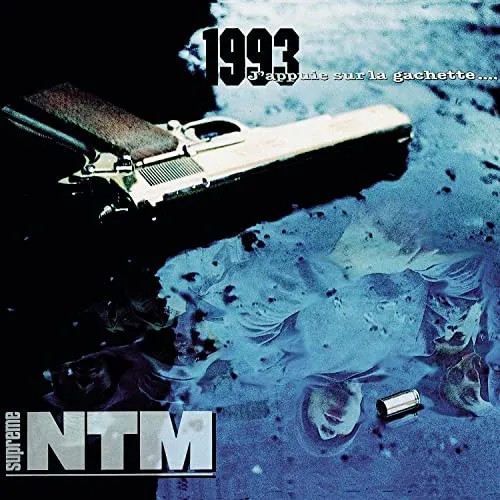
It’s 1997, I am completely into rock (Radiohead in particular), dub and funk. And absolutely hermetic to hip-hop, that I think of as people talking about a dead simple beat.
I have been smoking weed with friends for a couple years while listening to music, and comes a time when someone putt his record on.
The violence in the lyrics doesn’t change my mind…
Then there is this song about loneliness, being an outcast, and suicide. It trigs something.
I take the CD booklet, read the words. Isn’t this some fucking poetry??? It hits me hard, somehow everything comes into place, the funk in the background, the groove of the beat together with the flow, the words, the despair, and the fun as well…
I figured I’ve slept on a whole genre of music, and suddenly feel the urge to hear more.
Then come the Beastie Boys. And Cypress Hill (they’ve been in Rennes two weeks earlier, I’m so pissed).
Abstract hip-hop, acid jazz…
This is the album that opened me to hip-hop.
Not flawless, and it certainly owes a lot to 2pac and the US, but it definitely has its style.
6 Likes
Incroyable! de voir le Nikoumouk cité ici.
1 Like
Boards of Canada — Campfire Headphase
Well gang, we’re living in the thrill of another BoC album launch! I suspect they’ll show up a lot this month, so I’ll keep it short.
One day I was at Future Shop (which was basically a Canadian Best Buy, until Best Buy bought and rebranded it), and the album cover caught my eye. I vaguely knew about Warp Records because one of my friends listened to Aphex Twin’s Come to Daddy EP obsessively, and I thought I had maybe heard something about BoC being good, so I decided to take a chance.
I can’t say the album CHANGED anything for me. I was in the twelfth grade, had already absorbed a wide range of music both as a listener and as a player, and had even started to get into solo music production on a Tascam 788. But Campfire Headphase FOCUSED everything for me, and inspired me to think about “simple contentment” and “joyful solitude” as valid musical themes.
BoC basically teaches a master-class in tape echo, not only driving an incredible sense of momentum in “Dayvan Cowboy,” but also adding tension and release to songs like “Satellite Anthem Icarus” and “Oscar See Through Red Eye.” And their sound design is perfectly on point throughout. I remember people questioning whether the guitar belonged in electronic music, which seems quaint in retrospect. They treated every instrument with a similar level of care, and honestly, their warbly noodling sounds almost perfectly modern today.
Finally, while Boards of Canada are famously not Canadian, I was thrilled to learn that they briefly lived in Calgary and that the cover photo for Music Has the Right to Children was taken in Banff. At the time, it felt like every Canadian artist worth celebrating was coming out of, or at least moving to, Toronto or Montreal. I left Calgary more than ten years ago and I don’t see myself moving back, but when we were visiting in early 2022 I finally dragged my family to the MHTRTC lookout for a photo:

9 Likes
I love that you picked this one! It’s my favorite BoC album and I always feel weird about that, since it seems to be the least loved one. Probably because of that guitar presence. That photo is also lovely, what a cool thing to do as a family!
3 Likes
Terje Rypdal / Miroslav Vitous / Jack DeJohnette
The first time I heard this album was an absolute revelation. One of those “where has this been my whole life?” moments. It transports me to another place and makes me feel like nothing else can.
It is a jazz trio (electric guitar, acoustic bass, and drums), but that description doesn’t capture it. The guitar will often go in an ambient direction, the bass is often bowed, the drumming is so sensitive (and the cymbals sound fantastic!). There is organ and electric piano at times, often droning away.
This album led me down a deep dive into ECM Records, but I was always chasing the sound/feel of this.
One of my most prized records.
6 Likes
V.A. Chicano Power! - Latin Rock in the USA 1968-1976 (Soul Jazz Records)
I cannot overstate the significance of Stuart Baker’s Soul Jazz Records label for shaping my musical interests. I could have picked at least a dozen compilation albums in as many genres that opened my ears to styles I probably wouldn’t have touched with a ten foot pole, had it not been for Soul Jazz Records. To comply with the rules here, I picked just one and tried to steer clear of the potentially more obvious ones, such as the London Jazz Classics series. Similarly to my affection for Mo’ Wax, I used to buy Soul Jazz compilations on sight, because I knew whatever the style, I was going to be in for a treat and they never disappointed, most of them coming with extensive liner notes or even comprehensive booklets providing background.
7 Likes
I didn’t try salsa dancing until I was in my 40s but I got bit by the bug pretty hard for a few years. I was about 40 years too late and about 5000 km too far east to be part of its heyday but the rhythms, the arrangements, the fact that a lot of the music played at salsa socials in the UK revolves around 70s and 80s records and I’m a child of the 70s and 80s - it all just felt right.
And after I’d lost the bug for the dancing I kept the bug for the rhythm and that’s what drove me in the direction of looking into timeline patterns, trying to write interesting interlocking rhythmical parts, and that led to the urge to program drum machines and that led me … here.
There’s all sorts of albums I could pick as “my favourite” - tbh I don’t really have one. But I need to choose one so I’ll choose Willie Colón & Ruben Blades - Siembra
It’s as good an introduction as you’re likely to get to the wide-wide made-up “genre” of salsa music.
4 Likes
+1 for Willie Colón. I became aware of him through his balearic anthem “Set fire to me” and found out he was a frequent collaborator of Héctor Lavoe’s, who was Louie Vega’s uncle. Sadly enough, Willie Colón passed away in February.
1 Like
Héctor Lavoe, Willie Colón, Rubén Blades, Roberto Roena, Ismael Rivera, Celia Cruz, Richie Ray, Bobby Cruz, Eddie Palmieri, the list goes on!
I really like the Roberto Roena y su Apollo Sound series of albums and Palmieri’s Vamonos pa’l monte is one of the best riffy tunes I can think of, Hawkwind notwithstanding.
1 Like
Pantha du Prince - Black Noise (2010)
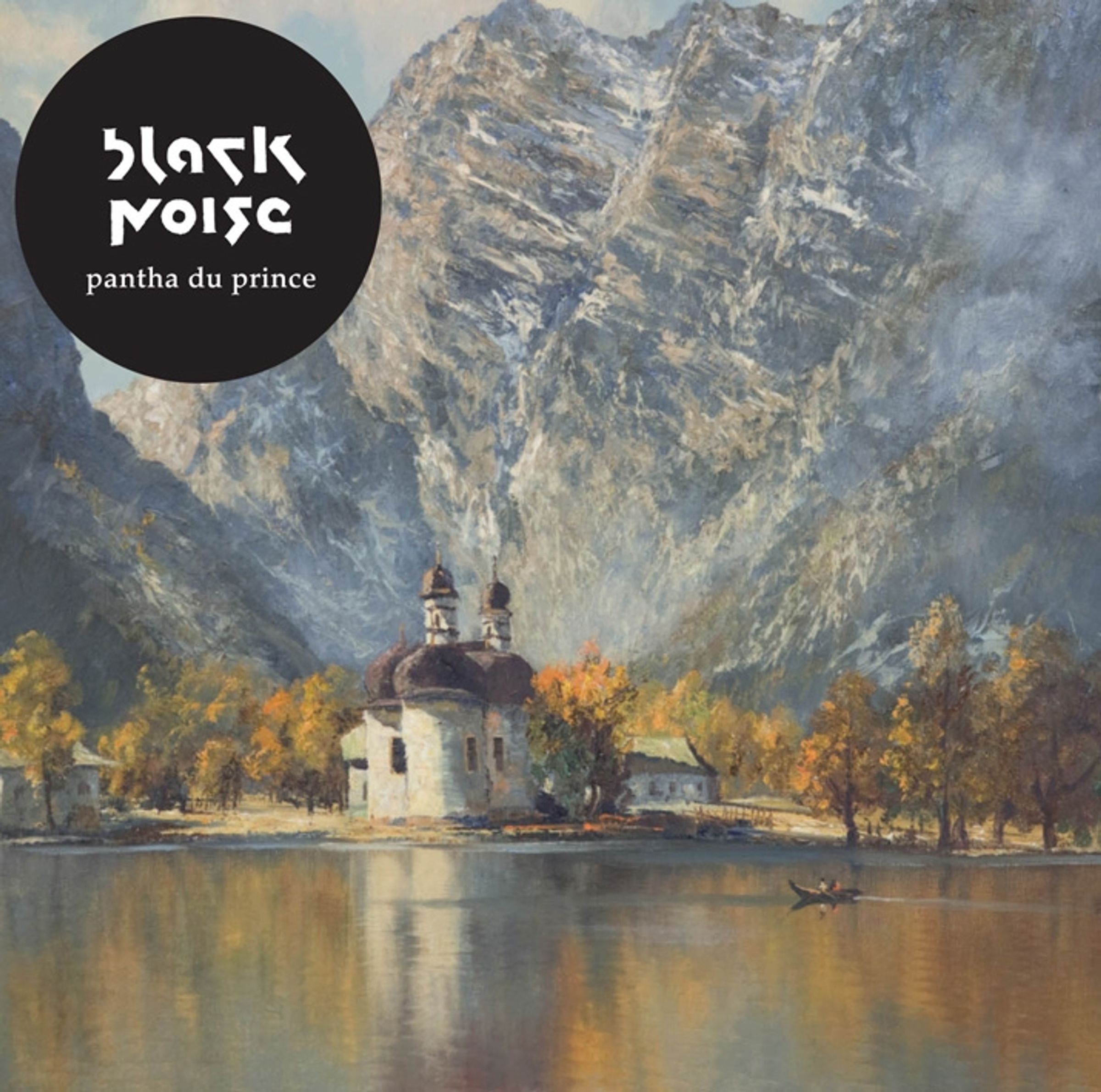
After four albums that can be more (System of a Down) or less (Sigur Rós) be classified as guitar music, it’s time for an electronic album. And while I struggle with many picks on my list, it had to be „Black Noise“ without a doubt. It was the first electronic album that I really got into and in many ways, I still view it as the quintessential album in that genre.
As you know by now, I was first influenced by metal, then came punk and hardcore, until I settled on different variations of indie rock as my main genre. It was rare to see anyone playing a synth during the first wave of early 2000s indie that was spawned by bands like The Strokes or The White Stripes, defined by their organic guitar and drum sound. Even bands like Interpol that harkened back to New Wave initially didn’t feature synths prominently. They were often present, but only as a bonus texture in the background. However, that started to change as the first decade of this century slowly came to an end. Bands like Bloc Party or Editors released albums defined by synths and drum machines, often with mixed results. The latest albums by Hot Chip and LCD Soundsystem showed that they had already mastered different blends of guitar based and electronic music. Veterans like The Prodigy, Portishead or Massive Attack returned with new albums. And, of course, Kraftwerk were presenting the latest incarnation of their catalogue at a rare live show at Southside Festival 2010. All of which is to say: I had heard many different kinds of music with electronic elements or influences by that point. But many didn’t really grab me at that time. And most of them still were quite close to rock music in their approach to songwriting or instrumentation.
I didn’t exactly perceive it like that at the time though. I was listening to Klaxons or Does it Offend You, Yeah, really thinking of them as electronic artists, when they were clearly indie rock bands that happened to hit a few keys on a synth. By that standard, Digitalism or Justice sounded like techno to me. And an artist like Pantha du Prince was completely off my radar. I think this rather narrow frame of reference was due to two factors. I still thought of electronic music mainly in the context of dancing with my friends, something I have talked about at length in my essay on “Funeral.” We may have moved to (mostly smaller) college cities by now, but that didn’t mean we now went to clubs that played techno or house for dancing. Instead, we either went to indie rock focused clubs and parties or threw them ourselves. Because these events were mostly about dancing to music you already knew, and structured around playing whole songs, electronic music had to somehow pass that filter to reach me. And it had to work within a rock/pop song structure.
So how did I end up listening to Pantha du Prince? I think three things needed to happen before that. My friends F. and P. were always a bit ahead of the curve when it came to discovering new music, and I think they started reading Pitchfork at that time. It was in the middle of transitioning from an indie and alternative rock outlet to also writing prominently about Hip Hop, R’n’B and electronic music. And so, they were introduced to several exciting electronic albums that came out in 2010 like “There is Love in You” by Four Tet, “Swim” by Caribou and “Crooks & Lovers” by Mount Kimbie. As usual, it still took me some months or years before I listened to these albums myself, and all of them took a long time until they clicked for me. But I remember trying hard to get into Four Tet’s latest album in early 2011, because I can see myself sitting in my dorm room in Sweden, listening to it repeatedly on my oldest sister’s stereo that my father sent me by request shortly after I had arrived in Uppsala in January. I stayed there as an exchange student for half a year, and while these few months were quite influential for who I would become for several reasons, they were also important for deepening my interest in electronic music. I went out almost every night during that time, and so we would naturally go dancing at the city’s student clubs (think of it as a good version of frat houses) a lot. These parties weren’t techno parties akin to a “real” club, but I nevertheless grew more familiar with these kinds of sounds and sets that weren’t about playing songs you already knew front to back, weaving parts of different (club) tracks together instead. It was also the heydays of dubstep, and I remember being interested in the US version of that, which somehow reminded me of my hardcore days in terms of sound and how you (or at least I) would dance to it.
At some point after I was back in Germany, I gave Pantha du Prince’s “Black Noise” a try. My guess is that this was in early 2012, but I can’t tell exactly. I also don’t remember if I had listened to it before or not (I think I did). All I can say is that I was familiar with this album because of my friend F., I can definitely remember him talking about it. And I think an important reason for this was that Panda Bear contributed vocals for “Stick to my Side.” I didn’t mention Animal Collective yet in my list of artists that slowly got me interested in electronic sounds, but they might actually be the most important piece of the puzzle. I almost chose “Merriweather Post Pavillon” as one of my picks for that reason. The way they approached synths with a punk attitude but also a sensibility for great pop melodies seemed like an ideal bridge built just for me but was among the most challenging sounds I forced myself to get into. It definitely paid off: to this day, I’m discovering great artists because of Panda Bear, who might be the most prolific and interesting collaborator of the last ten years. Ironically, “Stick to my Side” is the only track on “Black Noise” that falls flat for me (Pitchfork came to the same conclusion in their review, which I didn’t read at the time). I find it fascinating how effortlessly Panda Bear blends in with all kinds of music, often treating vocals himself on collaborations. But on this album, he seems like an intruder, his voice tacked on. I’m still glad it’s here, because I don’t know if I would have ever discovered “Black Noise” otherwise.
I would be lying if I reconstructed exactly how I would come to love this album, because I don’t really know. I know it took an active effort, unlike other entries on my list like “De-Loused” or “Funeral.” I think one of the first things that impressed me was the sound. It was the first time that I really listened closely to an electronic album on good speakers at a decent volume. Hearing the full spectrum of frequencies crystal clear and feeling them in my body was a spectacle for sure. I don’t think I had heard such low ends before, and I was fascinated. This could have been the case with any techno album I guess, but there was something else that drew me in: all of the bells, toy like sounds and plucks that define “Black Noise.” Years later, I would get my first copy of Ableton, and without thinking of Pantha du Prince, I would immediately reach for marimbas and vibraphones to take a crack at composing. These instruments aren’t really present on “Black Noise,” but the spirit is the same. To this day, there’s few things I love as much as sending plucky or glassy FM sounds or sampled marimbas, vibraphones, or toy pianos into a bunch of effects and building a song around that. I think I have to thank Pantha du Prince for that.
Right in the middle of “Black Noise,” there’s also three tracks that are mainly defined by synth sounds and drums: “A Nomad’s Retreat,” “Satellite Snyper” and “Behind the Stars.” The bells are still there, but they take a backseat. These songs also have a more classic structure, building towards climaxes and releasing, repeat. I didn’t like these tracks at first, but eventually they became my favorite ones for a long time. They sound more like the previous album “This Bliss,” which I even preferred at that time. “Walden 2” in particular was such a brilliant showcase of how to construct a minimalist techno song that has a short melodic outburst in the middle and a lengthy intro and outro built around that. However, I’ve come back full circle thinking that what really sets Pantha du Prince apart are the “Black Noise” tracks that are mostly made of bells, percussion, and field recordings, with a pad, sub bass and simple drums relegated to supporting roles.
Maybe I’m too ignorant, but I don’t know anything else that sounds like “Bohemian Forest” or “Es Schneit.” They weave such a dense soundscape out of layer upon layer of bells. They don’t have any obvious sense of progress but somehow keep evolving and changing all the time. These tracks completely transformed how I thought about electronic music. As I mentioned, I mainly thought of that kind of music as something that’s good for dancing, and it needed to hit hard. Black Noise is none of that (though I did dance to tracks like “The Splendor” a lot). It’s a meticulously crafted study in sound design that’s best enjoyed while sitting or lying down and listening to it with full attention and concentration. That’s when I understood that these kinds of artists are more like our modern version of classic or prog music, making instrumental concept albums. In other words, a lot of what I loved about Sigur Rós or Mars Volta was here, just expressed in another language. And as soon as I had realized this, I could finally appreciate albums by Four Tet, Floating Points or Forest Swords. Years later, I would go to a Steve Reich concert in Cologne, realizing that’s the spirit Pantha was channeling all along.
I could have also picked Pantha’s next album “The Triad,” which was at least as important to me. I obsessed over it when it came out and, in a way, I wanted it to define me. Whenever the chance arose to pick something to dance to, I chose a track from “The Triad” (sorry to everyone who had to sit that out). But that album hasn’t stood the test of time like “Black Noise.” In hindsight, I don’t think the whole band-adjacent approach and more vocals were adding anything to Pantha du Prince’s sound. Like Panda Bear’s appearance on “Stick to my Side,” it feels more like an unnecessary distraction. To be fair, when Weber went all in on the bells and ambient/new age vibes on the albums that followed, he didn’t really grab me either. It seems a bit tragic that he came up with a unique sound that I’m sure took a lot of hard work to find and refine, only to then peak with the first album of that kind. Pantha du Prince might also be the first and only artist on my list that isn’t also there in part because of a live experience. My first show during the “Black Noise” era in 2012 was canceled after several hours of waiting, because the club didn’t comply with security demands and was shut down soon after. When I did finally see Pantha live in Bochum during the “Triad” tour, the band approach didn’t really work for me - one of my biggest disappointments when it comes to concerts, because I was so hyped at the time.
None of that distracts from the brilliance of “Black Noise” and what it taught me about (electronic) music. Without this album, I would probably not be making music with synths and drum machines. And I might not have seen myself as the kind of person who might go to a techno club. Which is to say: without this album, I might have missed out on what would become my two favorite ways of experiencing music.
Quintessential track:
The Splendour
Could have also been:
Kraftwerk – Minimum Maximum
Four Tet – Pink
Mount Kimbie – Cold Spring Fault Less Youth
Floating Points – Elaenia
The Soft Pink Truth – Is it Going to Get Any Deeper Than This?
9 Likes
I think we kinda followed a similar path into electronic music. I was way into all the 00’s electroclash indie adjacent artists but also got into ‘proper’ electronic music through Pantha Du Prince. But it was his previous album This Bliss that did it for me.
There was this blog I used to follow which posted art and ‘minimal techno’ like music and it’s actually still around. The last post was in 2017 though. But that’s where I discovered his music. Nice trip down memory lane. 
3 Likes
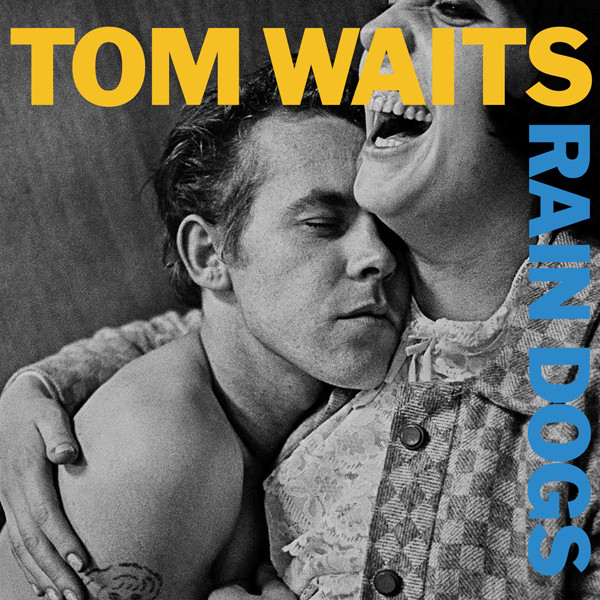
Tom Waits’s Rain Dogs has heavily influenced how I view stories, ambiences and characters within a musical construct. It’s not that I was unaware that songs often created fictional universes that were full of fictional colorful characters. I was. I had been. Beginning in the earliest years of my childhood, Johnny Cash spent years telling me he shot a man in Reno just to watch him die. (He didn’t). Loretta Lynn and Conway Twitty convinced me somewhere out there was a man and woman who would swim in across a river full of gators just to be together. Deep down I knew that was bullshit. As a small child I was infatuated by songs about fictional western gunfighters who had once roamed the west. Songs such as Marty Robbins’s “El Paso” or “Big Iron”. (I’ve mentioned previously that I grew up in a small western rural community. Cowboys were everywhere and once upon a time I was a small impressionable child who wore boots and a cowboy hat.)
But when I first heard Rain Dogs, something about the characters and atmosphere across the album prompted me to catalogue these impressionable characters differently within my brain. The songs on Rain Dogs are as much stories and vignettes to me as they are music. It’s like you are walking along the street and you step into a dive bar and sit down and start talking to some old grizzled buy lamenting about his life.
Here is another long screed where I infer how influential an album is to me, and then I proceed to barely mention it as I go on and on about working at graveyard shift in a suburban pharmacy back in the day:
7 Likes
Nice! Writing my text, I realized that the Panda Bear collaboration might have introduced a whole generation of indie fans to Pantha du Prince and possibly even electronic music.
Like I wrote, I listened back to “This Bliss” after I fell in love with “Black Noise” and prefered it for a long time. Fantastic album, but a little less unique than BN imo. It’s a shame it’s missing a track on streaming services for whatever reason.
2 Likes
Ye olde copyright issues  He lifted a modern classical piece from Howard Skempton pretty much verbatim as a background bed on Saturn Strobe.
2 Likes
Ah, I guess it makes sense then. Severly cripples the album though, probably the best track on it and essential for the flow.
1 Like
It always drives me nuts when a track is unceremoniously removed from an album. Whenever this occurs, I inevitably start doubting my sanity and memories. “I swear that there was this other song on the album. Wasn’t it? I know it was right after track Y.” I will then drop every responsibility I have trying to ascertain the validity of my memory.
I think the first time this happened to me was when I was looking to listen to the Violent Femmes “World Without Mercy” many years ago when digital streaming started taking off. The digital streams did not include it as the last song on the album. It didn’t include it at all. It took me months to figure out that it was a bonus track on the cassette version of the album. I had no idea it was not on the other formats. In the interim of that discovery I was baffled as to how I could entirely recollect a song that I could suddenly not locate. (It now appears on the remastered version of this album.)
3 Likes
It’s sentences like these that really make me love your writing! I hope I’ll make it to the long form texts one day.
2 Likes

Mouse on Mars: Niun Niggung
This ongoing series is cool because it really makes me think about what “defining” means in this context, especially as a musician.
This is isn’t a top ten album for me that sees heavy rotation like some of the others, and I only discovered it in the last 5 years or so.
But it really set a beacon and goalpost for me when it comes to how I want to approach music.
This kind of electronic music can be so cold, digital and pessimistic for lack of a better word. I’m painting with a pretty broad brush and I love that stuff too.
But these guys just inject so much joy and life into their tunes. There’s a unique ska influence in songs like Yippie and Mykologics in particular. It’s all so fresh. Download Sophist and Albion Rose are probably my favorite.
I come from the guitar world and specifically from a DIY mindset of just jamming things out and not thinking too hard about it. Albums like this really showed me I can lean into my core nature of just fucking around until something sounds cool.
I have a handful of music buddies who I highly respect the output of but they are perfectionist through and through.
I don’t have the patience to be like that though I can’t stress enough that I respect all methods. I tried to force that way of working in the past but it doesn’t click.
I’m not saying it doesnt take hard work and focus. I have a lot more to improve on but learning to better capture and give context to the moments I naturally stumble into while just having fun and experimenting is my growth arc and this album went a long way towards that pointing me there.
6 Likes