how so?
1 Like
Grooveboxes are designed around the step sequencer.
I am comfortable using as little and as many tracks. My philosophy is that a song dictates where it wants to go and how it wants to be, and if the song says, “I am of 6 instruments” or “I am of 29 instruments”, then that’s what it is.
So I need a DAW to ideally give me an unlimited number of tracks because I want the flexibility to use as many tracks as a song dictates. I know I am not going to use a billion tracks in every song - that’s not the point. The point is to not be limited.
Like, I would rather have an unlimited data plan for my phone because I want that flexibility, but that doesn’t mean I am going to download the entire internet with my phone.
3 Likes
I do a lot of sound design, where I record onto 8-track samplers (OT, M8, Digitakt, etc) where I bounce multiple tracks down to one, then manipulate that again, layer with other sounds, bounce down to one track again, manipulate, combine with other sounds, layer, bounce, and so on and so on… I end up with a library of sounds that I’ve created, which at some point were several tracks, but now each one is a single sound.
When I’m making an arrangement from sounds in my library and I only use 4 or 5 tracks, I wonder if that would be considered the true track count? Maybe I used 12 tracks total to create a single sound… And then if I factor in things like sample locks, where at any given point a different sound could be played on one channel, my 5-4 track arrangement’s track count could blow up to being dozens, but on paper I just used 4-5 tracks.
I don’t really think too hard about track limitations if I have the ability to layer and resample – most of my samplers can do this, so it’s a non-issue for me.
Of course, I think a lot of orchestral arrangements need way more than 8 tracks. Or if you’re recording a live band, you might almost run out of tracks just micing the drum kit… It really depends on the situation, but what I was describing above was for a solo person working on electronic music, tracking in one instrument at a time, so I don’t think the track count is a limitation (for me).
7 Likes
Totally agree. As mentioned, it’s totally up to the individual workflow/genre needs. I’m not trying to knock any piece of gear. I’d simply like to see more viable options for 16-track grooveboxes.
4 Likes
Oh totally! Don’t get me wrong; I’d use the fuck out of 16 tracks! I don’t necessary want less tracks… I just try to make it work with layering stuff.
4 Likes
I don’t want to be whiny about it, but sometimes if I have sounds or samples that I want to overlap each other, even the same sound at 2 different velocities, and on a monophonic sampler you’re forced to throw it on 2 different tracks. There’s a certain degree of sound locking that allows you to still make more out of those tracks but depending on the nature of the sound you might end up with 2 tracks or even 3 tracks of 1 sound at 3 different velocities because if you don’t, then they’ll get choked out before they naturally decay. As lowph mentioned you can bounce sounds but that leaves no room for later adjustment or finer articulation of the sounds used, they have to be show ready by the time you bounce them. But what if I need 2 of those tracks to do anything else with before the track is complete? In fact, can you really do that without leaving at least a single track open for the purpose of bouncing? that makes it a 7 track machine because you need the free track dedicated to bouncing.
There are other things I could focus on, but this is 1 which is a legitimate issue when trying to compose and arrange on a monophonic 8 track machine. I love Digitakt and will often and probably always work around the limitations, but there are things like this which make refined compositions challenging. Anyone who says it’s not supposed to be used in that way or just slap an LFO on it if you want it to modulate, that’s fine and all, but some people are accustomed to having more specific control over the sonic tapestry which is created when you work this way. Some people also have more practice in using isolated listening and are more sensitive to when the levels of individual sounds are out of balance. That, of course, is the nature of mixing.
I’m not saying you couldn’t compose with 8 tracks, but when it comes down to it and you’re ready to mix it, and you can’t because you were forced into a pre-mixed arrangement and it can no longer be fixed or altered, isn’t that a person who “needs” more than 8 tracks?
4 Likes
I have a strategy for that:
On the Octatrack, I use the very last bank as a messy playground. That means I have 4 parts that I intentionally exclude from the arrangement. 8 machines per part, times 4, leaves me with basically 32 tracks for offline processing. I can do all sorts of crazy stuff in there without trying to economize tracks, then save the samples and bring them into the main arrangement.
I could probably do something similar on the DT, using different patterns, considering that the DT pattern is almost like the OT part+pattern… I just tend to use the OT more.
3 Likes
I’ve certainly done that but it’s not what I’d call convenient, it’s a work around that you can get used to if you make it routine, or your belief is that it “has to be done this way”. My issue is focus, and that’s a personal issue, but too much “out of the moment” activity in one session of composition and I end up moving on to some other project, because the creativity leaves the building and I’m the one to blame for my lack of focus, but you have to know the effect of the stick in order to implement the use of the carrot.
1 Like
For sure! Part of the reason I created this topic is because I know I’m missing tricks, my compositions are likely quite primitive, and I wanted to hear other people’s perspectives. You make some cogent points.
3 Likes
I wasn’t advocating that your initial statement was contrary to the truth or in any way biased, I’m just referring to my individual use case. In that way, I was addressing the room as opposed to trying to contradict your post, sorry if it came off as otherwise. I’ll put away my soapbox and get my coat.
Drums tend to take 16 tracks already as I like to track sounds individually. On top of that I don’t need that many tracks. Typical amount is around 4 or 5. I like to keep it simple and try to imitate band music, so voice count stays relatively low.
I get by with 5 most of the time.
6 Likes
That’s definitely not my belief. I’m of the opinion there are infinite ways to solve most problems. I was just sharing my own strategy, in case it’s helpful to anyone. I know it was a bit of an epiphany for me to work that way when I started doing that a few years ago.
2 Likes
I was just speaking towards motivating myself. To follow through on using strategies like that I have to turn it into part of the workflow or I just end up getting frustrated. I used to use a digital recorder that had virtual tracks, and for me that would be the ideal is having virtual tracks on top of each sequencer track where you could bounce from the virtual to the main track. That’s just wishful thinking though.
1 Like
For producers, the groovebox track count will influence how early you transition from the groovebox sketch to the work in the daw. In that sense, a limited track count can be a blessing because it forces you to keep it simple and focus on the core idea rather than its surrounding details.
That said, for my type of electronic music, I rarely run out of room on the 12 monophonic synth tracks of the Syntakt. Not sure I’d say that’s the magic number but it definitely gets the job done most of the time. If I had only 8 tracks, I probably would feel a bit more limited, but as others have said, it also depends on how much you can fit into one track. For example, if each track has polyphony and/or can play samples, a single track could really be the full song.
4 Likes
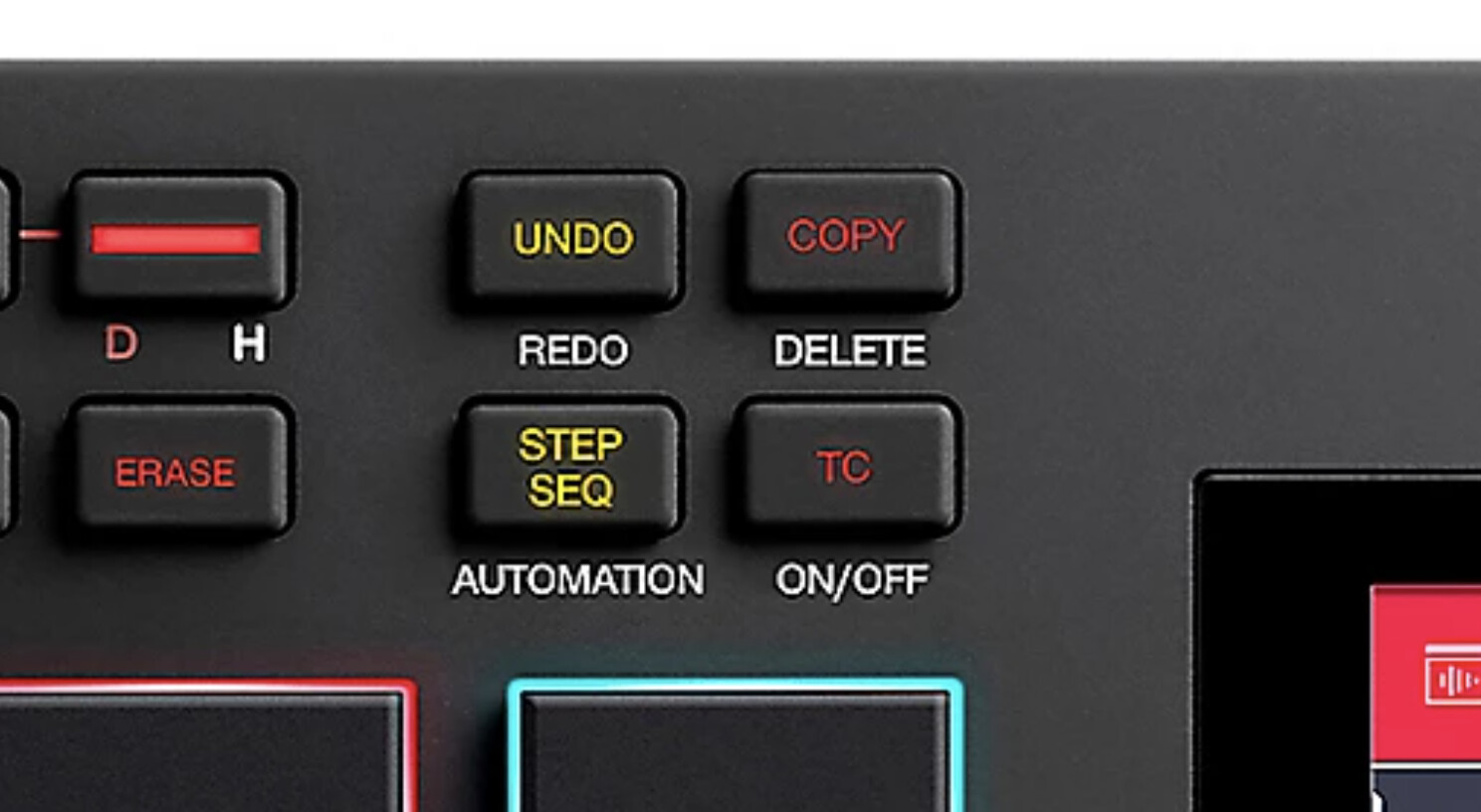
Like an MPC?
3 Likes
Yeah I do something like this on the DT with patterns. Bring in new sounds when needed on new parts. Since I use a DAW pretty much like post production to finish the track, I just split the different sounds up in the DAW when I mix.
I do this a lot with stabs and pads. I will get the stab going on one pattern and then get the pad tuned to it on another track, then copy the pattern and move the pad to the stab track in one of them and delete it in the other. So then I have them printing on the same track but in the DAW I can layer them how I want.
Its pretty much the nature of all grooveboxes that sounds don’t really carry over the bar so this is just one of those things that I have always done.
1 Like
Didn’t take it that way at all, appreciated your comments.