Cool, i thought there was a need for the extra cable, like this?
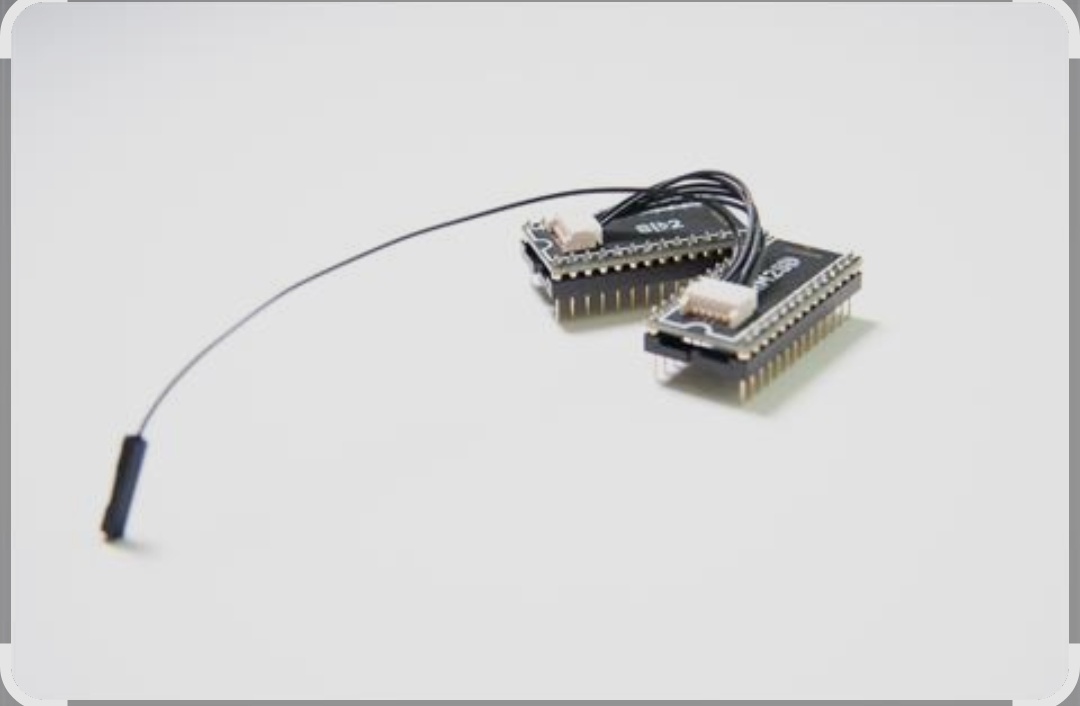
You know, the thin long one?
Or maybe thats just a standard cable type with crimp connection that can be added from my spare parts stock…
Cheers!
Marcus
Cool, i thought there was a need for the extra cable, like this?
You know, the thin long one?
Or maybe thats just a standard cable type with crimp connection that can be added from my spare parts stock…
Cheers!
Marcus
For 2SID-operation only the 5cm cable, as is, will do it.
If you want to patch in 3SID (9-voice) support you need to cut one of the cables, solder on an extension and then attach it to one of the CPU-pins, bent out of its socket. See the manual which links to a zip-file with pictures and instructions for that.
Noisy… Love the sound of this synth, however more and more I notice how clicks and snappy it is, in the sense that I hear lots of pops and clicks (from the envelopes?) when I play it.
Hard to get a clean sound from it that doesn’t sound sorta wrong… not talking about the character of the sound/chips.
FYI I’ve got two original SID chips that I bought from reputable dealer on eBay.
Anyone else notice this? I have three Twisted Electrons instruments (MegaFM and Blastbeats) and don’t notice similar stuff on those.
I do think of clicks and pops as somewhat endemic to SID chips, back to when I had a C64 (though I never got too far into the fancy demo scene.)
Perhaps try comparing a really loyal emulation, there may be a good trial/demo of chipsynth C64
The MegaFM and Blastbeats chipsets are radically different in structure so yeah, very different designs.
Yep. I forget the exact details but MSSIAH has workarounds for it. I think this is what MSSIAH manuals refer as hard restarts and envelope inits.
I don’t recall running into it with my HardSID ISA nearly as much as the Therapsid mk3 and I don’t know why.
Interesting, thanks. I know there are two major revisions, 6581/8580 but i’d need a refresher on the quirks of each. As Plogue’s chipsynth c64 suggests it draws off of 32 different revisions of SID, maybe that’d be a fun way to A/B them all.
Are there ways to control the individual volumes of the voices?
(With identical volumes, my mix gets a mess).
Or maybe you have different workarounds?
Thanks for your help!
flo
*On the playlist, they list the sid versions tested. The R + the single digit number at the end of the chip ID are the revision numbers.
Even easier! Thanks.
I don’t think this issue is specific to different revisions of SID.
The most famous differences are with the filter and the volume of digisounds.
Could you post an example?
Yes, the ADSR bug is a well known issue on SIDs, and when doing tracker music it is possible to fix this by for example stopping a note a bit early and thereby force a restart of the envelope. But for live playing this isn’t very easy as it would need to know in advance when the user has thought about releasing the note 
It would theoretically be possible to do certain things also on TherapSID but it could mean that a note-on could get delayed by about 35ms which isn’t really useful for live playing. Sidstation has a setting for this.
Exactly - it is same on all.
Yup, the 6581 has different revisions with different filter characteristics, but they can even vary a lot inside each revision. For the 8580 it is quite stable, so it is often the choice for tracker music when you want to know it is played back the same on another system.
6581 has a volume dependent click when changing the volume, which can be abused as 4-bit sample playback but that was kind of fixed for the 8580 leading to much lower volume of samples using this technique. Therefore (and for other reasons) there are other ways to play samples, for instance stopping the waveform generator at certain points, activating it and holding the value.
Nope, that’s one of the challenges (and beauty hehe) of the SID chip. But you can do it to some extent by using the Sustain of the ADSR with a very fast Decay. It will still “pop” a bit (due to the attack), but the overall volume will be lower.
Thanks - I will try this out, seems related…
Going to record and share here, much appreciated
Hey,
have you had any problems with weird background noise/sounds?
Between notes there is some kind of weird drone/tone/noise. None of my other machines have this.
I will see if i can get a recording of it.
Cheers / m
Yeah… consider it like the envelopes don’t fully close, or similar (Thomas or someone else here can explain better). It’ll often sound like the last-played notes are still playing, really quietly.
SID also has an audio input pin which needs to be closed to ground otherwise it introduces noise, but the creator of Therapsid confirmed to me that this is taken care of by Therapsid. So this likely isn’t it.
When I integrate SID into my recordings, I either
Yo… hmm, i better get a good listen to it again and see if it can be something of that you described. I also got some feedback from the T.E. camp to help out, so it´s going to be handled somehow, i´m not particularly worried.
Also, if it´s a chip thing, i just got the arm2sid expansion kit and am getting ready to switch to those new chips. Possibly it may help with my situation also! At the very least, it´s not going to make the situation any worse than it already is.
Yeah, i have used noisegates with great success in the past, a real life saver when you have a noisy drum machine for example - and that´s the best case since the drums are very short and snappy in most cases which makes it very simple to gate the sounds. But it should not be necessary i hope, i am pretty sure the weird noise/sound is something else than just a high noisefloor.
I think i will contact T.E. again and with their assistance try to resolve it, also i will check the suggestions from you since they have merit; i will return here with some more data i hope.
Thanks for your help! Cheers!
//marcus
Yeah, you really need to set expectations when using some of these chips, they are feats of interesting engineering and have their own, almost organic behaviors that are not as perfect as one might expect from modern EE practice and technology.
Hopefully you can be okay with the quirks and adapt to them with your work!
I got a response from T.E. support; they suggested it might be an example of the “sid shadow/ghost” noises or something like that, that is kind of a feature when using old SID chips.
No biggie, i will use noisegates if i am troubled by it, but i hope the arm2sid installation will resolve the worst of it since arm2sid is brand new chip tech and should be without old bugs.
Anyone that have had a similar issue and can confirm that the arm2sid installation resolved it?
Looks as if others have appreciated less accuracy in their emulation 
https://www.reddit.com/r/c64/comments/1dy8n1t/comment/lc6vz0k/
- Nobody tells you how quiet the ARMSID is when it’s not making music. The difference is massive. A real 6581 makes tons of video raster noise, and the gates never fully close so at high volume you can often hear silent voices. All the content on YT focuses on comparing the audio to an original.
I didn’t read up very far up the thread to see if it’s mentioned because I’m sure someone said it and I’m only mentioning this because sid chips are indeed super noisy at ambient levels, but any sid chip is much quieter if you ground the audio input since that’s where a lot of the line noise comes from. Maybe therapsid has some option for this?
I think there’s some janky workaround where you bend up the EXT in (pin 26) to prevent it from making contact in the socket but at least in a C64 you just ground the input cable RCA to something which is grounded but not powered on, I used to run a cable out to an old VCR although I have since acquired one of those S-video adapters which has an option to short the input to ground and has the same effect. I thought therapsid has an input jack, is it not for the sid’s EXT in?
edit: just to confirm though, my armsid are like dead silent no matter of the audio in signal path and they sound good for sure.