Poly aftertouch is a luxury for players with some keyboard experience. Smaller keys is the exact opposite. I get the smaller keys in Minilogue, which is an entry-level synth in many ways, but not in Fourm.
3 Likes
Ditto.
2 Likes
Is there a “slap on a bandaide” solution when they do?
Anyway, I like little thing. Chuck it in the car and off you go. Then I remember that my  AK is pretty much the same thing; only better.
Now wondering, is the AK graced with polyphonic after touch when in poly config mode??? And then what about the A4 in poly config, played with something like the Arturia keystep!!!
Not sure what you mean by slap on a bandaid, that plastic key assembly is in there for the life of the synth and you can’t substitute it for something else. Synth sounds good but I’ll never consider it, I don’t buy anything with that style of keys these days.
As in, mend those plastic flex parts with sticky tape/ sticky plaster.
I wonder if DSI still has their lifetime free parts replacement policy. Aren’t they externally owned now? I got a free pitch wheel replacement for the P~6 a few years ago so I’m kind of trusting.
Sure. Nearly anything can be fixed given time, budget, and motivation. I’ve fixed a few of those types of flexi key connectors in old toy keyboards (casio, yamaha, et al) by melting sistering strips into them and one or two by gluing strips on to reconnect. It depends on the composition of the plastic and i was always going for fast and functional rather than aesthetics. Also worth noting, the ones that failed were from sudden damage like being dropped or stepped on, not wearing out, and these were kid’s toys. I still have lots of those type of cheap kid’s toy keyboards that are going strong at 40 years old.
2 Likes
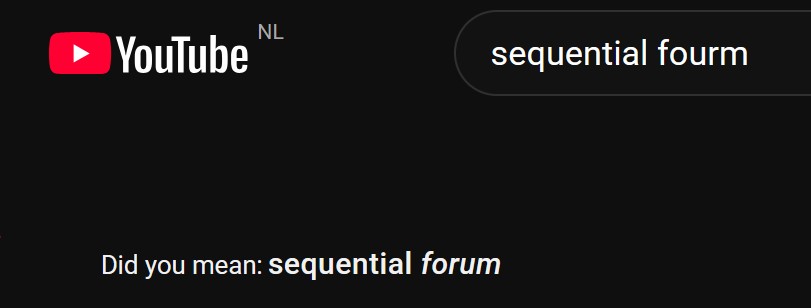
 they could have named it minipro 4 and be done with it. i mean, its hard to came up with sillier name then fourm. prourm ?
1 Like
Today, I searched “Sequential fourm” in YT too and had to re-read 3-4 times my typing when I saw the multiple mityped suggestions 
1 Like
100 posts here, 50 of them about the name.
It is way past over-done now Elektronauts.
8 Likes
Given how quickly this thread cooled off, I think we can probably afford ourselves to speak more freely, including topics like the name and the size of keys.
One thing that I’m curious about - perhaps this is a question of Fourm over function - but what exactly is the appeal of polyphonic aftertouch when you only have four voices and three octaves of mini keys? Not criticizing, just wondering if there is actually a big market for that or if those two sides (poly AT on one side, and a large keybed with more voices on the other side) usually go hand in hand.
5 Likes
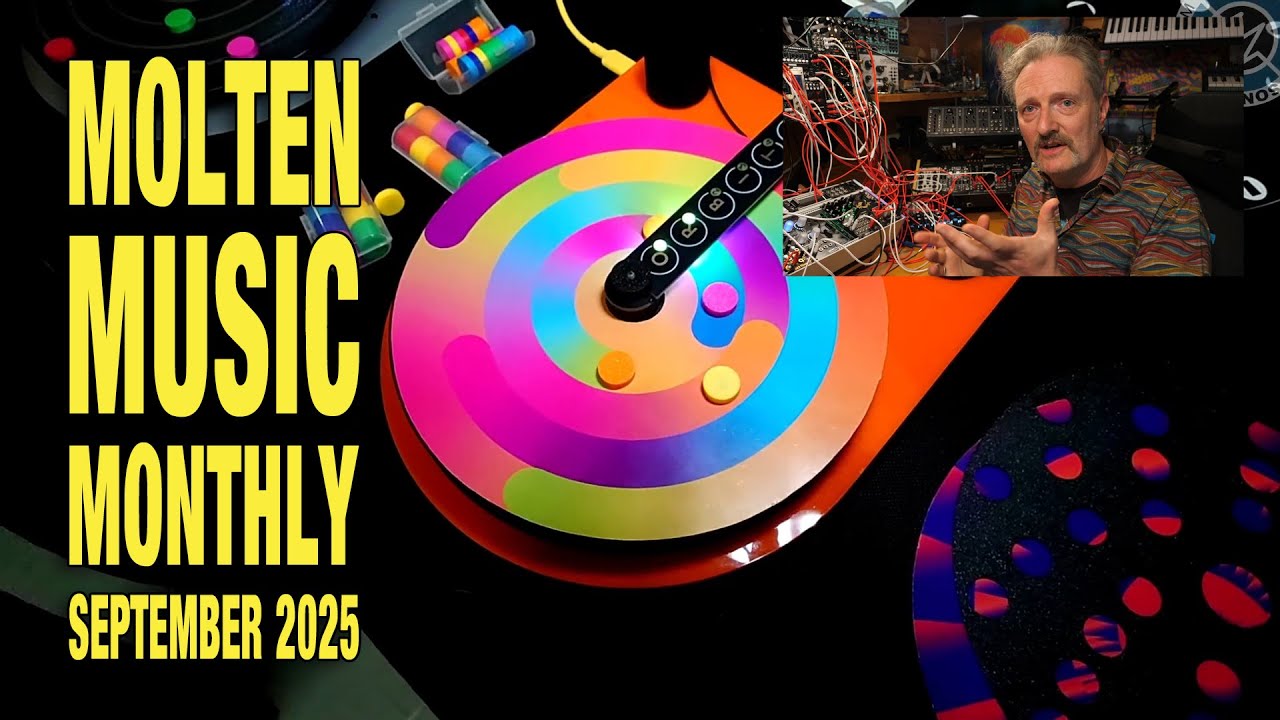
Molton (forgot his first name) in this video is a bit hilarious about the PAT. His solution was finding the init function.
I feel the same.
I’m interested in this synth but the (not so many) presets I like are interrupted by an often over the top PAT sound, except for one where a vibrato worked nicely.
2 Likes
Having had a hydrasynth for a number of years now i want every poly synth to have PAT. For whatever it’s worth, with the exception of the deluxe, the hydras have keyboards that are on the short side. If you can control what it’s assigned to and how deeply it modulates that parameter PAT is one of the best control sources around.
2 Likes
Yeah, I did have fun playing the Hydrasynth Explorer but it felt more like a novelty thing than something that really enhanced my playing. Admittedly, that was several years ago now and my playing has developed somewhat, so perhaps I would enjoy it more today. But my point/question was more around the apparent tension between offering PAT and limiting it to four voices over three octaves. At least the Hydrasynth Explorer offers eight voices.
3 Likes
poly aftertouch is always good to have if its implemented good, if it has nice responsibility, otherwise is useless. Good example would be Osmose, that thing is joy to play, that keys are haven! I don’t think polyphony is crucial, i often play Osmose 2 or 3 notes just to add pads to some more melodic synth lines. Thats always fun.
Now, for Fourm type of sounds, i am not so sure about, Take 5 has aftertouch, i never use it, and it is far less responsive than the one on Osmose. And one ch off course.
1 Like
As a poly-aftertouch player, four voices is practical and can work very well, and be very useful with two hands.
Either you have two notes in one hand and two in the other, or one in one hand three in the other.
Three and one is typically either the bass in the left, and three in the right hand, or chord in the left, plus melody in the right.
Two notes in one hand, makes it more about arm/hand pressure, and forearm twist.
Three notes in one hand, is the same, arm pressure, forearm twist, plus then finger pressure for whichever middle finger.
Five or six is typically played as a combination of the two and three per hamd methods, and is more complicated. Four per hand is a handful. 
Sequential has put together a PDF on “Polyphonic Aftertouch Performance Techniques” with details of specific uses of polyphonic aftertouch on the Fourm.
This shows quite a few specifics, and accessable ways to apply the poly-AT to your playing on the Fourm specifically. Things like the arpegiator feature with poly-AT on the Fourm with just four notes looks nice. This has a lot of power, that you might not be aware of as a conventional keyboard player.
Also another technique for playing on smaller keyboards to practice is the left hand little finger on the octave transpose buttons to expand the keyboard size. Daniel Fisher does that a few times in his video for example.
6 Likes
I think this is accurate and might lead to a failure of this synth. I‘m not a keys player and prefer modules. I do like to use a keyboard though because the note range of something like a digi is about too narrow even for me and I do like if there’s some variation via velocity. For this purpose, the smaller the keys, the better. I vastly prefer something like a Keystep over a synth or controller with 61/88 big keys. I don’t care for aftertouch, since my variation comes from turning knobs, automation or plocks.
So I do appreciate the small keys on the Forum (couldn’t resist) but the poly aftertouch makes it more expensive than necessary. And most people who are looking for a Sequential with poly aftertouch will probably laugh at these small keys and four voices. Remember how many people disliked that Prophet 6 only had 49 keys and Take5/Teo even less and only five voices? These strike me as the kind of person who would care for a poly aftertouch keyboard.
2 Likes
I expect it to be a huge success. Though I’d rather just have a module if anything.
It sounds a lot like a P5 to me. I think I’d need them side by side to decide how I felt about it relative to the Take5. I like using the rev3 filter a lot though, for some bite but the rev2/2140 is always a pleasant sound.
I like the polymod+ sort of approach though, that’s really cool. I’d love to see this sort of multi-bus polymod in more synths alongside a matrix, but maybe that makes more sense in an upscaled mono like this than in a poly.
I don’t think the 2131 sounds that bad; it’s probably some some qualities that make it different from a 3340 (an onboard waveform mixer and the like is probably a much more cost effective choice), setting aside the possibility of TZFM (not sure if the 2131 can do that or not, the 2130 can).
I think I’d still probably prefer a larger (and thus more expensive) 5 octave synth, but this thing is pretty cool and if I didn’t have a Messenger I’d be tempted.
4 Likes
any take-5 owners have a chance to try this yet?
im not familiar with the modulation options on the Fourm, but im sure its nowhere near the vast powerful mod matrix of the T5. still, its kind of appealing to me and i really like the sound
1 Like