Yup! Of course you can just use a very deep and complex synth in a more simple way and ignore 90% of what it can do. But you‘ll likely end up feeling bad because you‘re not doing this beast justice. The interface of the synth will most likely also be more menu divey or have more shift functions than a more simple subtractive synth that allows for knob per function usage. So if you already know you will probably never use 90% of the functions, feel bad about it and have less direct access to the parameters you’ll actually use, why would you get the complex machine instead of the simple one?
It’s cool that there’s people who want to use these deep engines though and I‘m happy for them. I‘m just happy I‘m not one of these people, so I don’t have to be think a second about Leviasynth. I think @tchu was pointing out that it takes some experience and confidence to realize you don’t need all of these functions and shouldn’t feel like less of a musician because of it. Sometimes people are shopping by spreadsheet function comparisons, especially if you’re new to hardware, and that might not be to your favor.
Very interesting, but I am way too poor for it. Maybe if the desktop cost 1300e like the Red shit does.
OTOH, I would probably want that keyboard as well.
In Kernel mode, the Iridium/Quantum has a six stage envelope for each of the six kernels. And you can have three Kernel-oscillators in a patch. So that’s 18 envelopes plus the seven regular envelopes. And since it’s bitimbral, you can have all this twice.
I do think an ultra-deep tool is a neat thing, but I don’t think I need more than one of those. Then again, I am a person that deeply disliked the original Hydrasynth’s approach to ‘wavetables’ and the patch creation process on it in general. Yes, I know you can make a few of your own inits to work with.
One feature on the LS I think more synths should have is the ability to save your own init patch; that’s a nice feature that would be useful on almost any synth.
There’s something to be said for growing into a synth’s deeper potential. Even since starting out with synthesis, I’ve never been one to seek out anything that I felt I could master in a few sessions. I’m still learning little nuances to the HSK, despite having adopted it fairly early on, and daily use.
The Leviasynth is a machine with fantastic capabilities. A bit rich for my blood, when I consider what I already have at my disposal. I made the same argument when the PolyBrute jumped up out of range. Unfortunately, pricing for everything is headed in this direction.
I’ll be keeping an eye trained on the LS developments. Probably an outlier in this, but I prefer multiple KBs, up to 4 octaves, over having a 5-octave controller / synth.
In the realm of ASM it probably is. They’ve made synthesis fairly intuitive with their workflow approach . get more for less (except the prices outside the US which is probably throwing off the perception of value in this discussion)
myb if it came off that way. I’m trying to come from the angle that people have experience with the hydrasynth and its workflow which is why i’m touting it as ease of access to build more, fast. I have simplistic synths that I enjoy, but i’m also one to dig deeper into patchmaking. maybe others don’t, and i can’t speak for them. I guess my point is that at the surface, you might only see people using a few of the features while there are many out there using these instruments to its larger potential
Part of the confusion here is probably because of US vs. the world prices. In the US, for the workflow ASM offers to get a patch going fast, the price speaks to folks. Seeing Canadian and European prices, I can see that it’s way too expensive, and ya, I’d agree you’d probably be better off with the Iridium.
Sure, there’s no argument about that. From a US price standpoint, it’s about the value/utility at the price point. People familiar with the hydrasynth know that they made doing subtractive synthesis pretty intuitive. They carried that over to the Leviasynth.
I’m not going to convince people to purchase it. But I believe they made complex sound design in an easily accessible format through their workflow. My argument is, just don’t be afraid of it if you’re looking for a ‘deep’ synth in the US price range (i can’t do any arguments for the world price because it’s way too high)
We’ve mostly always paid more for stuff over here in the UK compared to the USA, usually by about a couple of hundred pounds. So I am absolutely astonished at the price of this over here compared to the US. I was looking at another desktop due to my Artemis being returned and this would have been it if it was comparatively priced to the US. But as it stands I could buy a lot of synths for 2000 pounds! I could get the Redshift & an OPSIX (which is actually cheaper over here) and still have 450 left. Or an Iridium Core and a Korg Poly and still have change left. There is not much difference between the US & UK prices of the Hydrasynth so this is baffling to me and for that reason I’m out…
for now!
Some people want a synth that covers most bases and don’t want / can’t afford / don’t have space for another synth.
Some people collect synths like museums collect Roman pottery.
I’m somewhere in the middle. I can’t deny I like a synth with features (I have a hydra, for example) but OTOH the two synths that I’ve got that are small-screen menu-divey (Zoia, Blofeld) get much less traffic than other synths, so clearly UI design is something that influences whether I find a synth enticing.
Having said that, ITB I’ve got Halion, Pigments and a bunch of other synths that are packed full of features and don’t have the UI limitations of hardware synths. But I barely use any of them - partly because using keyboard/mouse to make music doesn’t enthuse me but also because the the wealth of features gets in the way for me. It’s the same reason I’d rather have a GR-1 than an Iridium, even though Iridium does granular and a bunch of other stuff and is clearly better bang for your buck.
I would not agree with that point, but for those the UI worked for, sure. It was maybe intuitive for a synth that could never be called knob per function, but not as intuitive as a synth with dedicated envelope controls would be. I think the HS is actually a poor first synth because of how not intuitive it is to use.
I found the HS less intuitive than, say, Modal’s Cobalt or Argon, and neither of those is as intuitive as would be ideal.
Intuitive given the power for the price, yes, and that’s probably why people are reacting so badly to the price of the LS. I think the LS (us) price is about what I’d expect for 16 voices and analog filters though.
I don’t doubt the LS will be more pleasant to use than, say, an Opsix, but I don’t think I care much for that sort of deep hardware, so I’m probably not the target market.
It will be interesting to see if B rushes the BX1 to market to compete or just shelves it.
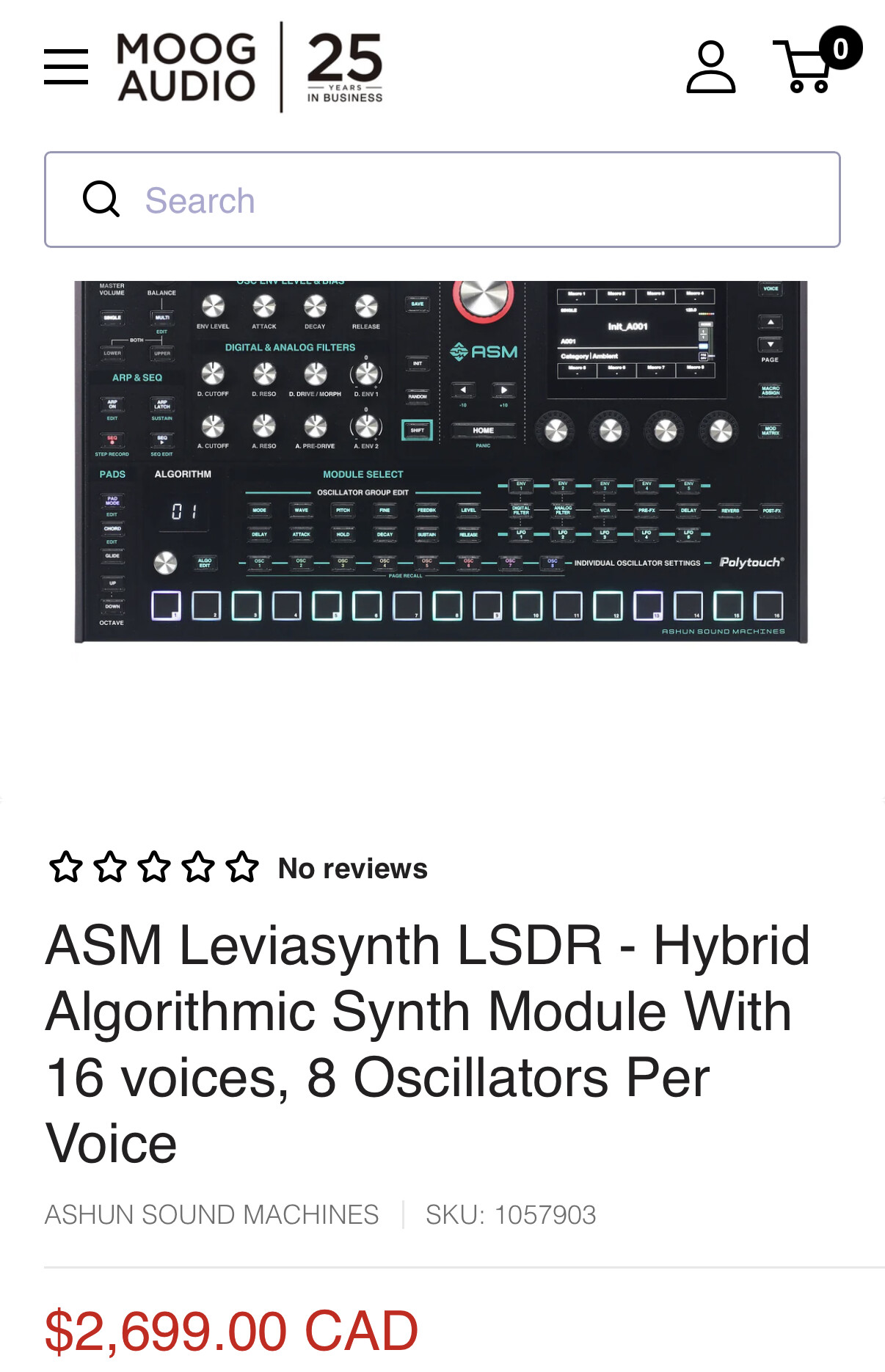
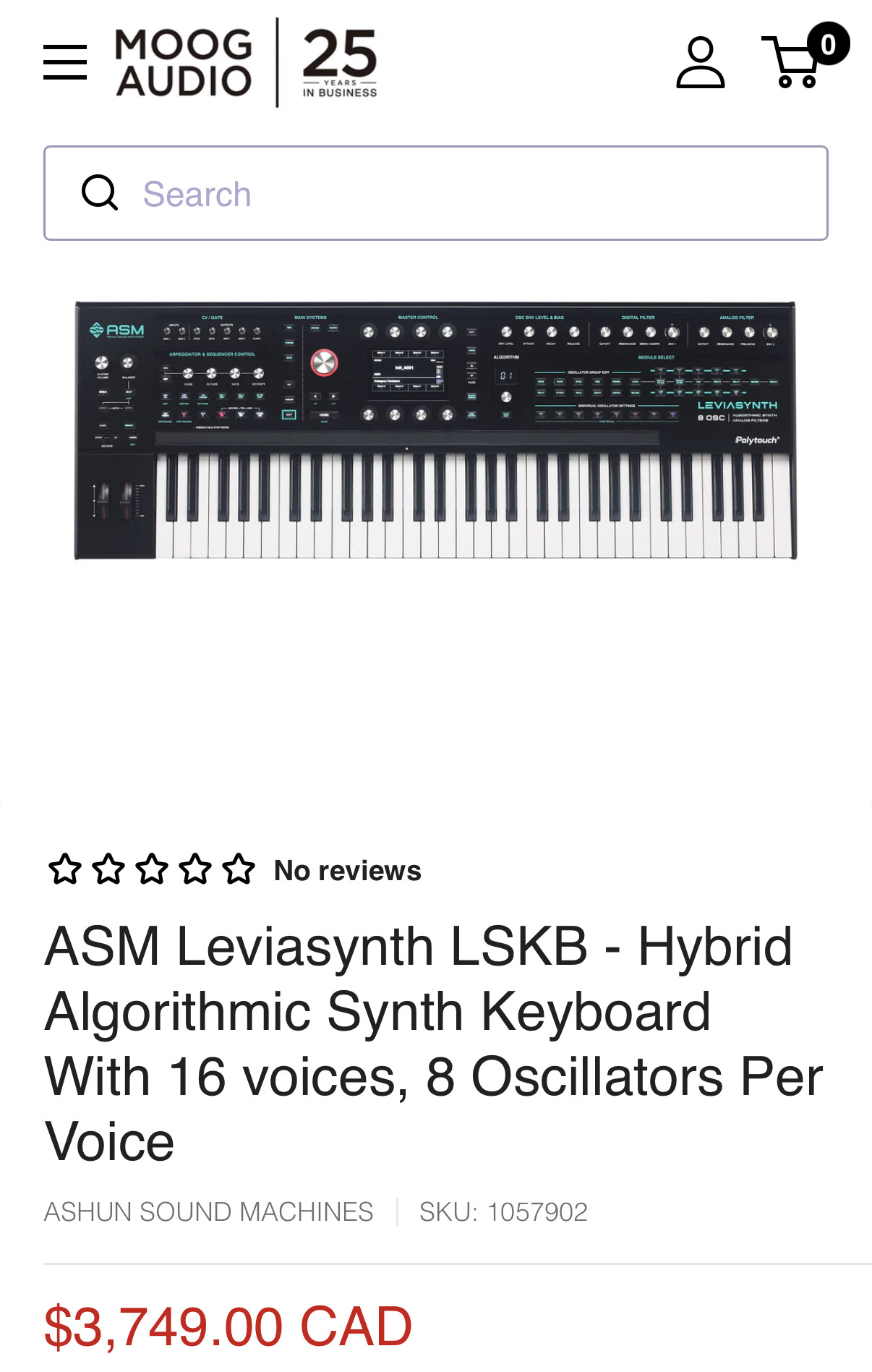

 )
)