I do play notes in with a Launch Pad.
Should I be looking at 256 to get decent timing on notes?
I do play notes in with a Launch Pad.
Should I be looking at 256 to get decent timing on notes?
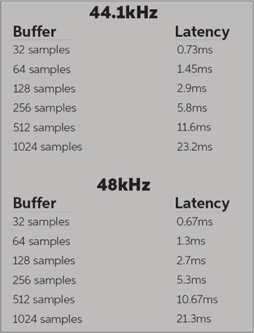
not really a big deal unless you are performing or having issues with the delay
Just bought a Dune 3 license.
I spent the evening making a track with sounds using Hive and Dune and switching between them.
Hive 2 is great and I might buy it next time it’s in the sale, but Dune 3 just sounds next level amazing and other than the lack of visual feedback (which I hope they sort in version 4) it’s really everything I wanted. To my ears it’s much better sounding than Pigments and it’s great that the UI is so snappy and the CPU so light.
@theobserver answered it.
More in depth:
It’s a bit of trial and error and system depending with different settings to obtain a stable setup with the smallest latency possible with no cpu spikes and glitch and pops in the audio.
With a slow computer you can decide to temporarily disable cpu hungry fx when recording midi when smaller buffers are needed.
In the mixing fase you can bring buffers up to 1024 to decrease cpu usage. It takes a few milliseconds more between start/stop but that’s not a big deal.
For spot on timing when recording midi notes or recording live automation it’s common people want the lowest latency possible.
There’s some information on the internet about setting up audio pc’s; energysaving off, disabling variable cpu core speeds and that kind of things.
If you are not playing via keyboard live, or recording audio live, you could live with up to 2048 samples as well.
For entering notes with the mouse and listening to the mix, this high number of samples can be sufficiant enough for production purposes.
UVI Falcon. Easily the best most versatile vst. Dune 3 is also seriously great.
Haha! - Yeah a lot of people think that, and I’m sure that drives Spectrasonics nuts 
Eric Persing has some fun with that here:
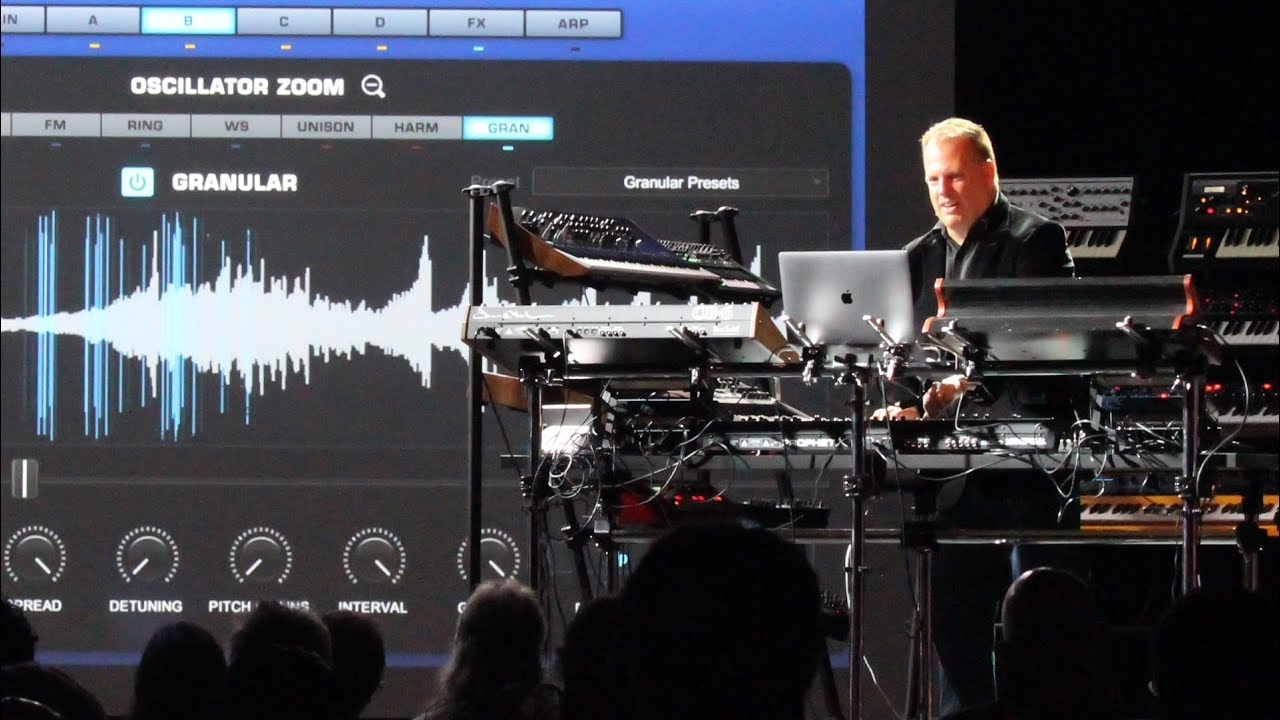
It truly is a VERY powerful synth, and it isn’t dependent on samples, it’s just very good at working with them as sound sources. Considering that Eric worked on the Roland D50, I guess that’s not a surprise as it integrated samples with synthesis.
Omnisphere might not be a great fit for your case, as I’m not sure how CPU friendly it is (it’s very patch dependent). It’s a giant download too with the samples / sound sources.
I only wanted to mention it in this “supersynth” thread because it’s kind of scary that you can’t demo it, and it’s expensive. But looking back I spent more time and money chasing VST after VST trying to find the “one”, and for me that ended with Omnisphere 5 years ago. It actually seems like a very reasonable price now looking back considering how capable it is, and how often I use it.
I think for things like Falcon and Omnisphere I’m sure they are great, but I don’t want something too complex to learn and once you get into £400 synths you start to look at just upgrading the laptop.
I’m super happy with Dune 3 actually.
It sounds the best of anything I’ve tried and it’s very snappy and resource friendly.
If the UI was more demonstrative of modulation then it would be perfect.
If it didn’t exist I would also have been completely happy with Hive 2 and may pick it up next time it’s on sale.
Falcon is great, but it’s a big time investment.
I’d probably suggest vcvrack, it’s a great way to really deep dive into synthesis.
Also I’d recommend the upgrade ( Pro) , I’ve found the vst/daw integration means I use it much more than when it was just standalone.
But start with free version see how you get on
If I could choose just one VST for all my needs, it would be Omnisphere. For ease of access and immediacy with great sound, it would be Dune 3.
Glad you are happy with Dune 3 so far, @monquixote. I think that’s the one I had recommended in a different thread. As much as I like Dune 3, when I want to whip up something that doesn’t require a very particular sound or technique, the synth I most often find myself going to is Hive 2. I will caution you that if you are waiting for it to go on sale, you might be waiting a long time. U-he does not put their products on sale very often (I am only aware of a couple of instances in the last few years). I do recall seeing a couple of year-end promotions, but in general they stick with a fixed pricing scheme. I have used all of the u-he synths at various times and think they are well worth the money.
Someone else in this thread mentioned Cherry Audio and their synths are worth a look as well as they are good value for the money. But most of them are emulations of particular hardware (I think Dreamsynth and Sines are the exceptions I can think of), and they aren’t as general as Dune 3 or Hive 2. But if you do want to try out a virtual modular, their Voltage Modular is nice (and compares favorably with VCV Rack which many others will suggest).
only vst synths ive been using are the noise engineering ones, love the modulation matrix and they sound great
Does it song mode?
Added granular engine

another vote for Vital.
Still loving Dune 3 and it’s just been updated 
I since got Diva and Hive in the “accidental sale” a little while back and they are also excellent.
Despite the fearsome reputation Diva actually runs fine.
It seems like a testament to how well built Dune 3 is that we didn’t have to wait for some total-rewrite Dune 4 for MPE support; Synapse was able to engineer it into their existing architecture and deploy it in a point release.
I haven’t even updated yet, but the sleeper star of the show looks like it might be the voice mixer. I haven’t owned Dune for that long (only picked it up this past summer) but it always seemed like the “voices” system was very close to a full multitimbral part-layering system, and that a mixer at that point in the signal path would close even more of that gap. And now they’ve added exactly that!
Another vote for Surge XT - it’s made me rethink owning a lot of VA / hybrid stuff I’ve got.
Having a read around on this thinking about setup as I often do at the end of the year. I am no sound designer by any stretch, but I’ve found pros and cons to all the big hitters (trialled or owned all of these.) As a preset hunter I have no issues with taking a preset and tweaking it, but sound design from scratch for me requires visual feedback.
Outside that, sometimes with design, once you hit upon the formula for the classic, there isn’t much that can be improved. Serum to me, is still an excellent combination of visualised sound and pretty much a one screen interface, which is great for beginners. As a sound design noob I can watch a tutorial and not get lost which I can’t say for many other synths. And while buying Serum is NFR, I did find out that should there be a Serum 2 it will be free to existing users as an update. So you’re in for a penny in for a pound there, but you’re getting Serum 2 when it comes out. A lot of people would be running off to the bank for full whack for something that well regarded.
Current actually looks kinda interesting. Leaving aside the subscription model fiasco, it seems to take the basic premise of Serum, but enhances it with some of the features of Phase Plant and Pigments, but while maintaining the visual restraint that Serum always had. In some ways it’s more complex, but in others it’s more refined. Plus in this case since they started out making effects, the bundled effects are apparently very high quality also. Compared to say Pigments which also has a granular engine, the way it uses samples in presets sounds kinda cool to me.
I’m finding Diva really easy to use and nowhere near as terrible for CPU usage as people suggest.
I’m currently trying to make a track with no presets.