Exit interviews for your gear

Don’t tell me what you’ve kept, tell me what you’ve sold. Not the instruments that sucked like the Kaossilator 2S, but decent instruments you still decided to part with.

What was great, what was okay, what was meh about it, and what you’d like to see improved, what could’ve made you kept it? Why is it not for you, and who do you think would love it?

I’ll start with the BS2.

First, what I liked about it:

  • Novation has the best support. It’s not an exaggeration, it’s literally the best support ever.

  • Powerful oscillator section. The sub oscillator can be tuned independently, so it can be a 3 oscillator synth. Plus it has some neat tricks like different glide times for oscillators 1 and 2.

  • A versatile filter, it’s nice to have bandpass and both 12 dB and 24 dB.

  • Filter overdrive? Distortion? Awesome!

  • The front panel is relatively knobby.

  • It has a proper power supply instead of relying solely on USB power. Having options is nice.

  • The manual is awesome, and a good read for beginners, even if they have a different synth.

Things that are okay:

  • The core sound is okay. It doesn’t suck, but DCOs paired with an unremarkable filter aren’t exactly going to knock you out of the socks. Not saying it won’t ever sound amazing, I’ve made some great patches on it, but it’s something you have to work on with a specific idea, not something like the Minitaur where you wiggle random knobs and the result is almost guaranteed to be a butthole cracking bass patch. Judging by Youtube, most people stop at “it sounds good” instead of putting extra effort into pushing it further, and that’s totally understandable, on this synth you really have to put 80% of time into chasing that 20% of greatness.

  • AFX mode is fun. Not “can’t get enough” fun, but rather “ah cool, whatever” fun.

  • The interface is mostly okay. Yeah it’s knobby, but so many functions are still hidden behind button+key combinations, and half of them were added in later firmware versions, so they aren’t on the panel. I don’t like menu diving, but this isn’t better for sure. Basic things are really fast, anything deeper is annoying. With that many knobs, I expected it to be faster and more straightforward.

  • The looks are okay at best. Can be upgraded massively with an overlay, which also solves the problem of unlabeled functions.

  • The price is fine for what it does. Not great, not terrible.

  • The arp is fine, the sequencer is probably serviceable as well, not sure, I’ve never used it.

Things that disappointed me:

  • The segment display is annoying. You have to memorize or write down patch numbers, and when you load a patch, you have to rely on the dots to see where is the actual knob position for this patch.

  • Shared envelope controls are extremely annoying, partially because of the segment display. I didn’t expect it to be a big deal, but it is.

  • Modulation in general is lacking. Two envelopes, one of them being amp, seriously?

  • That’s a matter of taste, of course, but I’ve never created or come across a patch utilizing the acid filter that couldn’t be improved by switching to the main filter. Plus, since we have two filters, it would be nice to be able to use them simultaneously.

  • It just felt too big for what it is. I used it with an external controller, and didn’t have that much space, and it took a lot of space.

  • It doesn’t handle humid environments well, the pot rubbers crumbled over time, and the wheel rubbers got moldy.

What I think it should’ve had:

  • An actual graphic display, so that you could name your patches, see important details at a glance, etc

  • A proper immediate interface, with separate envelope controls (though a display could make that optional), an expanded oscillator section, and probably more indication on switch positions

  • More characterful filters, and being able to use both of them simultaneously

  • More robust modulation, at least one more envelope

  • This is more of a preference thing, but while I like DCOs on polysynths, in my experience monos benefit from VCOs

Overall it’s a nice versatile gig synth, as opposed to studio synths. It’s not one for sound exploration, but rather one for bringing existing ideas to life, then saving them and writing down patch numbers for your live performances. For the studio, I’d definitely recommend the Typhon over it, but there are other worthy contenders (Minitaur, AS-1, Uno Synth Pro X, SE-02, Monologue and probably others I don’t remember), and it’s a great choice if you’re looking for a gig synth, it has reigned the scene for many years, though today the Messenger is a viable competitor.
5 Likes

large tube amps and cabs as no need to play guitar live.

4 Likes

Bye bye….

23 Likes

I need to keep a rolling document with this sort of reasoning every time I decide to sell something, because way too often I’m finding myself only remembering the good parts and going in for round 2.

13 Likes

Similar thread already exists.
https://www.elektronauts.com/t/discussion-what-gear-have-you-already-sold-and-why

4 Likes

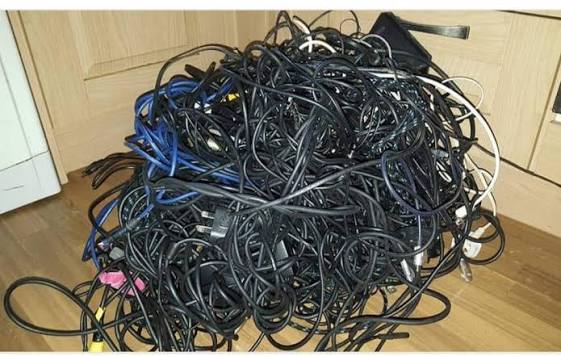
I hate cables so much.

9 Likes

I get a small joy from running cables, but this is horror.

3 Likes

Cables are not to blame, leave them alone!

Multiple outputs are! But still, we all want them for some reason…

As long as multiple USB audio is not feasible without a computer for less than Track8 audio price, we’ll have to make do with cables.

(But things might be changing soon in this respect…)

4 Likes

Once I hear a sonic characteristic or run into a UI choice I don’t like, it’s likely to be sold. But I do diligently try and beat that character out one last time and program something to see if I can work around it. (Notable exception; the Montage, which is one enormous UI mistake, but which sounds so lovely I can’t help but like it)

1 Like

Zoia.

Very powerful, still having features added, great sounding effects and my god what a powerhouse of ideas.

OTOH although I’m happy programming modular patches and I’m one of those perverse souls who doesn’t find the Blofeld that menu divey, absolutely fuck programming something with guitar pedal switches, a single rotary encoder, and a bunch of midget gems. That - for me - is a step too far.

I tried downloading patches from the community … Some great ideas there but zero standardisation so the button that turns the reverb on in one patch is in a different page in another and although it exists in a third it also inexplicably turns on 3 other unrelated effects at the same time.

If you liked the early days of Linux where you farmed it all from your own goats them this is the pedal for you. Personally, although I love to savour the goaty aroma of cheese from Satan’s consorts, I don’t want to get up at 3am on an ice-blasted winter’s morn to rescue a stranded kid from a bleak moorland.

5 Likes

$300 Martin ukulele:

I loved it but I hate myself so it went something like this.

It’s not you, it’s me, eBay!

3 Likes

Since my POST in the thread mentioned above, I sold a few more stuff:

  • Elektron Digitone: capable of cool sounds, but found it too complex for quick sound design, yet too limited for when I wanted to really dive in. I also didn’t like button colors and the way mute mode worked. Ultimately, I found operating two Elektrons at the same time confusing (I also had DT, which I loved).

  • Korg Monologue: I loved oscillator section, aggressive filter, audio rate LFO, hands-on UI and sequencer features like disabling steps. Hated limited envelope, where I had to switch “modes”, sequencer transpose always restarted the sequence and I couldn’t use analog sync to trigger the sequence like on e.g. SH-01a.

  • Korg Opsix: loved the sound, flexibility of the engine and custom algos, operator mixer was great for jamming, keyboard velocity was good and I liked the futuristic look. UI was good, but not great, button labels were hard to read in the dark, so I preferred programming the plugin. I missed having aftertouch, no midi thru meant I couldn’t chain anything after it, computer connectivity was hit&miss and it felt too bulky for my setup. Thinking of rebuying it in module format.

  • Roland VT-4: got it mainly for vocoder, which sounded pretty good, but limited carrier options and no audio input for custom carrier (except via USB, which is not helpful in a hardware setup). Hidden shortcuts for some functions (Roland-style) and harmonizer wasn’t anything to write home about.

  • Novation LaunchControl XL MKII: great amount of controls for the price, it felt quality, I liked that it had knobs, not encoders. But faders and knobs were way to stiff (and I didn’t like detents), buttons too mushy, no midi output, no screen to see what’s going on and too limited programability. I wanted controller for jamming with hardware, not mixing in Ableton.

  • I also sold two of my three acoustic guitars (I only need one, so I kept the one which sounded best), Zoom U-44 audio interface (too DJ oriented), Zoom H1n recorder (“line” inputs we’re too hot and it distorted), Yamaha MG10XU mixer (I was missing stereo sends, mutes and CUE per channel) and Hercules DJ Starlight controller (too small for scratch practice).

2 Likes

I took a picture of my setup the other day testing out my new camera. Sent it to my phone, and opening the photo it does that thing where it reads text in the photo. It translated my cables into an Arabic phone number.

Not showing because it probably is someone’s phone number.

But while I’m here, things that are secluded in my synth crypt (because no one else wants them):
Subsequent 37. Best experience I had playing live. Just never fit in at home.
Analog Keys. Together with a Minitaur, A4mk1 and AR, I was in synth heaven. Didn’t play well with others and my friends got the shits with me about always “dragging all that shit around”.
A4mk2. I was homeless, then I wasn’t.
Nord A1. Magical. Temporary fix while other synths were away for repairs/replacement, all at once!
All great things but each bought at a time when they were exactly what I needed for whatever situation I was in; then wasn’t.

6 Likes

The SP404 mk2. This is interesting for me at the moment since I am going to repurchase when I find a good price on a used one.
Honestly, there wasn’t much not to like. Some of the implementation on the step sequencer was janky and there were quite a few button combinations that were difficult to commit to muscle memory. The main reason I got rid of it was because the Digitakt 2 was coming out and I felt like with the implementation of stereo sampling I would be able to do everything I needed on just the DT2 and I am all about limiting gear as much as possible. However, I’ve been going back and listening to little bits and samples I created on the SP404 and I realize the DT2 just can’t make things sound the way the SP does. I have this idea of processing whole tracks on the 404 and creating mixes and transitions for songs that the DT2 just would not be able to do for technical (limited sample length) and creative (effects) reasons. So as my needs and wants from gear adapt so to does my assessment of a particular piece’s utility. But then, maybe I should not repurchase the 404 and sell the DT2 and just buy a Tonverk? IDK, I haven’t really investigated the Tonverk at all but maybe it would be the best of both worlds.

5 Likes

I’ve had an eventful 8 months

  • MPC Live 3: I still believe the Live 3 is the best all-in-one groovebox, but for me it almost did too much lol. The MPC sampling workflow is still my favorite way to chop samples, but even with the added buttons, the workflow still felt too involved and menu-divey. They’ve done a great job improving it from the Live 2 though.

  • MPC Sample: Pretty close to what I want in a sampler, but I’m not a great finger drummer so I missed a better sequencing workflow.

  • Roland TR8s: Super immediate, but sample management was uninspiring. I totally see why it’s a great live performance device though. Motion recording didn’t click with me either.

  • Ableton Move: At the time, the sampling workflow was weird to me and hacking the 4 tracks became more work than I had hoped.

  • Novation Peak: This was my first attempt with a synth and I wasn’t a fan of the filter. I regret returning this one though.

  • Take 5: Got it after the Peak and realized that I prefer the Peak workflow. Minor things, but I like being able to see the value of the knob I’m turning. The mod matrix is super intuitive though and wish the Peak had it.

Now I have the digitakt 2 which is great, but still miss having a synth to mess with. I also miss a better time stretch haha

3 Likes

I’m thinking there is a DN2 in your future to be the BFF of your DT2

I’ve thought about it but not sure if FM is for me

1 Like

RC505

Liked: being able to easily loop and mangle with FX

Disliked: build quality is trash, 5 loops was overkill, huge footprint, so damn ugly, one-trick pony

Sold it a week later, bought an OT instead. ZERO regrets

6 Likes

cable jungle!

These are just the quick and dirty summaries of recent(ish) stuff I’ve gotten rid of despite it not being “bad gear”. I could probably expand on each a lot more about things that I just didn’t bond with.

Sequential Pro Two special edition:

Loved the look and the layout, but mine was poorly assembled right off the bat requiring a lot of disassembly to rectify brand new. Never really gelled with the sound either, and it was the straw that broke the camel’s back in helping me decide that I really don’t need or want a mono synth that costs that much. Even if paraphonic.

Arturia Polybrute:

So much going for this one, but limited effects control and how basic the sequencer was despite taking up so much of the front panel always bugged me. Also I HATED, HATED the key bed on it. Felt worse than the Minifreak I have now, and I could never get past that on a synth that expensive. I may look into the new one at some point, but still on the fence.

MPC Live III:

Always wanted to try the new MPC workflow and while I was impressed how much you could do on just that small box (and the pads are best in the game) the workflow was not for me at all. Easy enough to grok but just way too much jumping around to get stuff done. The MPE style pads were tedious to set up too, even after the more recent uypdates. For my needs something like Maschine or Push 3S were just easier to use and more to my way of working. And I always felt like they were pushing Soundpacks on me right from the UI too. Although it did expose me to the Air Ether plug in, which is one of my favorite delays now.

Make Noise 0-Coast:

Kind of my entry into a more modular workflow, but while I liked the weird places it took me the fact that all my patches were one and done and often impossible to get back meant I never really used it for any actual music making. Also a bit raw sounding with no onboard effects of any kind, and I could see that pulling me down the eurorack rabbit hole and I’m still not ready to go there. For me the Modern Sounds Pluto scratches that same itch in a more musical package.

Hydrasynth:

Probably the best all around digital synth ever made, insane built quality, and the pads on the desktop version were surprisingly playable and expressive. The UI was really well thought out, and it had a ton of functionality that you can tell a lot of time went into making super easy to use. BUT… the whole 8 knobs with scribble strips just felt generic looking to me and never really inspired me to want to dive in deep to program my own sounds with. I probably could have hung on to this one longer, but I had a feeling it wouldn’t get enough use and that money would be better spent elsewhere. Also not a fan of the Halloween color scheme. Maybe a mistake, time will tell if I re-buy.

Analog Rytm MK2:

Awesome form factor, but mine was buggy and I just didn’t bond with the sound of it at all. Didn;t scream analog to me (I know people disagree) and I actually preferred the Machinedrum sound. Having to use certain machines on certain pads messed up how I like to lay out my instruments too, which made it hard for me to use live.

Roland TR-8S:

So much potential, but also so much menu diving to do basically anything. While I gave up some flexibility on individual drum sound tweaking, my MC707 gave me more or less the same sounds with a much better (if still sorta lacking) UI.

Barefoot Footprint 01 Monitors:

I wanted a pair of Barefoots for as long as I could remember, so I was super stoked to finally get these. But immediately I regretted the decision, they had so much hiss audible with no music playing it was unreal for monitors that cost that much. Also the overall sound was super bright and harsh to me, despite them having more solid low end than anything that size should be capable of. I could mix well on them, but I hated it every minute I was doing it. And I never wanted to listen to music for fun on them in the studio. Lost a stupid amount of money selling them only a few months later.

Universal Audio Apollo 16:

I actually really liked the sound of this one, totally different in a more relaxed way than the Lynx and RME stuff I’m used to. But I felt like they were constantly trying to get me to buy plug ins when I just wanted an audio interface, and I’m not really a fan of most of their plug ins anyway. Ultimately I liked the flexibility and non-spammy nature of my RME more and went back to one of those.

That’s all for now. Join me next week as we play “Was that a MIDI controller or a door stop?”

10 Likes