Have not tested Kenton - only ours 
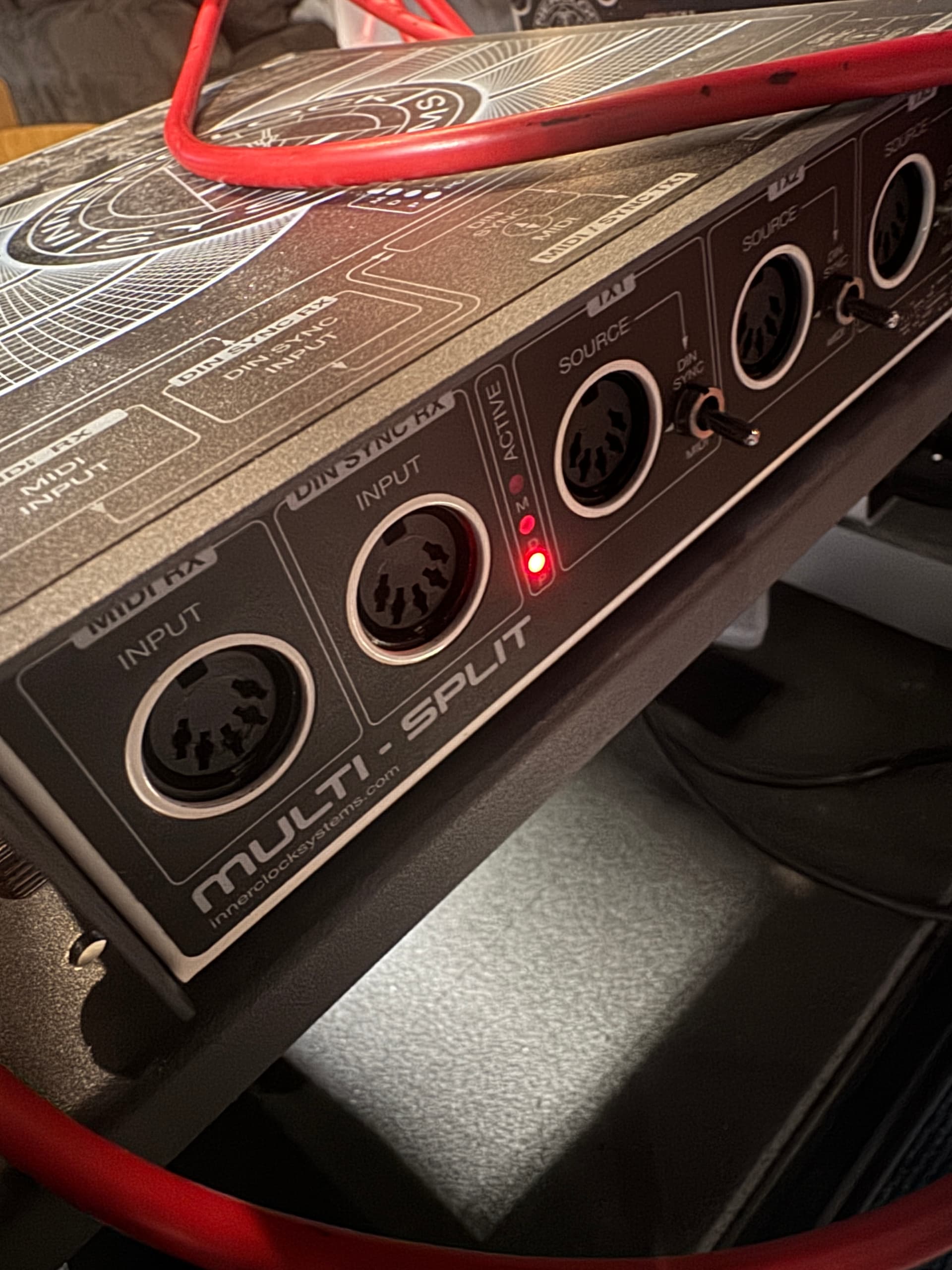
3 Likes
cool. gonna chrck it out
I normally avoid forums, but I was invited to Elektronauts back when people were asking me about syncing the TR-1000 correctly and the start lag issue. That thread was closed, I think for being too technical or off topic.
For context, we’ve been doing shifting and clocking solutions for over twenty years, covering jitter and latency, DAW and DAWless. We also make a MIDI interface. It’s a different animal to the mioXL, built for a different application, though there’s some obvious overlap.
So I’m happy to offer numbers, answers and facts on any of this.
It gets tricky because our products’ numbers are good, and I don’t want to be accused of using these discussions as a sales channel. That’s why I stopped participating on the original Elektron forum over ten years ago.
11 Likes
Understood. Aiming for an improvement vs my current scheme of PC (Win11) Bitwig master clock → clock out via rtpMIDI → mioXL (routed to dedicated Master Clock lane in Auracle X) → clock out via variety of DIN & USB connections to hardware synths/samplers/sequencers. Moving the weak point from PC clock output to the mioXL. Viable?
U using Nome II though hosted in Bitwig right to get good clock ???
Then you feed that into MIOxl yes ???
You have two methods your trying yeah ???
1: Bitwig Software Clock > RTP > MIOxl > DIN / USB Out
2: Bitwig > Nome II > 5-PIN DIN Out > MIOxl In > THRU Out
Number 2 should provide a better result but would need confirming.
Also see previous post showing MIOxl router port numbers.
Correct re: the two clock routing scenarios.
Saw the post above about mioXL router port measurements, had seen similar post in the TR1000 thread recently. Thanks for the data, appreciated.
1 Like
@innerclock
Have you ever had a go at testing abletonLink hardware for getting stable clock from a DAW to midiclock and analog pulses?
I specifically have an NI Maschine+ connected to bitwig running on the computer with abeltonLink. The Maschine+ then has a track sequencing a 480sample long pulse .wav file with 24PPQ and going out of the headphones out to the modular for analog clock - seems incredibly stable to me with no noticeable jitter but I have no way of measuring it.
Short answer - no
We released our original Sync-Gen system back in 2004.
Then Sync-Gen II PRO in 2009 and then the 3LX.
All three work with all DAWs the same.
These all provide sample accurate MIDI Clock, Din-Sync and analogue clock pulses so never had the need to go looking at DAW specific solutions.
I did a bit of digging a while back - not a lot…
"Link isn’t really a clock. It’s a shared agreement about tempo and where the beat is, passed around a network between apps and devices. There’s no master: anyone can join, leave, change tempo or hit start, and everyone else follows. Each device then makes its own timing from that shared picture, so how tight it ends up depends heavily on how well each app implements it.
Ableton doesn’t publish any accuracy figure. The only serious measurement I found is a 2021 university study over Wi-Fi, which put typical sync error in the low milliseconds, worse with more devices, and occasionally much worse. Nobody seems to have measured Link over wired Ethernet properly."
It reads like Link was built for convenience, not precision but need to test. It aims to solve “let’s all jam in time without cables or a master,”. But nobody, including Ableton, has ever put a tight number on it, and the only real study I can find measured its errors in milliseconds over Wi-Fi.
1 Like
I wanted to ask about the Mios when they were touched on in the TR-1000 thread but didn’t want to take things off topic so this is interesting… And a bit of a yikes on the ‘depends which port you’re plugged into’ aspect.
I only have the XM and it’s set up more for triggering synths and distributing CCs at the moment, it sounds like it’s probably a good idea to keep it that way?
Can we have something like the outbox original post with the library? We could’ve make a database of every device, with a quick info about what’s the latency, how’s the jitter and is the clock stable? I think that would be very helpful, I also don’t want to do this myself 
You mean triggering synths - as in MIDI Notes as opposed to Clock ???
Same additional processing jitter and port differences applies regardless of data type going in - Clock / Notes / CCs
Those numbers listed previously was best case: 5-PIN Din > 5-PIN Din
Given USB-MIDI generally is a poor substitute for 5-PIN MIDI I would assume the MIOxl USB Host port spec would be rougher again…
@inncerclock Any thoughts on opinions that sending an MPC 2kXL/2000 (probably others) a steady clock can actually kill some of the swing of the unit? The theory is that the feel of the machines is due to some of the drift that they have, and when you send them straight clock, it can take that away. Some think the machines have purposeful “jitter” in them because it makes the machine feel a little looser and more human. I use jitter in quotes because it’s supposed to be repeatable and not random and unmusical.
Anyway just some stuff I have read, I have not personally made any measurements on this.
I can’t recall where I read it, but I’ve understood the swing to generally land the MIDI event on nearly the same line on a repeat, consistent basis.
Yeah, I just have the XM (not the XL, though if the bigger brother has these issues I imagine the smaller one has similar too) but it’s only used for sending notes to one synth via USB. That synth also goes back to the sequencer over USB to act as master keyboard.
I thought separating that out from my sequencer’s two DIN outputs (which do have clock being sent) might be the lesser of two evils but now I’m wondering if I might be better just keeping it fully old school with a merge box and thru box.
I have an R-8 MkII acting as master clock (going into the sequencer via DIN) which ‘has its own feel’ as it is but obviously I’d like everything else to share that feel rather than be variably offset from it.
Are you talking specifically about the MPC 2000 series or what do you mean?

How were they even able to make music before they had drum computers that could hit the beat on the correct microsecond every time?!?
1 Like
I’ve shared this before - many times - let Roger’s words sync in deep - no pun intended !!!
LM-1
Linn-9000
MPC-60
MPC-3000
Do we need to list how many records were made using those four machines ???
And what do all those four machines have in common - low sequencer jitter / low latency / tight sync / tight MIDI.
https://www.attackmagazine.com/features/interview/roger-linn-swing-groove-magic-mpc-timing/
The playback timing should be very accurate.
“In my drum machines, I wrote the software in such a way that the notes play exactly at the correct timing location. And for the included drum sounds, I insured that the beginnings of the samples were closely trimmed to minimise any delay at the start. I’ve heard lots of theories over the years about other timing tricks, like introducing random timing variations into the notes of the beat, or delaying the snare on 2 and 4, but I’ve never found these to do much good. In fact, I’d suggest that if the note dynamics and swing are right, then the groove works best when the notes are played at exactly the perfect time slots. That’s about it. Not much magic, just good solid engineering.”
In other worse - keep two things as low as possible at all times:-
Jitter and Latency
4 Likes
It’s the usual trade off - convenience over performance.
USB-MIDI will always be a poor second to 5-PIN Serial DIN MIDI if implemented correctly.
Ethernet usually worse again.
Passive Routers over Software Routers etc etc
Software-based active MIDI routers / ethernet distribution - they look good on paper and you can plug all your stuff in for sure and keep things tidy and things work - just not real good.
3 Likes
“Elliot Scheiner (rhythm section engineer, 2021 interview): the Wendel drum machine was used for the basic drum beats on “Hey Nineteen”, “Glamour Profession”, and “My Rival”.”
1980 - 97 BPM
1 Like