2 Likes


2 Likes



1 Like
X-Out by Rainbow Arts on real hardware 
2 Likes
Real hardware 
Before fast loaders games took ages on tape - Arcadia took 18 minutes.
I couldn’t afford a proper drive so I got a ‘compatible’ cheaper one but it didn’t play nice with copy protection.
I only had the old breadbin version with old Sid chip … sounded good though. It’s probably in a box somewhere in my flat.
I think a friend and I started developing games on cassette… insane. With action replay v3 cart.
That looks superb, I may have to buy it.
I don’t get what’s so funny …
1 Like
Perhaps general purpose computers being described in similar terminology as used for “virutual” or “hardware” synthesizers?
Not a full joke or satire, just the nature of chiptunes tone generation as “instruments” as I read it.
Well, the SID chip isn’t software, it even has analog filters.
And people dedicate a lot of time with its peculiarities - as posted above, for example C64 Music - #200 by J3RK - but “real hardware” refered here also to real disks, real loading time and so on.
3 Likes
Certainly, while I’m not the original person who posted that I do muse on the inevitable shift of chiptunes and “retrowave” to primarily use virtual instruments ala Gunship or Carpenter Brut and to picture the C64, Gameboy, or megadrive as a “hardware instrument” in its own right can be “funny” in that it makes perfect sense to suggest so, not that the framing is ridiculous!
I love how we categorize and compartmentalize authenticity, and what nostalgia represents to others’ ears.
Like when my spouse hears what I make with the MnM through open headphones as “super mario noises”. Sometimes simple waveforms, sometimes the SID emulation, they can hear the general area of what I’m influenced by but do not care how that sausage is made.
Basically, the discrepancy between what we know and loved from an early age and what your average person cares about is what’s fun.
1 Like

3 Likes
Linus being his usual 

7 Likes
Nice!
Yeah, a lot of the old greats didn’t use a musical editor of any kind. Just in the machine code monitor  I knew someone that did it that way too.
Edit:
Watched the rest. Yeah, that’s a very special kind of insane. The best kind
This is wild, so apparently video game historian is an employable job title and recently while excavating the garage of a former Activision developer, a video game anthropologist discovered the unreleased prototype for a C64 game collaboration between Paul Newel developer of cubequest (a laserdisc game) and Dona Bailey, the co-creator of centipede.
1 Like
Why not backport 
5 Likes
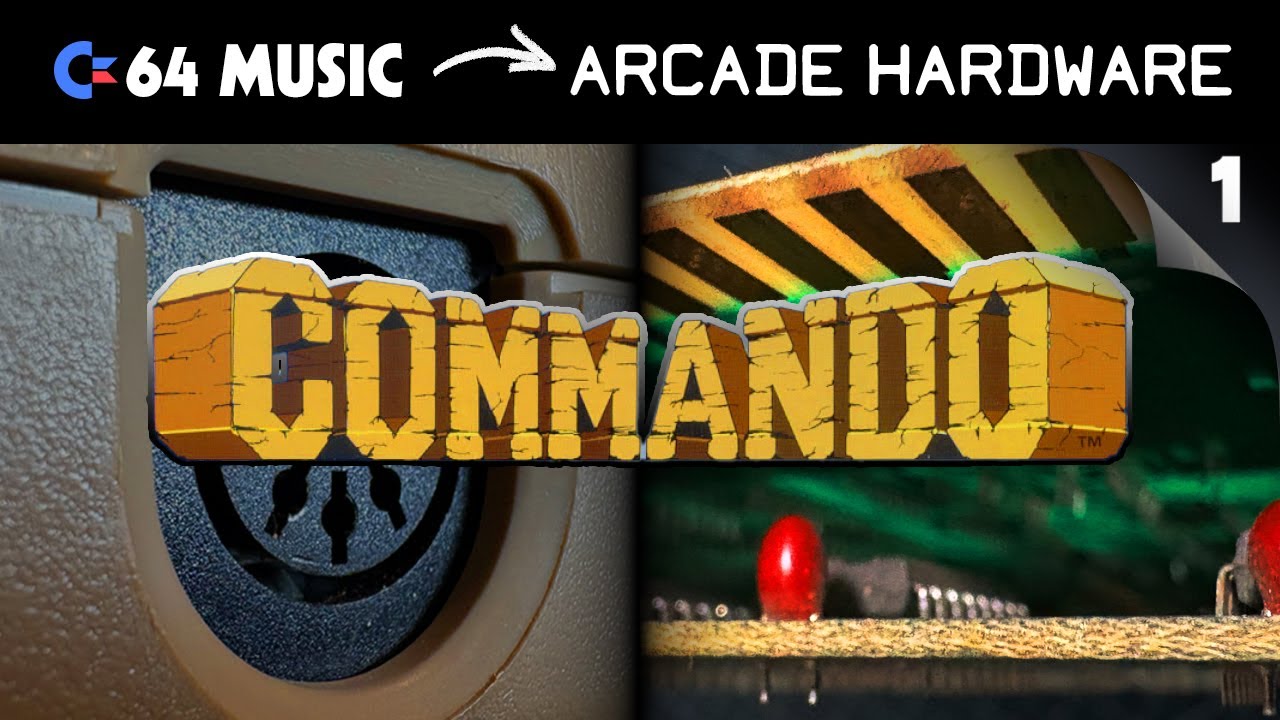
Got Rob Hubbard lookin like Donald Sutherland in the 70’s.
2 Likes
Yes, I love reverse-engineering porting!
2 Likes
Yes, I thought of that one when I posted You are great whith them chips. How did I miss your DW-8000 endeavours…
2 Likes
This video was very well balanced. A bit wordy, but I appreciate the effort.
1 Like
I don’t have any particular nostalgia for chiptunes, but watching tubesockor’s (thomasj?) video on SY CHIP gave me a new appreciation for it. I knew Elektron had started with the Sidstation but I didn’t realize how much the sid dna carries on throughout other elektron boxes.
The technique of rapidly changing waveforms is not so different from the concept of sound locks and trying to create a whole track using only the 4 voices of the A4 with sound locks is kind of similar to the process of making C64 music. Plus the whole parallel of AR & ST having 3 synth voices is pretty interesting.
3 Likes