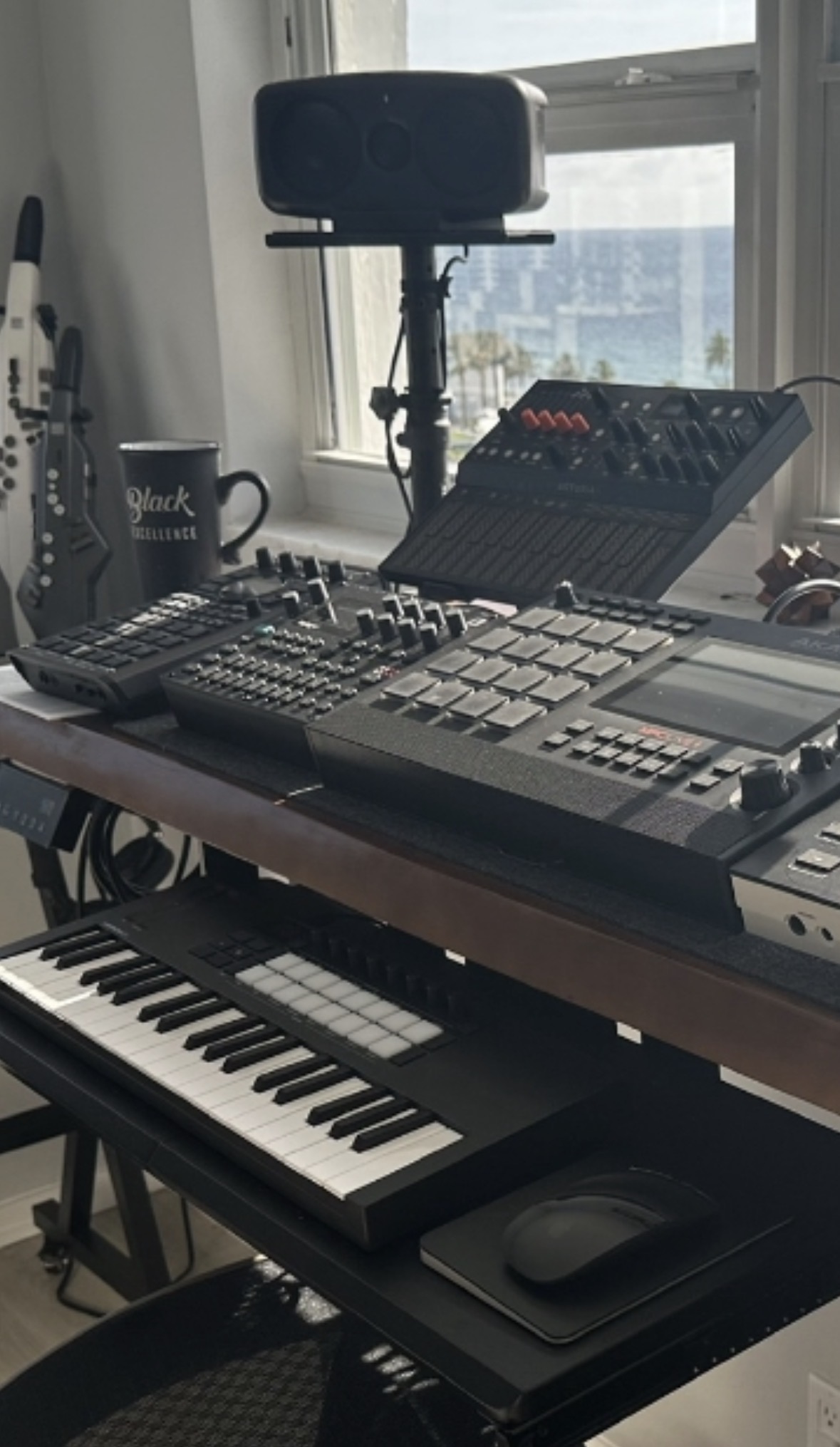
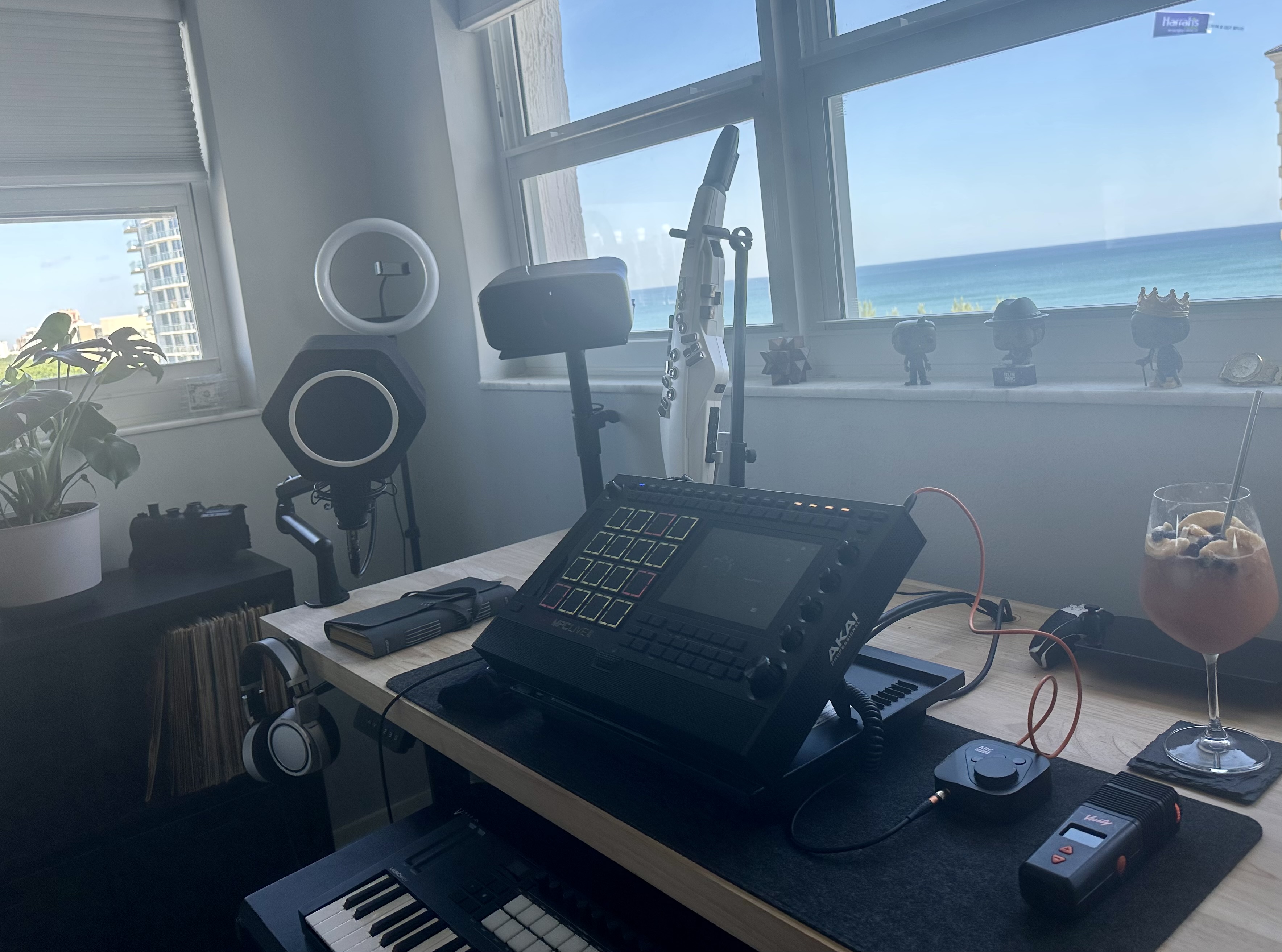
Coming from a background of mastering the MPC4000 and Spectralis, both of which are heavyweight players, I can confidently say that ruling TV vs MPC as one being better/worse than the other is somewhat misguided. This is because each machine is personal and serves distinct intentions. The type of music you’re aiming to produce is crucial in determining which unit suits you best. These devices differ so drastically in their strengths and weaknesses that they are almost polar opposites.
If you’re a producer working on simple 4/4 house/techno or hip-hop, the MPCs are quite straightforward and practical. It’s a simple process: sample, chop, lay down the chops, add some instruments, mix, and print the final product.
The same goes for typical musicians who just want to play into a looper, load some plugins, and arrange within a friendly GUI environment. The workflow is smooth and musical. Unless you’re a tech-savvy hip-hop or music producer seeking an experimental edge, the Tonverk might feel less desirable compared to the “live input with GUI DAW experience” that the MPC offers.
The MPC can serve as the heart of a large studio setup, while the Tonverk, although highly capable, isn’t on the same level when it comes to large-scale production. The MPC’s arsenal of instrument plugins is a world apart from simply browsing samples on a TV. And while both workflows are quick and tactical—TV being more hands-on and although the MPC often needs/ uses touchscreen for navigation, it compensates by being a vast ecosystem. Put it this way: while you’re browsing samples on the TV, you’re just a few tweaks away from your desired sound from trying out actualy synth presets on a plugin on the MPC.
The Tonverk, on the other hand, sounds incredible, with its modular nature, effects, and pitch algorithms. To my ears, it has a far more dimensional sound compared to the MPC, which sounds more “surface-level.” That said, the MPC does have a sweetness to its sound, provided you know how to shape it. The filters are somewhat “American/musical-sounding” (emulating DJ filters), while the Tonverk’s filetrs are more precise.
On a personal level, I prefer the Tonverk—it’s like a blend of my MPC4000 sampler and the Spectralis routing and sequencing. I’m naturally drawn to it, love the sound, and am thrilled by how innovative the grid/groove-based craft has been imlanted.
But the MPC counters this with its own strengths: live recording/editing of XY velocity pads, arranger clips, and the ability to continuously move loops around during playback in the arrangement. It offers a bunch of sequence commands, and parameter locking is done through pad copying (alternative PAD variations). Both have their own unique flow.
The MPC’s pad articulations are like programmable Rolls triggers, and its Flexbeat feature is like step components. There’s also a range of plugins that can be automated and assigned to macros for live performance-like effects. You can even mimic the Tonverk’s bus automation by sequencing automation on independent clips.
Its input expressiveness:
Touchstrip, velocity control, and XY pad surface vs one-octave clicky buttons on the Tonverk
The MPC is fantastic for capturing ideas and clips in real time. You can chop samples live (even going back to adjust a lazy chop while sample plays), and it has features like tail loops (VIP) and stem separation—how insane is that!? (hoola @90s samplist!)
Not to mention the round-robin sampling, layering options, and simultaneous pad play with group mutes. 16 levels and chord progessions. And somhow none is doing anything with the touse 4x LFOs, crossfade filters, mod matrix??
We could go on …Pad FX, Instrument FX, performance FX, and plugins like half-speed, Jura, MiniD, and analog tape emulation—just to name a few—and you get an incredible sampling powerhouse.
But the Tonverk stands out in terms of accessable focused groove and sound sculpting features + the sum sound quality. This is why the Tonverk remains so compelling, even when compared to the MPC3.
A downside to the MPC is the laborious process of assigning macros to knobs—multiple menu jumps are required, instead of a more intuitive “learn ability” between what’s on screen and the knobs (come on, Akai, take note!).
As for the Tonverk, it completely outshines the MPC in step sequencing. It’s super easy to lock steps, microshift, rotate, and clock dividision. The trigger options and parameter locking on the step sequencer are excellent, whereas on the MPC, you have to set it up manually if you want to sttraight up mimick Elektron but as previsuly stated … the MPC does triggers or parameter locks via PAD: Articulations (rools) and PAD (copies) for sound variations (‘‘step locked sound’’)…
I feel like whoever manages to combine the best of both worlds—real-time live expressivity and advanced step sequencing with incredible fidelity—will truly win the game. Korg, Yamaha, AlphaTheta, are you all just going to watch Akai’s birthday party while the MPC eats all the cake?
How close is Korg to releasing the Elektribe Pro? With its synthesis, tube tech (Polylogue), and sample fidelity (Drumlouge), they could really raise the bar.
It feels like everyone’s on the case. Grooveboxes are a mix of so many great things, and the hardware industry is booming, especially now that a generation of Ableton students, and thouse who started with Volcas, are now building their own personal spaceships.
If I had access to my account, I’d definitely own both.
I’m picking one of these this year—or maybe even multiple if I can swing it—but right now, I’m patiently waiting for the next TV OS update in all honesty
that was my two Cent and a dollar … 
 (learning the MPC is not holding me back) .